Basement Flood Cleanup in Texas
Texas basements are rare — our expansive clay soils fight them — but where they exist, they flood hard. Hydrostatic pressure, failed sump pumps, and wall seepage: we pump out, dry, sanitize, and waterproof-advise.
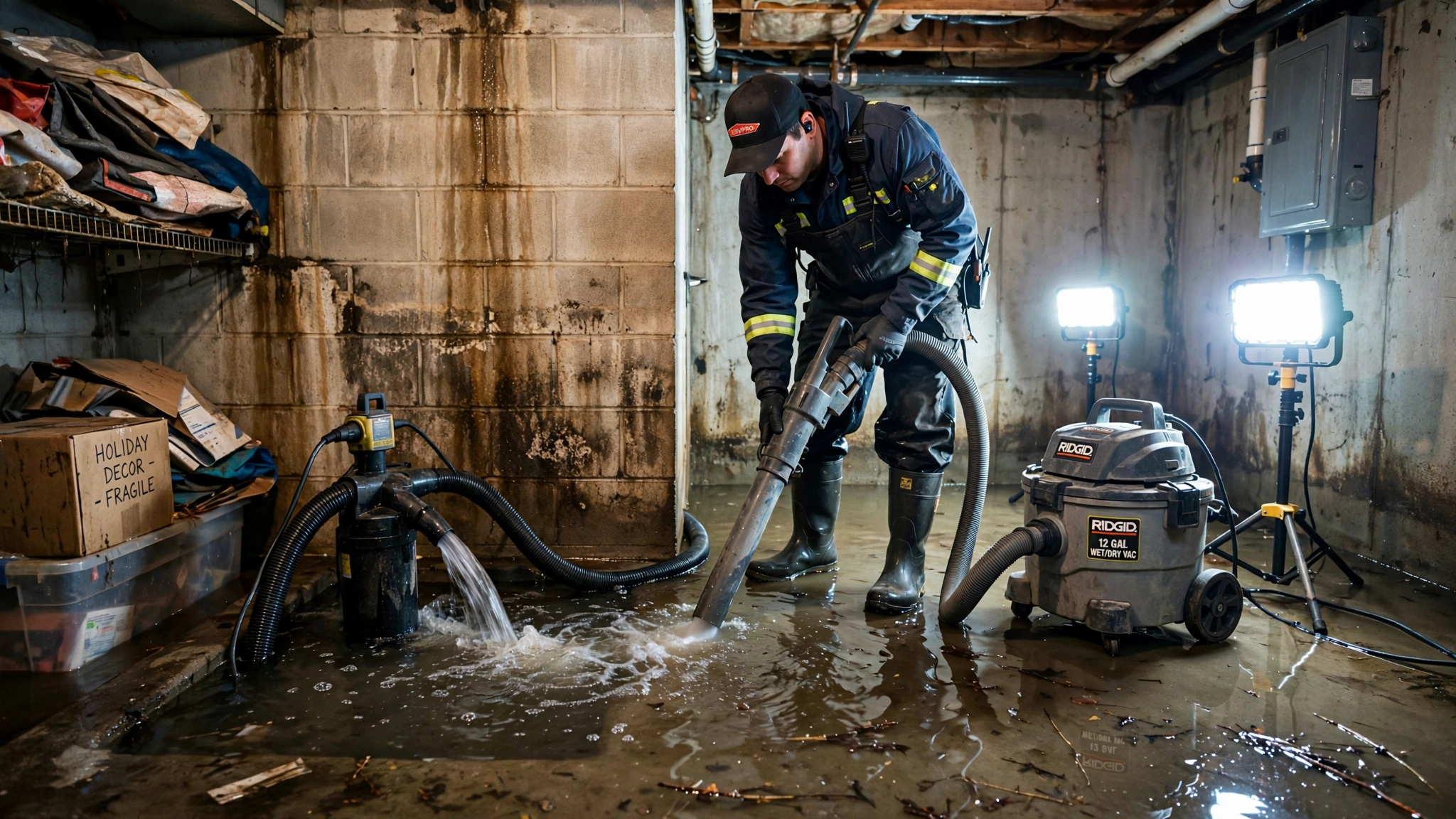
Why Texas Basements Flood Differently
Full basements are uncommon in Texas, and there’s a geological reason: much of the state sits on expansive clay (Houston gumbo, Dallas blackland) that swells when wet and shrinks when dry — heaving foundations and cracking basement walls. Where basements do exist — older homes in North Texas, hill-country walkouts, converted cellars — they face a perfect storm of risks.
Hydrostatic pressure is the #1 enemy. After heavy Texas downpours, groundwater pushes against foundation walls and the slab with tremendous force, finding every crack, cold joint, and pipe penetration. Water doesn’t need an opening — pressure makes openings. Add a failed sump pump (the #1 cause of finished-basement floods nationwide — usually dead during the storm that needed it most), and you get inches of standing water over carpet, drywall, and stored belongings.
Walkout basements in the Hill Country face a different threat: surface water intrusion during flash floods, when water sheets off limestone slopes straight into below-grade doors and window wells. Whatever the entry point, professional water damage restoration in Texas basements starts with understanding the pressure dynamics — pump the water without addressing the pressure, and it comes right back.
Every Service You Need, One Team
From emergency extraction to full rebuild — local professionals handle it all.
What Basement Water Destroys
Finished walls & flooring
Basement drywall wicks water fast, and carpet pad in a basement is essentially a mold incubator — warm, dark, and undisturbed. Local professionals remove saturated drywall to the verified water line, pull carpet and pad, and dry framing and slab to verified targets.
Stored belongings
Basements are where Texas families store everything — and cardboard boxes disintegrate in hours. We triage contents: what can be cleaned and dried, what needs specialized restoration, what’s a loss — all documented for your insurance claim.
Mechanical systems
Furnaces, water heaters, and electrical panels in basements are flood-vulnerable and dangerous when submerged. Local professionals coordinate power-down, and nothing gets re-energized until it tests dry and safe.
The mold time bomb
Basements stay cool and humid — ideal mold conditions. Post-flood basements that “look dry” often harbor mold inside wall cavities within days. Our process includes antimicrobial treatment of every exposed surface, not just the ones that look wet.
Our Basement Flood Cleanup Process
1. Pump out & extract. Submersible pumps handle inches of standing water; truck-mounted extraction pulls the rest from carpet and porous surfaces.
2. Remove the unsalvageable. Saturated drywall, carpet pad, and insulation come out — we don’t try to save what floodwater has claimed, especially Category 2/3 water.
3. Dry it verified. Industrial structural drying with directed air movement and commercial dehumidification. Basements dry slowly (no sunlight, poor airflow) — we verify with daily moisture readings, not guesswork.
4. Sanitize everything. Antimicrobial treatment on all exposed framing, slab, and masonry. Floodwater is contaminated; “looks clean” isn’t clean.
5. Advise on prevention. Sump pump with battery backup, interior drain tile assessment, exterior grading review, and window-well covers — we’ll tell you honestly what would have prevented this and what it takes to install.
Preventing the Next Basement Flood
The two highest-ROI upgrades for Texas basements: a sump pump with battery backup (storms kill power exactly when you need pumping most) and exterior grading that slopes away from the foundation — many basement floods are really grading failures. Window-well drains and covers handle the walkout risk. We assess all of it during cleanup and give you a straight prevention plan, not a sales pitch.
Dealing with sewage in the basement too? That’s a biohazard job with its own protocol — see our sewage cleanup service.
Trusted Resources
Check FEMA’s flood map service center to understand your property’s flood zone designation — it directly affects both your insurance options and which waterproofing investments make sense.
Know Exactly What Happens Next
Water damage is stressful enough. Here is the exact process local professionals follow on every job — no surprises, no guesswork.
Inspection & Moisture Mapping
We find every wet area with meters and thermal imaging — not just the visible puddle.
Water Extraction
Truck-mounted extractors remove standing water fast — the highest-leverage step of the job.
Drying & Dehumidification
Commercial air movers and dehumidifiers bring materials back to verified dry standards.
Cleaning & Restoration
Sanitizing, odor control, and full rebuild of whatever could not be saved.
Basement Flood FAQs
My sump pump failed during the storm. Is that common?
Can basement carpet be saved after flooding?
How do I know if water is still inside my basement walls?
Will my homeowner's insurance cover basement flooding?
Should I waterproof my basement after cleanup?
Basement Flooding Right Now?
Pump-out, dry-out, sanitize, and rebuild — plus honest prevention advice. Call now, 24/7.

Emergency water damage restoration across Texas. Local water damage restoration professionals.