Sewage Backup Cleanup in Texas
Raw sewage is a Category 3 biohazard — not a mop-and-bucket job. Local water damage restoration professionals contain, extract, disinfect, and restore: safe sewage cleanup for Texas homes and businesses.
Sewage Is Not "Just Dirty Water"
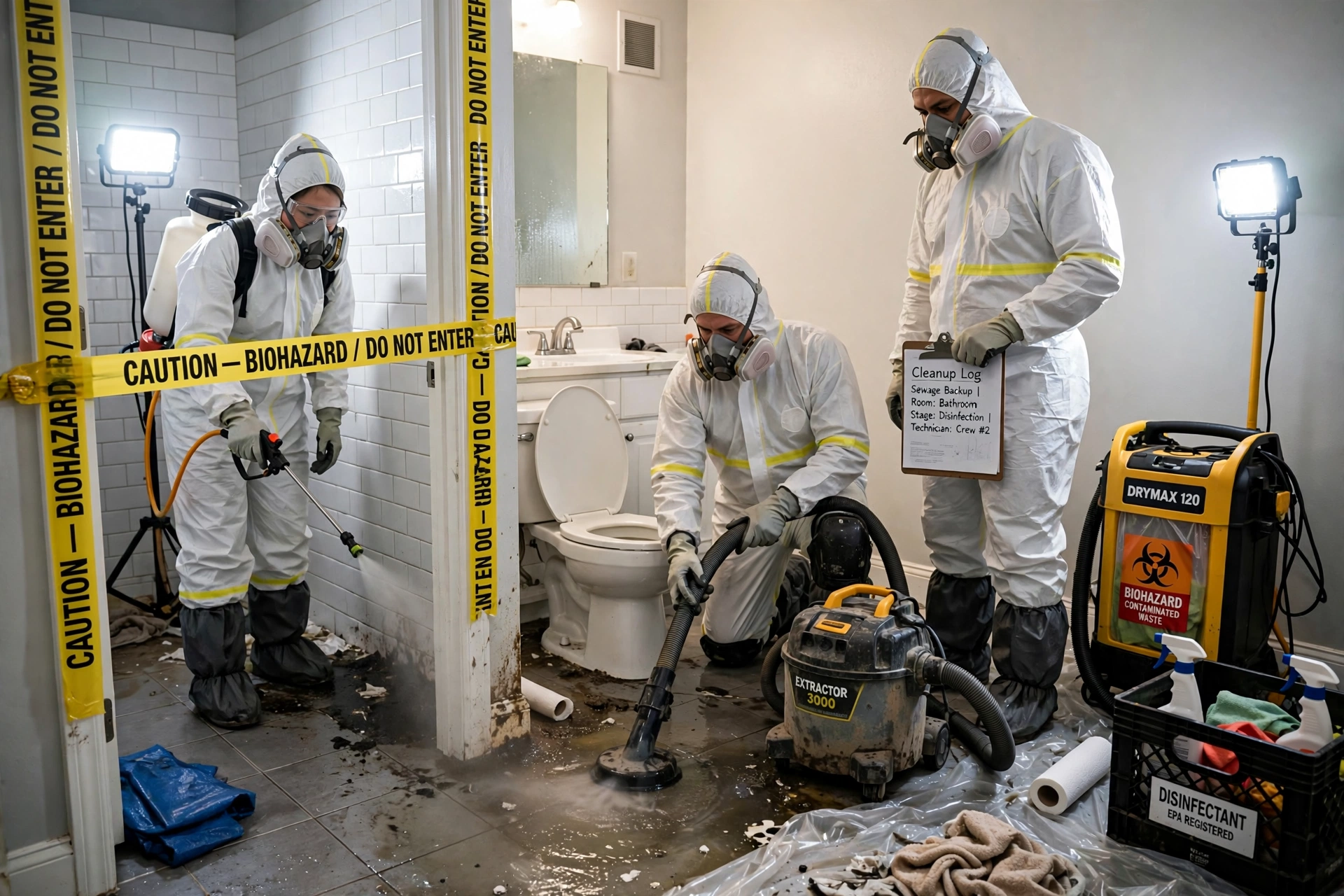
When a sewer line backs up into your home, you’re dealing with Category 3 black water — the most hazardous classification in the IICRC S500 standard. It contains fecal matter, bacteria (E. coli, salmonella), viruses (hepatitis, norovirus), parasites, and whatever chemicals went down the drain upstream. The EPA classifies sewage exposure as a serious health risk — this is why sewage cleanup in Texas is a job for certified professionals in full PPE, never for homeowners with rubber gloves.
Texas-specific causes we see constantly: aging clay and cast-iron sewer lines in older neighborhoods (Dallas, Houston, San Antonio) that crack and admit tree roots; grease buildup from restaurants in mixed-use areas; storm-surge infiltration overwhelming municipal systems during heavy rains; and foundation shift on expansive Texas clay soils snapping sewer laterals.
Every Service You Need, One Team
From emergency extraction to full rebuild — local professionals handle it all.
Health Risks You Can't See
Sewage pathogens enter through ingestion (hand-to-mouth), inhalation (aerosolized droplets — this is why we use respirators and negative air), skin contact…
Our Sewage Cleanup Protocol
We seal the affected area with containment barriers and negative-air-pressure scrubbers so contaminants don't migrate through your HVAC to clean rooms. Full…
Preventing the Next Backup
After cleanup, we recommend: a sewer camera inspection (know your line's condition), root treatment or line replacement for intruded clay lines, a backwater…
Health Risks You Can't See
Sewage pathogens enter through ingestion (hand-to-mouth), inhalation (aerosolized droplets — this is why we use respirators and negative air), skin contact (especially through cuts), and eyes. Symptoms range from gastroenteritis to hepatitis to respiratory infection. Children, elderly, and immunocompromised people face the highest risk — which is why we recommend evacuation of affected areas until cleanup is complete, especially for families.
Our Sewage Cleanup Protocol
1. Containment & safety
We seal the affected area with containment barriers and negative-air-pressure scrubbers so contaminants don’t migrate through your HVAC to clean rooms. Full PPE: respirators, suits, gloves, boots.
2. Source control
We identify why it backed up — root intrusion, line collapse, municipal surcharge — and stop the inflow. If your lateral is damaged, we’ll scope it with a camera and tell you exactly what failed.
3. Extraction & removal
Standing sewage is extracted with dedicated equipment (never the same machines used for clean water). Then the hard rule: all porous materials that contacted sewage are removed — carpet, pad, drywall, insulation. No exceptions. Drying can’t make sewage-contaminated drywall safe.
4. Disinfection
All remaining hard surfaces get hospital-grade antimicrobial treatment. We verify with ATP testing where appropriate — disinfection you can measure, not just smell.
5. Drying & restoration
Structural drying of the remaining structure, then rebuild. Throughout, local professionals document for your insurance claim — sewer backup coverage is often a separate rider, and we help you navigate it.
Preventing the Next Backup
After cleanup, we recommend: a sewer camera inspection (know your line’s condition), root treatment or line replacement for intruded clay lines, a backwater valve (one-way valve preventing municipal surges from entering your home — required by code in some Texas cities for good reason), and never flushing wipes, grease, or “flushable” products that aren’t.
Know Exactly What Happens Next
Water damage is stressful enough. Here is the exact process local professionals follow on every job — no surprises, no guesswork.
Inspection & Moisture Mapping
We find every wet area with meters and thermal imaging — not just the visible puddle.
Water Extraction
Truck-mounted extractors remove standing water fast — the highest-leverage step of the job.
Drying & Dehumidification
Commercial air movers and dehumidifiers bring materials back to verified dry standards.
Cleaning & Restoration
Sanitizing, odor control, and full rebuild of whatever could not be saved.
Sewage Backup FAQs
Is sewage backup covered by homeowner's insurance?
Can I clean up a small sewage backup myself?
How do I know if it's sewage vs. clean water?
Will you have to tear out my walls?
How long until my home is safe again?
Sewage Emergency? Don't Touch It — Call Us.
Biohazard-crews, 24/7. We make it safe again.
Emergency water damage restoration across Texas. Local water damage restoration professionals.