Water Damage Insurance Claim Help in Texas
Denied claim? Lowball offer? Confusing adjuster? Texas water damage claims are a maze — flood vs. water damage, sudden vs. gradual, endorsements you didn’t know you had. Local professionals document, advocate, and maximize your legitimate claim.
Texas Water Claims Are Uniquely Treacherous
Texas has the most complicated water-damage insurance landscape in America. Here’s why homeowners get blindsided:
Flood vs. water damage — the distinction that denies more Texas claims than anything else. Water from a burst pipe inside your home: typically covered. The same water rising from the ground outside (even from the same storm): excluded without separate NFIP flood insurance. After hurricanes, adjusters scrutinize every claim through this lens — and the burden of proving which water did what falls on you.
Sudden vs. gradual — a pipe that bursts today is covered; a pipe that’s dripped for six months is “long-term leakage” and excluded. The difference is documentation, and most homeowners have none until we create it.
Texas-specific wrinkles — TWIA (Texas Windstorm Insurance Association) for the 14 coastal counties, named-storm deductibles (often 1–5% of dwelling value, not a flat dollar amount), and flood exclusions that surprise even careful policyholders. Water damage restoration in Texas without claim expertise leaves real money on the table.
Every Service You Need, One Team
From emergency extraction to full rebuild — local professionals handle it all.
Emergency Water Damage Restoration
24/7 rapid response for floods, burst pipes, and storm damage.
How We Maximize Your Claim
Day-one documentation
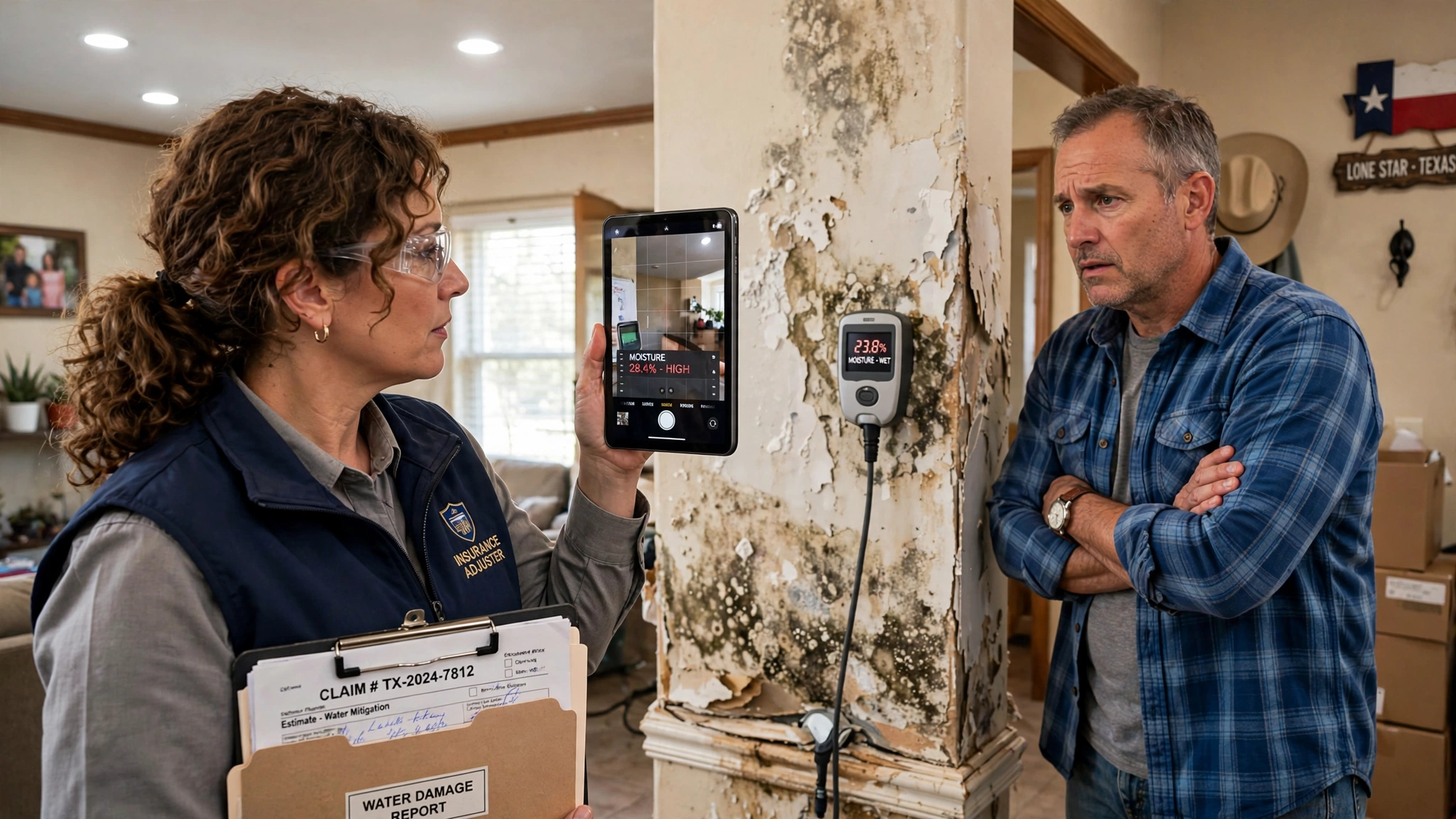
From the first visit: timestamped photos, moisture meter readings, thermal imaging, cause-of-loss determination, and itemized damage inventories. This is the evidence package adjusters need — created before anything is moved or dried, when it matters most.
Scope accuracy
Carrier scopes routinely miss hidden damage — moisture inside wall cavities, saturated insulation, compromised subfloor. Our independent scope, built on instrument readings rather than visual guess, becomes the baseline for negotiation. Missed scope is the #1 reason initial offers come in low.
Adjuster meetings
We meet your adjuster on-site, walk the loss together, and speak their language — IICRC standards, line-item Xactimate-style scoping, and code requirements. Adjusters respect documented professionals; they discount vague homeowner estimates.
Supplement process
Hidden damage discovered during demolition (mold behind drywall, rotted subfloor under “dry” flooring) gets documented and submitted as supplements — additional claim payments for damage found after the initial scope. Most homeowners never file supplements. We file them as a matter of course.
Denial review
Denied claim? We review the denial letter against your policy language and our documentation. Many denials rest on misclassified water categories or missed endorsements — we’ve seen denials reversed when the evidence was properly presented.
What's Usually Covered (and What Isn't)
Typically covered: burst pipes, appliance ruptures, water heater failures, storm-created roof openings, accidental discharge — the “sudden and accidental” events. Resulting damage (drywall, flooring, mold from a covered event) is part of the claim.
Typically excluded: groundwater flooding (needs NFIP), long-term leaks and seepage, wear-and-tear plumbing failures, mold from neglected maintenance, and earth movement. Sump-pump failure needs a specific endorsement many policies lack.
The gray zone — where we earn our keep: Was that ceiling stain sudden or gradual? Did wind create the roof opening or did age? Is that mold from the covered burst or pre-existing? Honest, documented answers to these questions determine thousands of dollars.
Related services that generate claims: emergency restoration, flood damage, burst pipes, appliance leaks, roof leaks.
Our Fee Structure: No Games
Claim help is included free with our restoration work — documentation, adjuster meetings, and supplements are part of doing the job right. For standalone claim consulting (denial reviews, second opinions on low offers), local professionals work on transparent flat-fee or contingency terms discussed upfront. We are not public adjusters and don’t pretend to be — we’re restoration experts who know claims inside out. If your situation needs a public adjuster or attorney, we’ll tell you straight and refer you to reputable ones.
Trusted Resources
For flood-specific coverage, the NFIP (National Flood Insurance Program) site explains what federal flood policies cover — essential reading for any Texas homeowner near a floodplain.
Know Exactly What Happens Next
Water damage is stressful enough. Here is the exact process local professionals follow on every job — no surprises, no guesswork.
Inspection & Moisture Mapping
We find every wet area with meters and thermal imaging — not just the visible puddle.
Water Extraction
Truck-mounted extractors remove standing water fast — the highest-leverage step of the job.
Drying & Dehumidification
Commercial air movers and dehumidifiers bring materials back to verified dry standards.
Cleaning & Restoration
Sanitizing, odor control, and full rebuild of whatever could not be saved.
Insurance Claim FAQs
My claim was denied. Is it over?
The adjuster's offer seems low. What can I do?
Do I need flood insurance in Texas?
Should I file a claim or pay out of pocket?
Will filing a water claim raise my rates?
Claim Trouble? Talk to Us First.
Free claim review with our documentation experts. Know where you stand before you sign anything.
Emergency water damage restoration across Texas. Local water damage restoration professionals.