Roof Leaks After Texas Hailstorms: A Homeowner’s Action Plan

Texas sees more hailstorms than any other state. Here’s exactly what to do when the storm passes and water starts coming in.
North Texas sits in the heart of “hail alley,” and the Hill Country, Panhandle, and parts of Central Texas get pounded regularly too. A single severe hailstorm can bruise thousands of roofs in one afternoon — and the leaks often don’t show up until the next rain, days or weeks later. This is your action plan.
The First 24 Hours: Stabilize
- Stay off the roof. Wet, hail-damaged roofs are treacherous, and walking them can worsen damage. Leave inspection to professionals.
- Contain interior leaks. Buckets, towels, and moving valuables come first. Poke a small relief hole in a bulging ceiling to drain trapped water into a bucket — it prevents a larger collapse.
- Document everything. Photograph hailstones next to a coin for scale, damaged siding and gutters, and every interior water spot with timestamps.
- Call a roofer for emergency tarping if shingles are missing or decking is exposed. Most reputable Texas roofers offer 24-hour storm response.
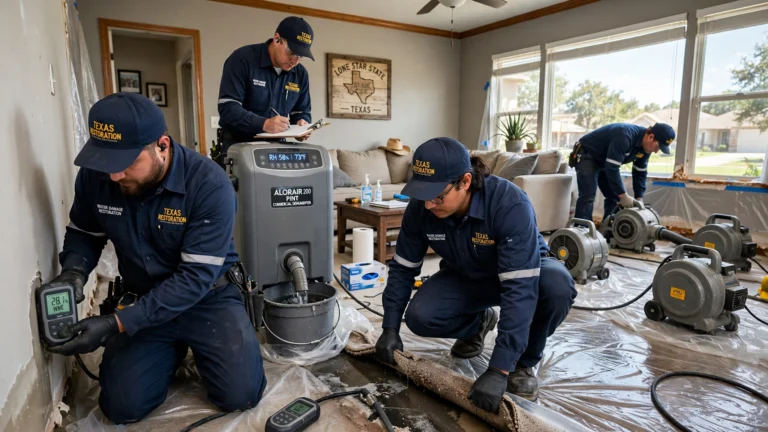
- Call for interior water mitigation if water is inside the home — wet insulation and drywall start growing mold within 48 hours. Our roof leak repair team handles the interior damage while your roofer handles the exterior.
- Notify your insurance company promptly; Texas policies require timely reporting.
Signs Your Roof Took Hail Damage
You don’t need missing shingles to have a compromised roof. Look for dented metal vents, gutters, and flashing; granules piling up at downspouts (shingles losing their protective layer); dark “bruises” where hail fractured the shingle mat; and cracked or split shingles. Damage to soft metals is your best evidence — if the vents are dented, the shingles took hits too.
Check the attic during the next rain. Shine a flashlight along the underside of the decking and look for drips, wet insulation, or daylight through cracks. Attic inspections catch slow leaks before they stain ceilings.
Insurance in Texas: What to Know
Standard Texas homeowners policies cover hail damage, but the details matter. File promptly, meet the adjuster with your documentation ready, and understand whether your roof is covered at replacement cost or actual cash value (depreciated) — the difference can be tens of thousands of dollars. Along the coast, wind and hail may fall under a separate TWIA policy with its own deductible.
Working With Your Roofer and Restoration Team Together
The smoothest recoveries happen when the roofer and the restoration crew coordinate. The roofer stops water at the source — tarping, then permanent repair — while the restoration team handles everything the water touched inside: extraction, insulation removal, drying, and rebuild. Share your roofer’s timeline with your restoration crew and vice versa; drying shouldn’t finish before the roof is sealed, or the next rain undoes the work. Keep both invoices — they’re separate line items on your claim, and your adjuster will want to see each scope clearly.
Don’t Forget the Interior
Roofers fix roofs; they don’t dry homes. Water that entered through hail damage soaks attic insulation (which must be removed once wet), ceiling drywall, and wall cavities. Water extraction, ceiling and wall restoration, and verified structural drying complete the job — and the documentation supports your claim.
FAQs
Should I file a claim for minor hail damage?
Compare the estimated repair cost against your deductible first. If damage is near or below your deductible, paying out of pocket avoids a claim on your record. A reputable roofer’s free inspection helps you decide.
How long do I have to file a hail claim in Texas?
Policies require “prompt” notice — don’t wait months. Texas law also gives insurers deadlines to respond once you file, which the Texas Department of Insurance enforces.
Can I tarp the roof myself?
You can, but steep or damaged roofs are dangerous, and improper tarping can void shingle warranties. Emergency tarping services are inexpensive compared to an ER visit.
Which Texas areas get the worst hail?
The Dallas–Fort Worth metroplex leads the state in hail claims — suburbs like Sachse and Anna sit squarely in hail alley — followed by the Hill Country and Panhandle.
Water Damage Can’t Wait
Local Texas crews respond around the clock for extraction, drying, and full restoration. Call now for fast help.