Slab Leak Water Damage in Texas: Detection and Repair
Under-slab pipe leaks are one of the most common — and most misunderstood — sources of water damage in Texas homes.
Most Texas homes sit on a slab-on-grade foundation, with hot and cold water lines running underneath the concrete. When one of those lines fails, water pours directly into the soil beneath your home — and the damage spreads silently for weeks before you notice. Texas’s expansive clay soils, hard water, and older copper plumbing make slab leaks a statewide problem, from Houston to Dallas to San Antonio.
Here’s how slab leaks happen, how to spot one early, and how professionals find and fix them without tearing your house apart.
Why Texas Homes Are Prone to Slab Leaks
Three Texas-specific factors team up against under-slab plumbing. First, expansive clay soil — common across North and Central Texas — swells when wet and shrinks in drought, shifting the slab and stressing rigid copper lines. Second, hard water corrodes copper from the inside over decades; hot water lines fail first because heat accelerates corrosion. Third, many homes built from the 1960s through the 1990s used copper lines buried directly in or under the slab with minimal protection, and that generation of plumbing is now reaching the end of its life.
Even a pinhole leak can release hundreds of gallons a day into the ground under your home.
Warning Signs of a Slab Leak
- A sudden spike in your water bill with no change in usage — the single most common red flag.
- Warm or hot spots on the floor, especially on tile or wood — a classic sign of a hot-water line leak.
- The sound of running water when every fixture is off.
- Damp carpet, warped wood, or baseboards pulling away from walls near the slab.
- Cracks in walls or flooring, or doors that suddenly stick — shifting soil from prolonged leaking.
- Low water pressure at fixtures.
Do the meter test: turn off every faucet and appliance, then watch your water meter for 15 minutes. If the dial moves, water is escaping somewhere — and a slab leak is a prime suspect.
How Professionals Locate the Leak
Guessing means jackhammering in the wrong place. Professionals isolate the problem first: shut off valves determine whether the leak is on the hot or cold side, then a pressure test confirms it. Acoustic listening equipment picks up the hiss of pressurized water escaping underground, and thermal imaging cameras reveal the warm plume spreading from a hot-line leak. In tricky cases, a harmless tracer gas pinpoints the break within inches. Only then does anyone break concrete.
Repair Options — and Their Tradeoffs
Spot repair means opening the slab at the leak and fixing that section of pipe. It’s the cheapest option but leaves aging pipe in the ground that can fail again nearby. Tunneling — digging under the slab from outside — avoids breaking interior floors but costs more and takes longer. Rerouting abandons the under-slab line entirely and runs new PEX through walls or the attic; it’s increasingly popular in Texas because it eliminates future slab leaks on that line and avoids concrete work altogether. Epoxy pipe coating exists but is controversial among Texas plumbers for potable lines — ask hard questions before choosing it.
The Water Damage Side of Slab Leaks
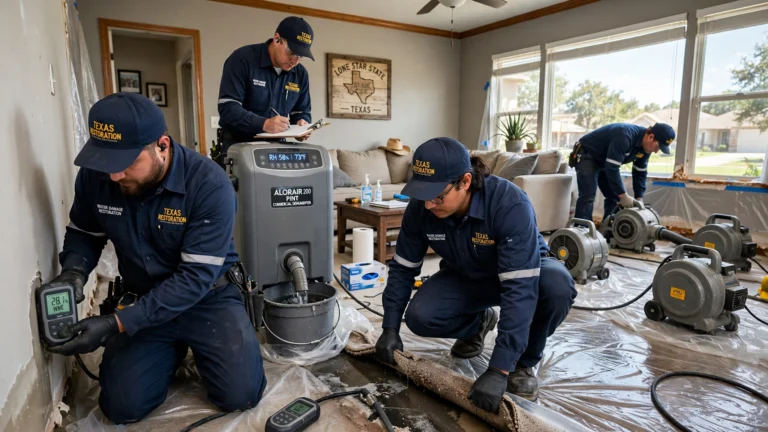
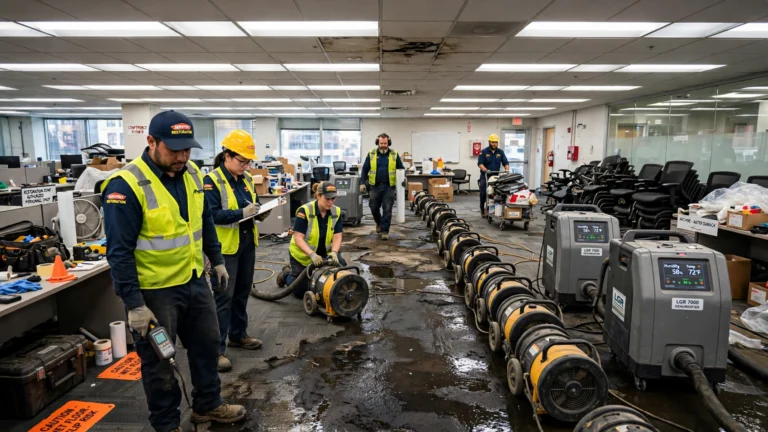
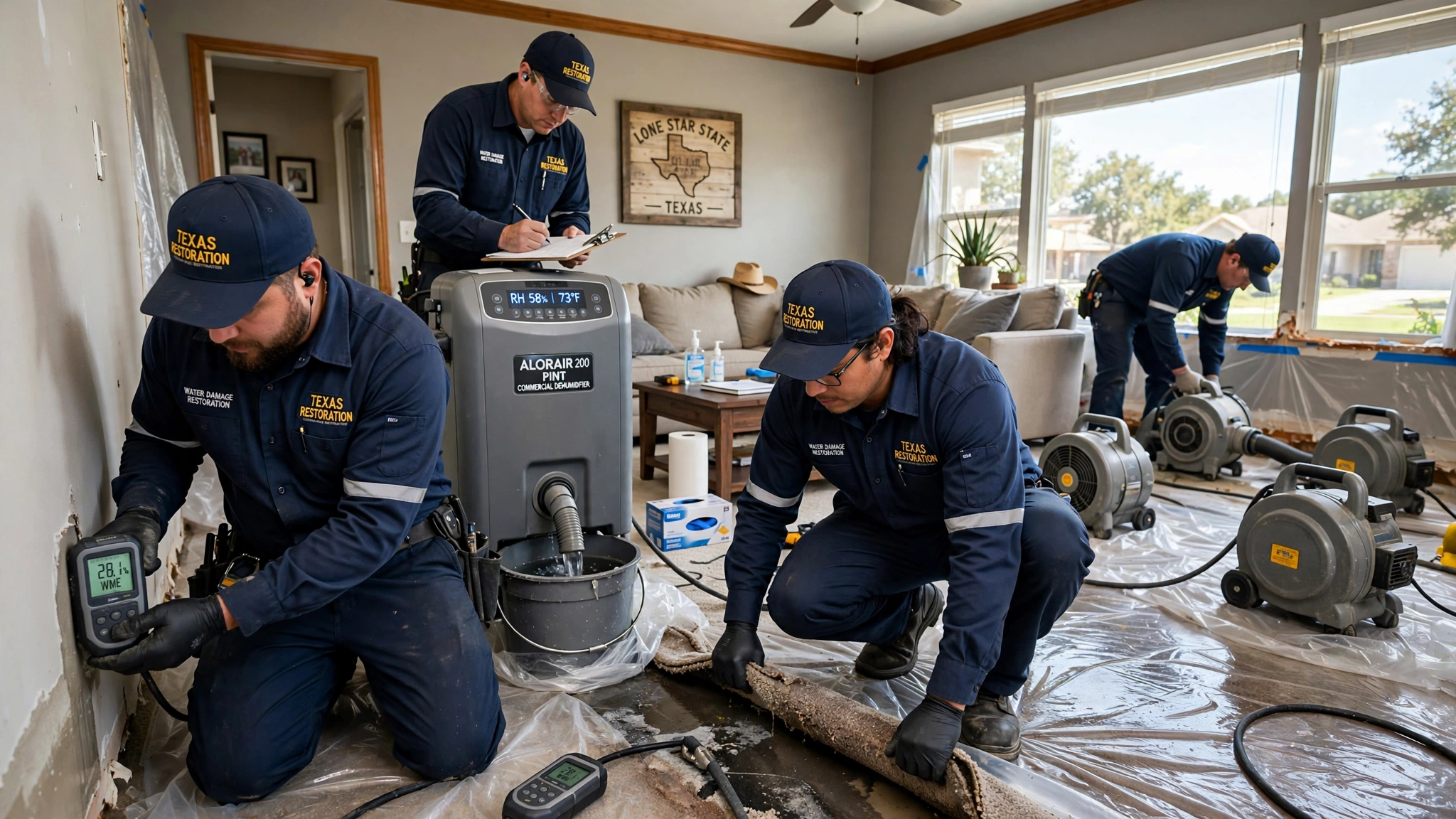
The plumbing fix is only half the job. Water wicking up through the slab soaks flooring, drywall, and baseboards, and the constant moisture feeds mold inside wall cavities. Professional water extraction removes standing water, then structural drying with dehumidifiers and air movers — verified with moisture meters — brings the slab and framing back to safe levels. Skipping the drying step is how a fixed leak turns into a mold remediation project six months later.
Insurance note: most Texas homeowners policies cover the water damage from a sudden slab leak and the cost to access the pipe (tearing out concrete), but not the pipe repair itself — and gradual, long-term leaks are often excluded. Documentation matters.
FAQs
Can I stay in my home during slab leak repair?
Usually yes for reroutes, since work happens in walls and the attic. Spot repairs that break the slab are louder and dustier but typically take a day or two.
Does homeowners insurance cover slab leaks?
Often the resulting water damage is covered if the leak was sudden, but the plumbing repair itself and damage from long-term seepage usually are not. Review your policy and document everything — see our insurance claim guide.
Are slab leaks common in Friendswood and the Houston area?
Yes — Gulf Coast clay soils and older copper systems make slab leaks frequent in Friendswood and across the Houston metro. Shifting soils in North Texas cause similar problems in cities like Cedar Hill. Learn more from the IICRC about professional water damage standards.
Water Damage Can’t Wait
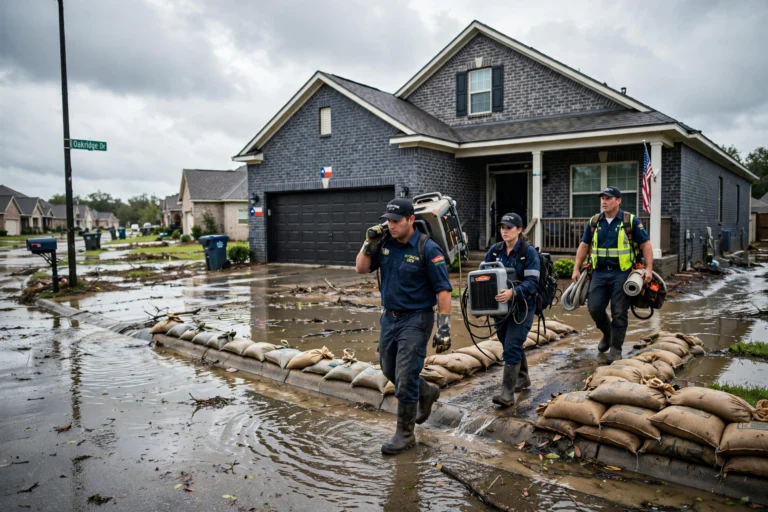
Local Texas crews respond around the clock for extraction, drying, and full restoration. Call now for fast help.