Basement Flooding Texas Causes Prevention
Basements are rare in Texas — but the homes that have them pay a special price when water shows up. Unlike the Midwest, where basements are standard and builders plan for them, a Texas basement is often an afterthought: a converted cellar under an older Dallas home, a walkout level in the Hill Country, or a finished lower floor in Austin built into limestone. When one of these floods, the damage hits harder because the structure was never really designed to live below grade in the first place.
After two decades in restoration, I can tell you Texas basements flood for a handful of very specific reasons — and almost all of them are preventable. Here’s what actually goes wrong, and what to do about it.
Why Texas Basements Flood
1. Expansive clay and hydrostatic pressure
Much of Texas sits on expansive clay soils — the famous Blackland Prairie gumbo that swells when wet and shrinks when dry. When heavy rain saturates that clay, it expands and squeezes groundwater sideways and upward against your foundation with enormous force. Water finds the path of least resistance: the cold joint where the basement wall meets the floor slab, hairline foundation cracks, and around pipe penetrations. This is the number one cause of “mystery” basement seepage I see in Central Texas homes.
2. Sump pump failure during storms
Homes that do have basements usually rely on a sump pump — and sump pumps fail exactly when you need them most. Texas storms knock out power, the pump stops, and the pit overflows. I’ve pulled pumps that were simply unplugged, switches stuck by debris, or discharge lines frozen or clogged. A sump pump is a mechanical device with a finite life; most last 7–10 years, and almost nobody replaces theirs proactively.
3. Flat lots, poor grading, and short gutters
Texas clay barely absorbs water — it sheds it. If your yard slopes toward the house, or your downspouts dump water two feet from the foundation, every thunderstorm delivers a concentrated stream right to your basement walls. Newer subdivisions are often graded correctly at move-in, then landscaping beds, mulch, and settling quietly reverse the slope over the years.
4. Flash flooding that overwhelms everything
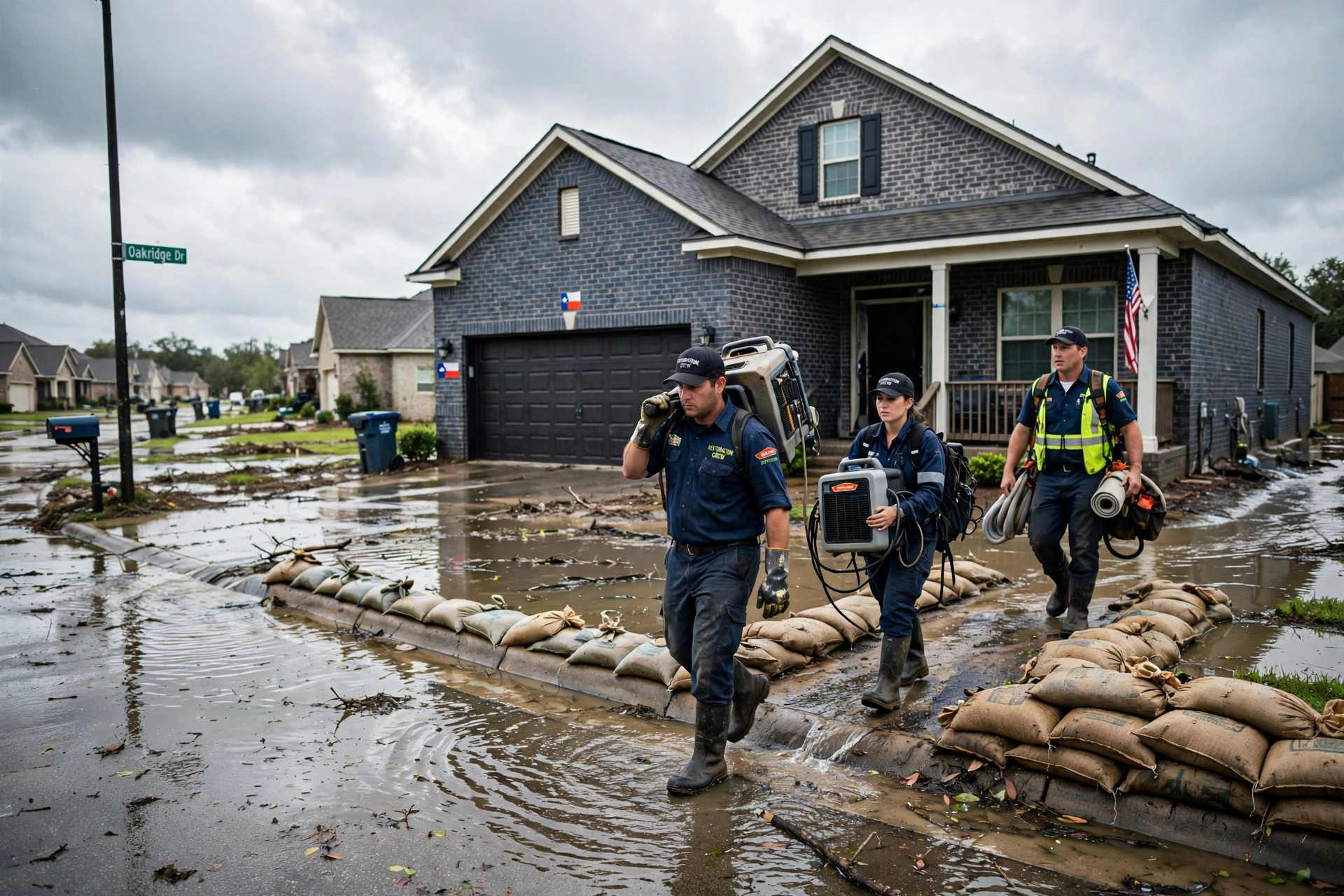
Hill Country creeks can rise feet in an hour. Houston bayous leave their banks. When surface water is a foot deep against your house, no sump pump or sealant is going to hold it back — water comes in through window wells, doors, and anywhere the envelope isn’t watertight. This is a different animal from seepage: it’s a flood event, and it changes the cleanup protocol entirely.
5. Plumbing and sewer failures below grade
Water heaters, washing machines, and HVAC condensate lines are sometimes located in basements. A failed water heater dumps 40–50 gallons in minutes. Worse, a sewer backup during heavy rain pushes contaminated water up through the lowest drain in the house — which is your basement floor drain. Category 3 water in a finished basement is a gut job, not a drying job.
What to Do in the First Hour
- Kill the power to the basement at the breaker — never wade into standing water that may be electrified.
- Stop the source if it’s plumbing: shut the main valve (more on that in our water main shutoff guide).
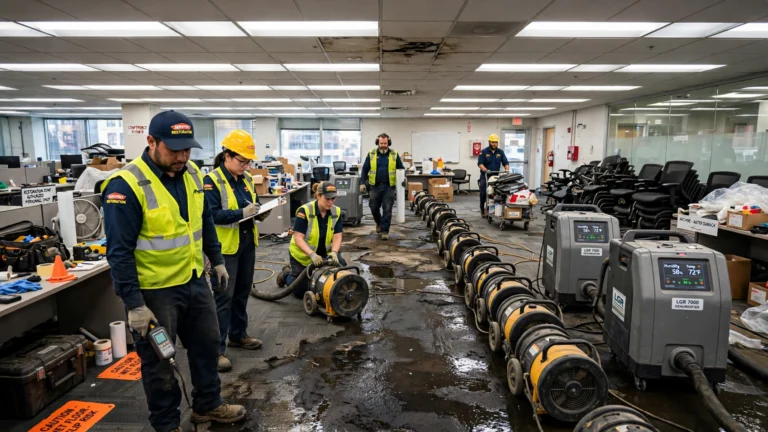
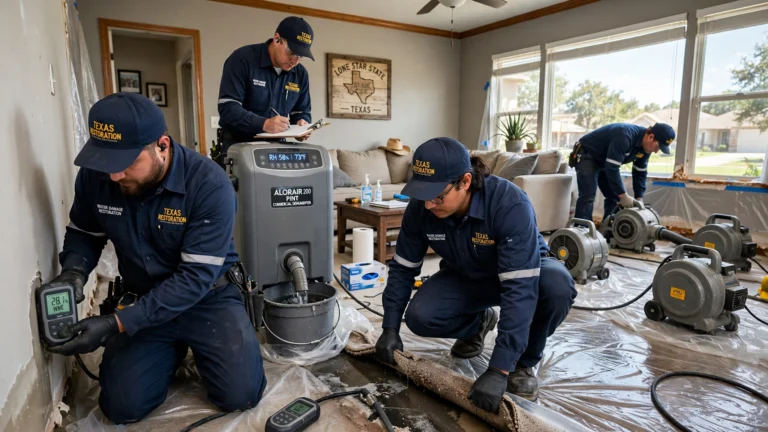
- Call a restoration company before you start ripping things out — documentation matters for insurance, and pros with truck-mounted extraction remove in an hour what a shop vac takes a day to handle.
- Move valuables upstairs and photograph everything for your claim.
Prevention That Actually Works in Texas
- Regrade and extend downspouts. Soil should slope away from the foundation at least 6 inches over the first 10 feet. Extend downspouts 6–10 feet out — those little splash blocks aren’t enough on clay.
- Install a sump pump with battery backup. The backup is the whole point in Texas, where storms take the grid down. Test the pump twice a year by pouring a bucket of water in the pit.
- Seal the envelope. Hydraulic cement for active crack leaks, then a proper foundation sealant. Window wells get covers and drains.
- Add a backwater valve on the main sewer line if your basement has below-grade drains — it lets sewage out but not back in during surcharged city lines.
- Consider interior drain tile for chronic seepage: a perimeter channel under the slab edge feeding the sump. It’s the permanent fix when exterior excavation isn’t practical.
Frequently Asked Questions
The Bottom Line
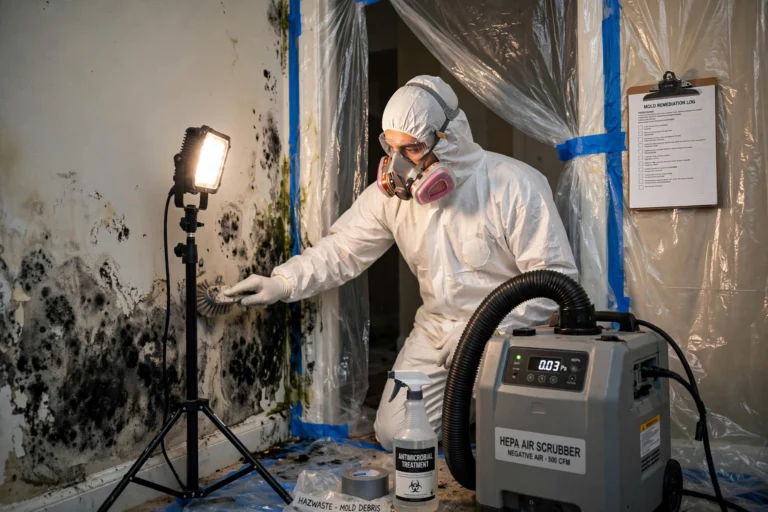
Texas basements flood because of clay soil, failed pumps, bad drainage, and flash floods — not bad luck. Every one of those has a known fix, and the fixes cost a fraction of a single flooded-basement restoration. If yours has already flooded, don’t DIY the drying: hidden moisture in wall cavities and under flooring is what turns a water loss into a mold loss.
Basement Flooding in Texas?
Local professionals serve homeowners across Texas — from Stafford to Friendswood and beyond — with 24/7 emergency extraction and drying.