Sewage Backup in Texas: Health Risks and What to Do
A sewage backup is the one water disaster no Texas homeowner wants to face — and in a state where sudden downpours overwhelm municipal systems, shifting clay soil cracks sewer lines, and mature tree roots hunt for water, it happens more often than you think. Unlike a clean supply-line leak, sewage carries bacteria, viruses, and parasites that can make your family seriously ill. Here is what you need to know, what to do in the first hour, and how professionals make your home safe again.
Why Sewage Backups Happen in Texas Homes
Texas has a perfect storm of conditions. First, our rainfall pattern: long dry stretches followed by intense cloudbursts. When several inches fall in an hour — common from the Gulf Coast to DFW — aging sanitary systems can surcharge, pushing wastewater back through the lowest drains in your home. Second, expansive clay soil. As it swells and shrinks with moisture changes, it shifts buried sewer laterals, cracking joints and creating low spots where solids collect. Third, tree roots. Live oaks and pecans send roots into the tiniest pipe cracks searching for water during drought, eventually clogging the line entirely. Finally, in older neighborhoods around Galena Park or South Houston, aging cast-iron and clay pipes are simply past their service life.
The Real Health Risks
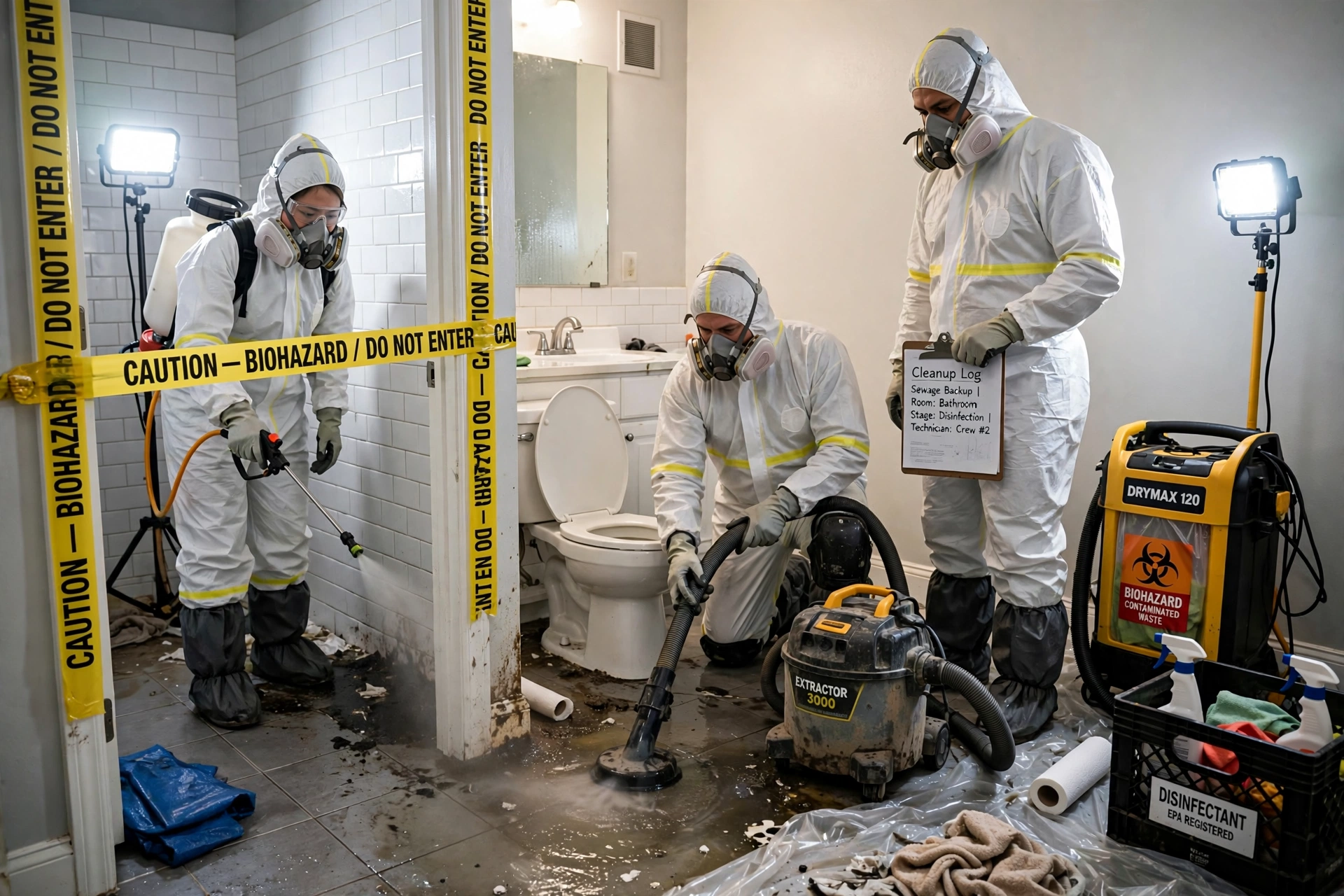
Sewage is classified as Category 3 “black water” — grossly contaminated. It can carry E. coli, salmonella, hepatitis A, norovirus, giardia, and roundworms, plus chemical contaminants from household drains. Exposure is not just about drinking it: agitated water releases aerosolized droplets that carry pathogens into the air, and skin contact — or wading through backup water — can cause infections through cuts and scrapes. Children, elderly residents, and anyone immunocompromised face the highest risk. This is why crews treat every sewage loss as a biohazard, with full PPE, containment barriers, and hospital-grade disinfection — never a mop-and-bucket job. The IICRC sets the industry standard for exactly this kind of contaminated-water restoration.
What to Do in the First Hour
- Stop using water. Do not flush, run the dishwasher, or do laundry — every gallon you send down adds to the backup.
- Keep everyone (and pets) out of the affected area. Close doors and, if possible, shut off the HVAC so contaminants do not circulate through the ductwork.
- Call a professional sewage backup cleanup crew immediately. Time matters: porous materials absorb contaminants deeper with every passing hour.
- Document everything. Photograph water lines on walls, damaged belongings, and the source area for your insurance claim.
- Call your plumber too. The blockage itself — roots, a collapsed section, or a city main issue — needs diagnosis and repair, or the backup will simply happen again.
What NOT to Do
Do not try to disinfect with household bleach and call it done. Bleach does not penetrate porous materials, and it does nothing about contaminants wicked into drywall, subflooring, or wall cavities. Do not run fans in the affected area, which only aerosolizes pathogens. Do not assume contaminated porous items can be saved: carpet pad, upholstered furniture, mattresses, and children’s toys exposed to Category 3 water generally cannot be restored safely and should be bagged and discarded. And do not assume it is “just a little backup” if the water looks clear — gray water from a washing machine backup can escalate to black water within 48 hours as bacteria multiply in Texas heat.
How Professional Sewage Cleanup Works
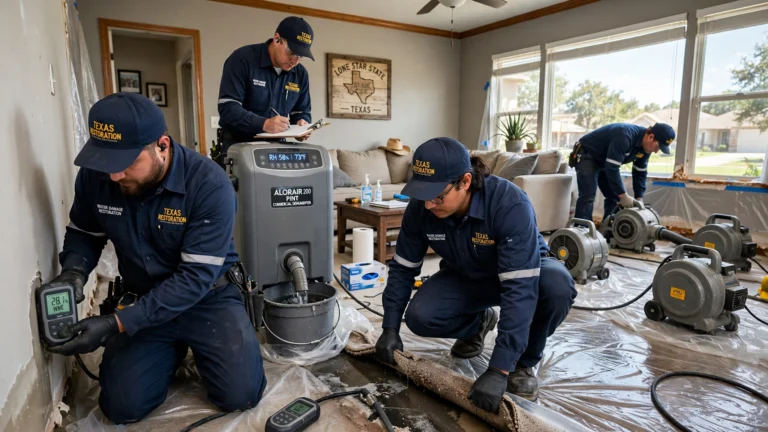
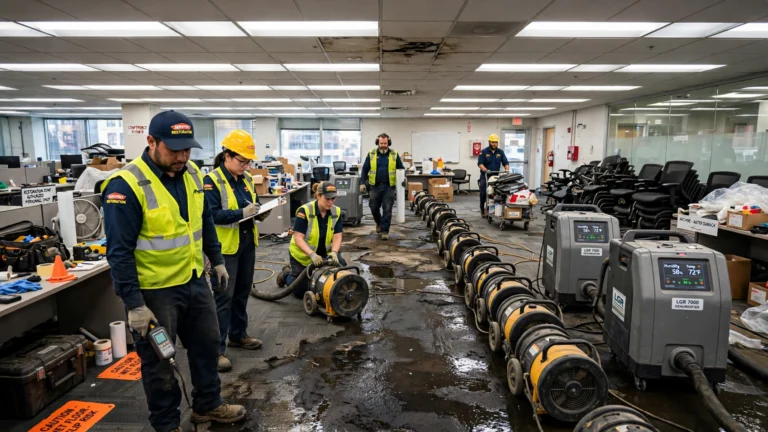
A professional crew follows a strict protocol: establish containment to protect unaffected areas, remove standing water with truck-mounted water extraction equipment, cut out and bag contaminated porous materials (typically drywall 12–24 inches above the water line, plus carpet pad and insulation), HEPA-vacuum and apply EPA-registered antimicrobials to every remaining surface, then dry the structure with commercial dehumidifiers and air movers — verified by moisture meters, not guesswork. Our structural drying process confirms no hidden moisture remains to breed mold. Only after verified drying goals are met does rebuilding begin.
Preventing the Next Backup
Install a backwater prevention valve on your main sewer lateral — it is the single most effective defense, and some Texas municipalities offer rebates. Have your sewer line camera-inspected every few years, especially if you have mature trees. Never flush wipes (even “flushable” ones), grease, or hygiene products. If your home has a sump pump or lift station, test it before storm season. And know where your main cleanout is before you need it at 2 a.m.
Frequently Asked Questions
Does homeowners insurance cover sewage backup?
Usually only if you carry a specific “water backup” endorsement — standard policies typically exclude it. Check your declarations page now, not after a loss. Our insurance claim help team can walk you through what is covered.
Can we stay in the house during cleanup?
If the backup is contained to one area, often yes — with the area sealed off. For widespread backups, especially with small children in the home, temporary relocation is the safer call.
How long does sewage cleanup take?
Most residential jobs take 2–4 days for mitigation and drying; rebuilding adds more time. The timeline depends on how far contamination spread and how much material must be removed.
Will my belongings survive?
Hard, non-porous items — glass, metal, sealed plastic — can usually be cleaned and disinfected. Porous items exposed to Category 3 water generally cannot be safely restored.
Dealing With a Sewage Backup Right Now?
Our emergency restoration crews respond 24/7 across Texas.