What to Do in the First 24 Hours After a Flood in Texas
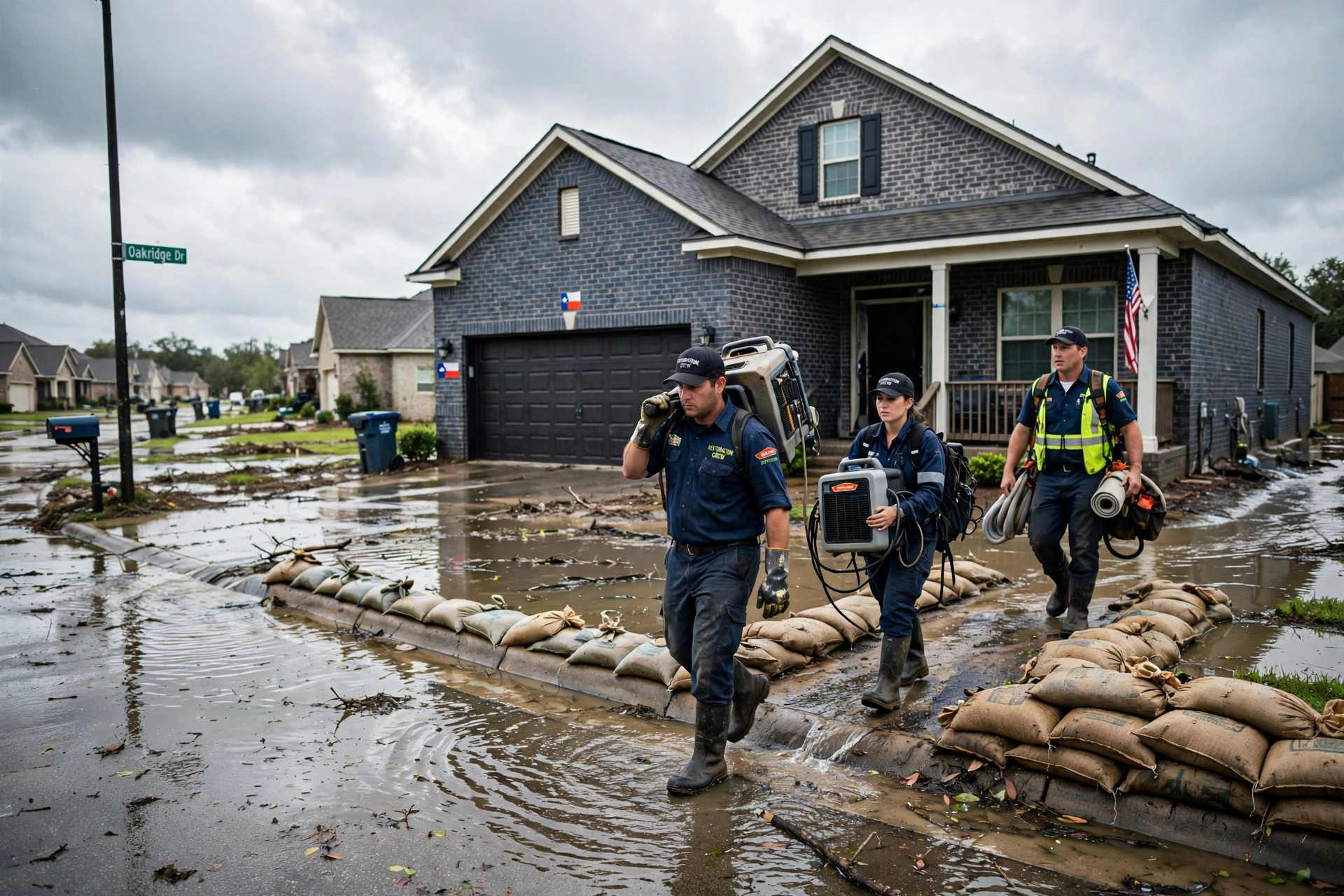
Whether it’s a Hill Country flash flood, a Gulf Coast storm surge, or a burst pipe at 2 AM — the first 24 hours decide whether you’re facing a dry-out or a gut renovation. Here’s your hour-by-hour action plan from Texas restoration professionals.
Hours 0–2: Safety First, Then Stop the Water
Protect people before property
Floodwater in Texas is never just water. It can carry sewage, chemicals, fire ants, and snakes — and it can be electrified. Before you do anything else:
- Turn off electricity to flooded areas at the breaker — never touch electrical equipment while standing in water
- Don’t wade in unless you must, and wear rubber boots if you do
- Keep kids and pets out of standing water entirely
- Watch for gas smells — if you suspect a gas leak, leave immediately and call 911
Stop the source if you safely can
If the flooding is from plumbing (not weather), shut off the main water valve — usually near the street meter or where the line enters the house. Every Texas homeowner should know where this valve is before an emergency. If it’s storm flooding, there’s no valve to close — move to documentation.
Hours 2–6: Document Everything, Then Start Removing Water
Document before you clean
This step protects your insurance claim. Before moving or discarding anything:
- Photograph and video every affected room — wide shots plus close-ups of water lines on walls
- Capture the water source if visible (burst pipe, failed appliance)
- Photograph damaged belongings where they sit; make a written inventory
- Save a sample of damaged materials (carpet square, baseboard piece) if your adjuster may want to see them
Start water removal
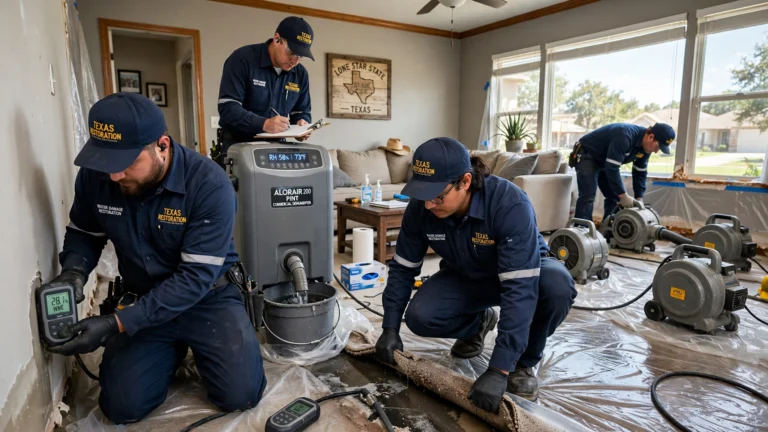
Once documented, get water out. A wet/dry vacuum handles small areas; for significant flooding, call for professional water extraction — truck-mounted equipment removes water far faster, and speed directly limits damage. Move furniture onto blocks or out of wet areas, and get area rugs outside.
Open windows if outdoor humidity allows (rare in a Texas summer — in that case, keep the house closed and get dehumidification running). Start your AC; it helps pull moisture from the air.
Hours 6–12: Call Your Insurer and a Restoration Company
Call your insurance company to open a claim — even if you’re unsure about coverage. Texas policies require prompt notice, and late reporting gives insurers an excuse to reduce payouts. Have your policy number ready and stick to facts: what happened, when, what’s damaged.
Call a restoration company — don’t wait for the adjuster. Your policy actually requires you to mitigate further damage, and waiting days for an adjuster visit while mold colonizes your walls will hurt your claim, not help it. Professional emergency restoration teams document conditions on arrival, which supports your claim.
If the flooding came through a damaged roof, get emergency storm services — tarping and board-up prevent the next rain from doubling your damage.
Hours 12–24: Dry, Separate, and Protect
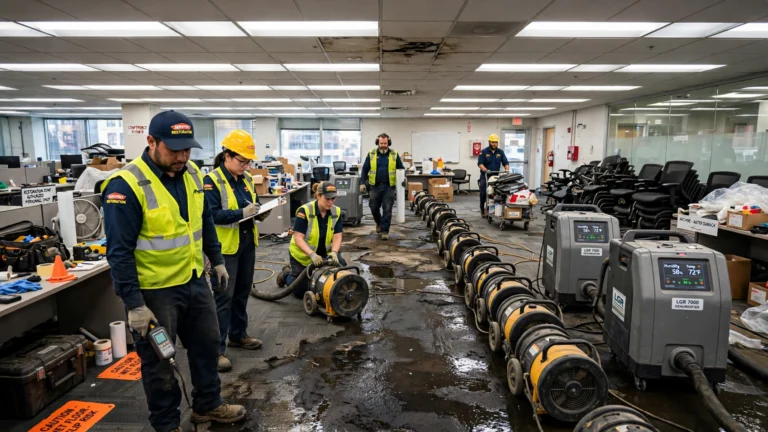
- Get commercial drying started. Air movers plus dehumidifiers, aimed correctly — this is when professional structural drying makes the difference between saved drywall and replacement.
- Separate wet from dry. Move dry belongings to unaffected rooms. Wet porous items (mattresses, upholstered furniture, cardboard boxes) that sat in floodwater generally can’t be saved — floodwater is Category 3 contaminated.
- Don’t throw everything away yet. Your adjuster may want to inspect items. Pile suspected losses in one area (garage is ideal) rather than curbing them.
- Watch for sewage. If floodwater may have mixed with sewage — common in Texas flash floods when systems overwhelm — treat everything it touched as biohazard. Professional sewage cleanup with proper disinfection is the safe route.
- Check FEMA resources. For major declared disasters, FEMA assistance may be available alongside your insurance — file early, as programs have deadlines.
What NOT to Do in the First 24 Hours
- Don’t use household fans alone and assume it’s drying — hidden wall moisture needs professional equipment and verification
- Don’t turn on HVAC if floodwater reached the air handler or ductwork — you’ll spread contamination through the house
- Don’t paint over stains — you’ll trap moisture and guarantee a mold problem
- Don’t sign anything from door-knocking contractors in the chaos — Texas storm-chaser scams spike after every major flood event
- Don’t assume it’s “just a little water” — water wicks up drywall at roughly an inch per hour; what looks minor on the surface is often worse inside the wall
Homeowners in flood-prone areas — from Houston’s bayous to Buda‘s creek crossings — should keep this checklist somewhere accessible. When water’s rising, you won’t have time to look it up.
First-24-Hours FAQs
Should I wait for my insurance adjuster before cleaning up?
No. Document thoroughly with photos and video, then begin mitigation immediately. Your policy requires you to prevent further damage, and adjusters understand that drying can’t wait days.
Is floodwater dangerous to touch?
Assume yes. Texas floodwater routinely contains sewage, chemicals, and debris. Wear rubber boots and gloves, keep children and pets away, and disinfect anything it contacted.
Can I save carpet that got flooded?
Carpet soaked by clean water (supply line) can sometimes be saved with fast professional drying. Carpet soaked by floodwater or sewage should be removed and discarded — it’s a health risk, not a cleaning project.
How do I know if water got inside my walls?
Look for baseboards swelling or separating, paint bubbling, and a musty smell. Professionals use pin and pinless moisture meters plus thermal imaging to map exactly how far water traveled — the only reliable method.
Flooding Right Now? Don’t Wait.
The first 24 hours decide the cost of everything after. Call now for emergency response across Texas.