Odor After Water Damage Why Lingers Pro Removal
The water’s gone, the floors look dry, the fans are packed up — but the smell won’t leave. That musty, sour, sometimes downright foul odor that hits you when you open the front door. Homeowners call me about this constantly, and they’re always surprised by the answer: the smell isn’t a leftover. It’s a symptom. Something is still wet, still growing, or still contaminated — and until you find it, no amount of air freshener will fix it.
Why Odors Linger After Water Damage
Hidden moisture keeps feeding microbial growth
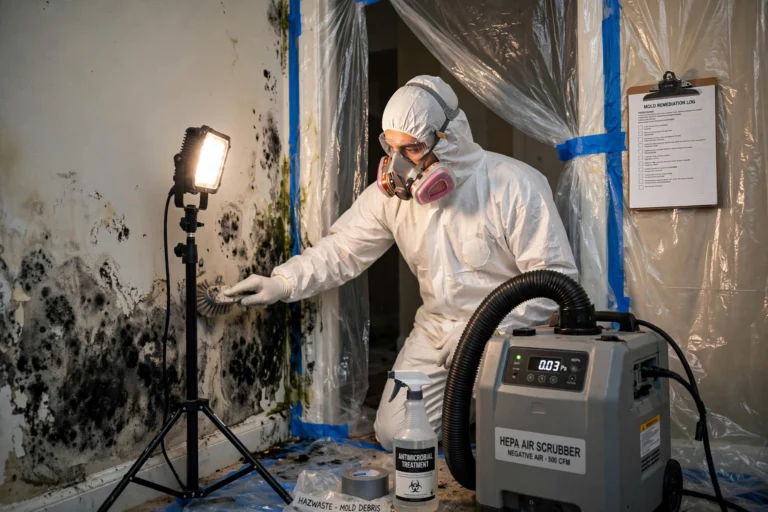
The number one cause of persistent odor is moisture you can’t see. Water wicks up inside wall cavities, soaks into subfloors under tile, and pools in the low spots of a slab foundation. The surface dries; the inside doesn’t. Bacteria and mold keep digesting organic material in that hidden dampness, releasing microbial volatile organic compounds (MVOCs) — the classic “musty” smell. In Texas heat and humidity, this process runs fast and doesn’t stop on its own.
Porous materials trap contaminants
Drywall, carpet pad, upholstery, and unfinished wood are sponges at the microscopic level. Floodwater — especially gray or black water — drives bacteria, silt, and dissolved organics deep into these materials. Surface cleaning removes the top layer; the contamination below keeps off-gassing. This is why a carpet can look clean and still smell like a swamp.
Sewage and protein odors are chemically stubborn
Sewage backups leave behind hydrogen sulfide and mercaptan compounds that bind to surfaces. Protein-based odors (spoiled food from a dead refrigerator after a power outage — a Texas storm classic) penetrate plastics and seals. These don’t respond to soap and water; they need chemistry.
HVAC systems recirculate the problem
During a water loss, the air handler pulls contaminated air — and sometimes actual water through a flooded return — into the duct system. Then every time the AC runs (which in Texas is always), it redistributes odor throughout the house. Ducts with wet liner or a contaminated evaporator coil will keep a house smelling bad indefinitely.
How Professionals Actually Remove Odor
Real odor remediation follows a strict order. Skip a step and the smell comes back:
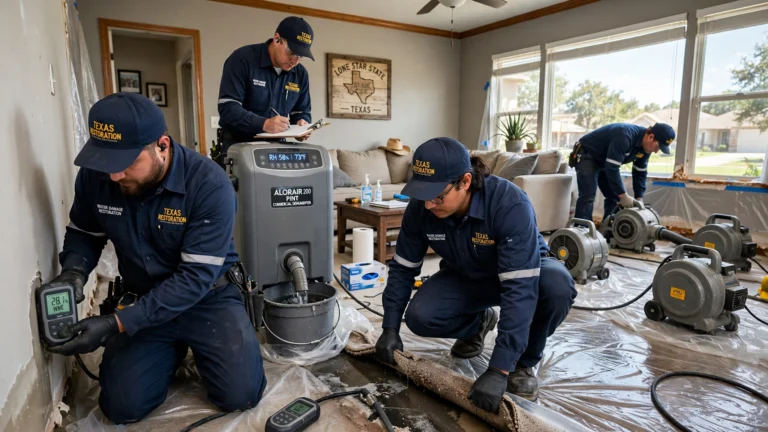
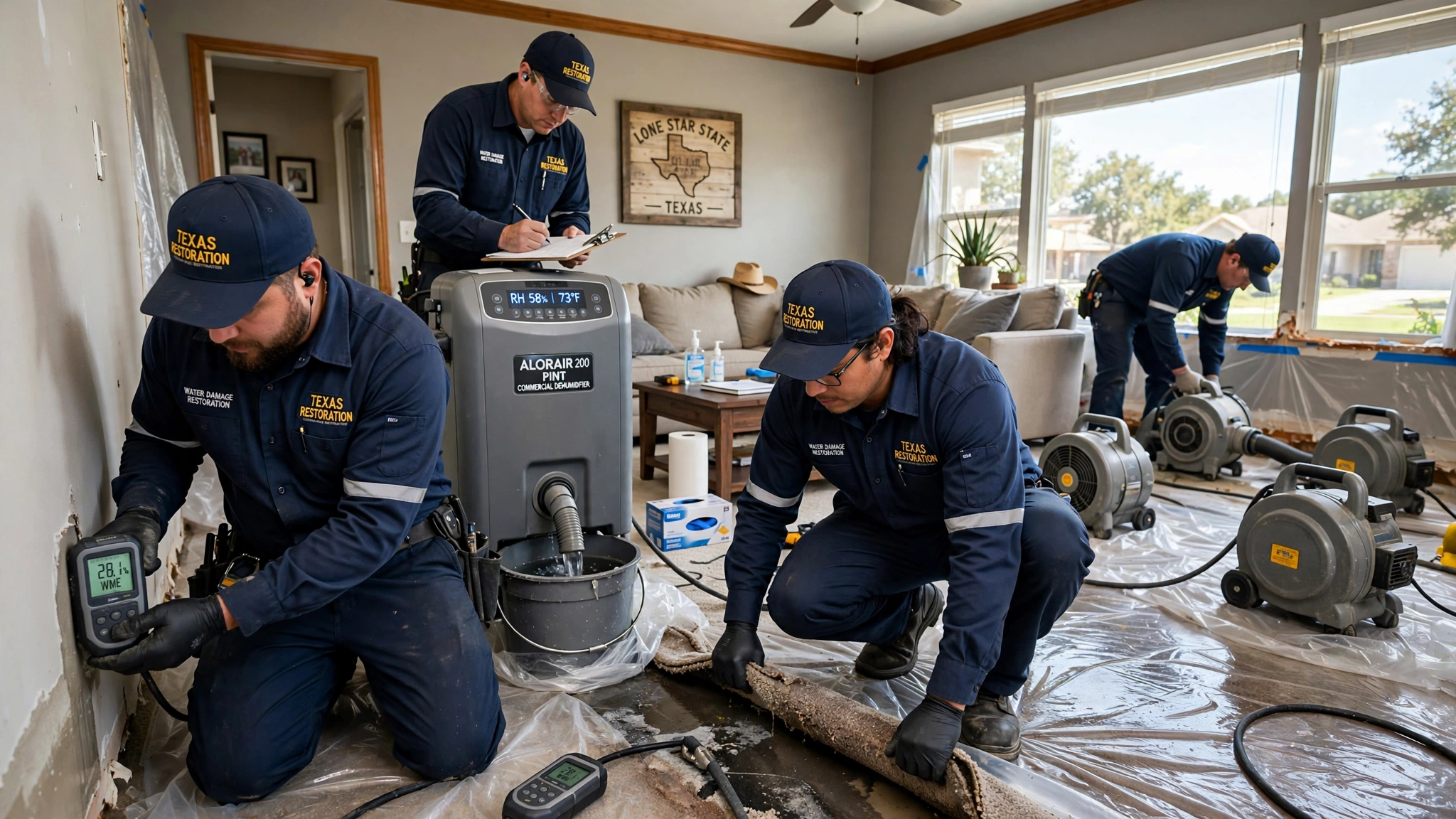
- Find and eliminate the source. Moisture meters, thermal imaging, and sometimes selective demolition locate hidden wet material. Wet drywall gets cut out, saturated pad gets removed, contaminated insulation gets bagged. You cannot deodorize what you haven’t removed.
- Clean and sanitize. HEPA vacuuming removes particulates; EPA-registered antimicrobials treat remaining surfaces. For sewage, this means proper Category 3 decontamination protocol, not a mop and bleach.
- Dry to standard. Structural drying with dehumidifiers brings materials back to dry standard — verified with meters, not assumed. Odor work done on still-damp material is wasted money.
- Deodorize with professional equipment. Depending on the odor: hydroxyl generators (safe for occupied spaces, break down odors at the molecular level), thermal fogging (deodorizer fog penetrates like the smoke/odor did), and ozone (powerful oxidizer — but the space must be unoccupied, and it doesn’t work on every odor type). Activated carbon filtration handles airborne residuals.
- Seal when necessary. After cleaning and drying, odor-blocking sealants (shellac-based) lock in residual odor from framing and subfloors before rebuild.
What You Can Do vs. What Needs a Pro
DIY-appropriate: ventilate, run the AC (it dehumidifies), remove obviously ruined porous items (soaked cardboard, area rugs on a slab), and clean hard surfaces with proper cleaners. Baking soda on upholstery can help mild odors.
Call a pro when: the odor persists more than a few days after everything “looks” dry, it’s a sewage or musty-mold smell, it’s concentrated in walls or HVAC, or anyone in the home has allergies or respiratory issues. Persistent odor after water damage is the industry’s most reliable indicator of hidden moisture — treat it as a diagnostic signal, not a cosmetic problem. Our odor removal and sanitization service starts with moisture mapping for exactly this reason.
Frequently Asked Questions
The Bottom Line
Lingering odor after water damage is your house telling you the job isn’t finished. Find the moisture, remove what’s contaminated, dry what’s left to standard, then deodorize — in that order. Do it right and the smell leaves permanently; mask it and you’ll be smelling it again every humid Texas summer.