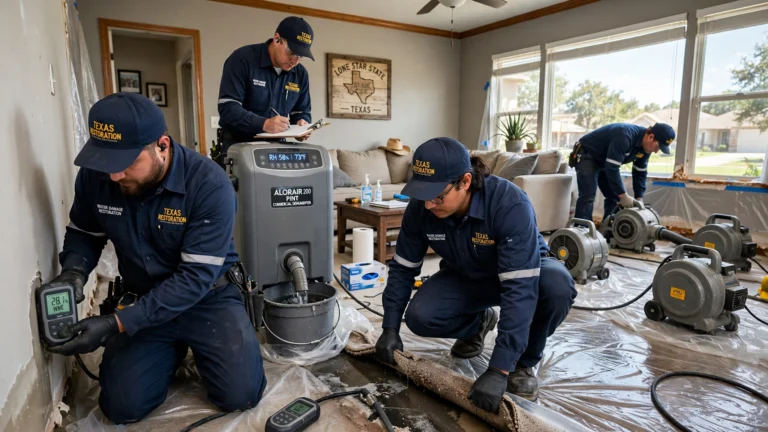
Storm Damage Restoration in Texas: From Tarping to Full Repair

No state takes a beating like Texas. Hurricanes slam the Gulf Coast, hail hammers DFW’s “hail alley,” tornadoes track across North Texas, and derechos flatten everything in their path. When the sky clears, you are left with a damaged building, an insurance claim to file, and a critical question: what happens first? This guide walks the full sequence — from emergency tarping in the first hours to the final repaired shingle.
Hour Zero: Safety, Then Mitigation
Before anything else: watch for downed power lines, smell for gas, and do not enter rooms with sagging ceilings or standing water near electrical. Once safe, your legal and financial priority is mitigation — your insurance policy requires you to prevent further damage, and adjusters can reduce payouts if you did not. That means emergency tarping over roof breaches and board-up for broken windows and doors, ideally within hours. Professional tarping uses properly secured, code-compliant materials — a blue tarp flapping in the next storm helps no one and documents poorly. Photograph all damage before tarping, from multiple angles.
If you must DIY-tarp before help arrives, use at least a 6-mil polyethylene tarp extending past the damaged area on all sides, secure it with 2x4s rather than nailing through good shingles, and treat it as a days-long bridge — not a season-long roof. Photograph the tarped area too; insurers want to see that you mitigated promptly.
The Restoration Sequence
- Emergency mitigation (day 0–1): tarping, board-up, and water extraction for any interior intrusion. Stop the bleeding.
- Assessment and documentation (days 1–3): full inspection — roof, attic, interior — with photos, measurements, and moisture readings. This becomes the scope your claim is built on.
- Structural drying (days 2–7): commercial dehumidification of everything the storm wet, verified by meter-logged drying. Skipping this step is how “repaired” storm damage becomes a mold problem six months later.
- Repairs (weeks 1–4): roofing, siding, drywall, flooring — the visible rebuild.
- Final restoration: paint, texture matching, and detail work that makes it look like the storm never happened.
Roof Damage: Hail vs. Wind
They look different and claim differently. Hail bruises shingles — dark spots where granules are knocked off, dents in vents and flashing, cracked tile. It is often invisible from the ground, which is why Celina and Prosper homeowners should get a professional roof inspection after every major hail event, even if “it looks fine.” Wind lifts, creases, and tears — missing tabs, folded-back shingles, damaged ridge caps. Both compromise the roof’s water-shedding ability, and both let the next rain become interior roof-leak water damage. A proper inspection documents both, because policies and deductibles can treat them differently.
Where Water Gets In (Beyond the Roof)
Storm water is opportunistic. Wind-driven rain enters through damaged window seals and siding, blows under soffits, overwhelms gutters and pours behind fascia, and pushes under garage doors. On the coast, storm surge is a different animal entirely — that is floodwater, Category 3, handled under our stricter flood restoration protocol. After any major storm, inspect the full building envelope, not just the obvious hole: water travels inside wall cavities far from its entry point.
Working With Insurance After a Texas Storm
File promptly, but do not wait for the adjuster to begin mitigation — document thoroughly, then tarp, extract, and dry. Keep every receipt; emergency mitigation is reimbursable under most policies. Understand your deductibles before the adjuster arrives: Gulf Coast homeowners may face separate windstorm (TWIA) and named-storm deductibles, and flood damage needs its own NFIP claim — our insurance claim help guide breaks down the Texas specifics. If the initial estimate misses hidden damage (it often does), supplements with photo and moisture-map evidence are a normal part of the process, not a fight. FEMA’s disaster assistance resources are worth checking after federally declared events.
Frequently Asked Questions
Should I tarp the roof myself?
Only if you can do it safely — steep, wet, storm-damaged roofs injure homeowners every year. Professional crews tarp quickly, secure it to withstand the next storm, and document it for your claim.
How soon should restoration start?
Mitigation immediately; drying within 24–48 hours to prevent mold. Full repairs follow the drying. The sequence matters — rebuilding over wet structure guarantees future problems.
Should I wait for the adjuster before cleanup?
No. Your policy requires you to prevent further damage. Document everything with photos and video, keep receipts, then mitigate. The adjuster inspects documented damage; they do not need to see it actively leaking.
What if the adjuster’s estimate seems low?
Common — initial estimates frequently miss hidden moisture, matching issues, and code upgrades. Supplements supported by moisture readings, photos, and line-item scopes are standard procedure.
Storm Hit Your Home or Business?
From emergency tarping to final repair — one crew, start to finish. See storm damage restoration.