How Long Does Water Damage Restoration Take?
Most Texas homes go from disaster to dry in 3–5 days — but full restoration can take weeks when rebuild work is involved. Here’s the realistic timeline for each phase, what speeds things up, and what causes delays.
The Realistic Timeline at a Glance
Every job is different, but here’s what Texas restoration professionals typically see:
- Emergency response & assessment: same day, usually within hours
- Water extraction: a few hours to one full day
- Structural drying: 3–5 days for most residential jobs
- Cleaning & sanitizing: 1–2 days, often overlapping with drying
- Repairs & rebuild: a few days to several weeks, depending on scope
Total for a typical job: 1–2 weeks from first call to fully restored. Simple dry-outs (clean water, caught fast, no demolition): as little as 3–5 days. Major events (sewage, whole-home flooding, mold, full rebuild): 3–8 weeks.
Phase 1: Assessment (Hours)
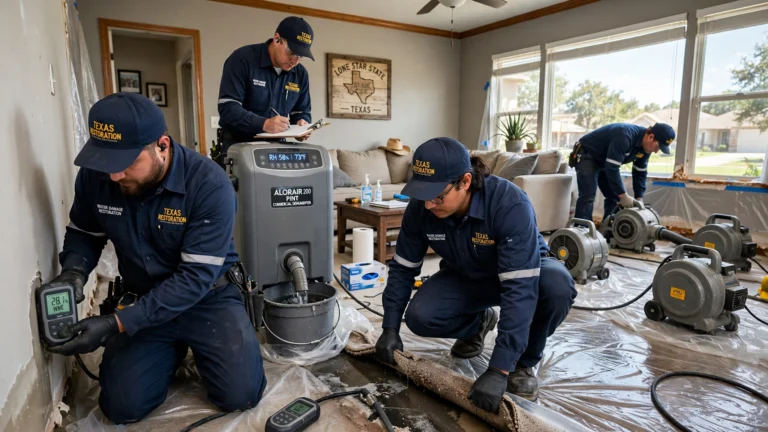
The first visit sets everything in motion. Technicians locate the water source, stop it if still active, and map moisture with pin meters and thermal imaging — finding water inside walls and under flooring that you can’t see. This assessment determines the drying plan and the written estimate. Expect this within hours of your call for emergency service.
Phase 2: Water Extraction (Hours to 1 Day)
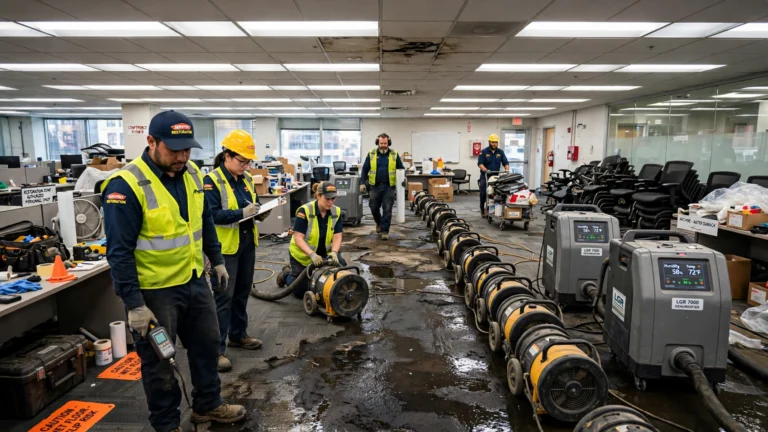
Standing water comes out first — it’s the fastest phase and the most important. Truck-mounted extractors and submersible pumps can clear thousands of gallons in hours. Professional extraction is dramatically faster than consumer wet-vacs, and every hour of standing water means deeper penetration into materials.
Contaminated water (sewage or floodwater) adds time here — affected porous materials get removed and bagged rather than dried, following proper biohazard protocols.
Phase 3: Structural Drying (3–5 Days Typically)
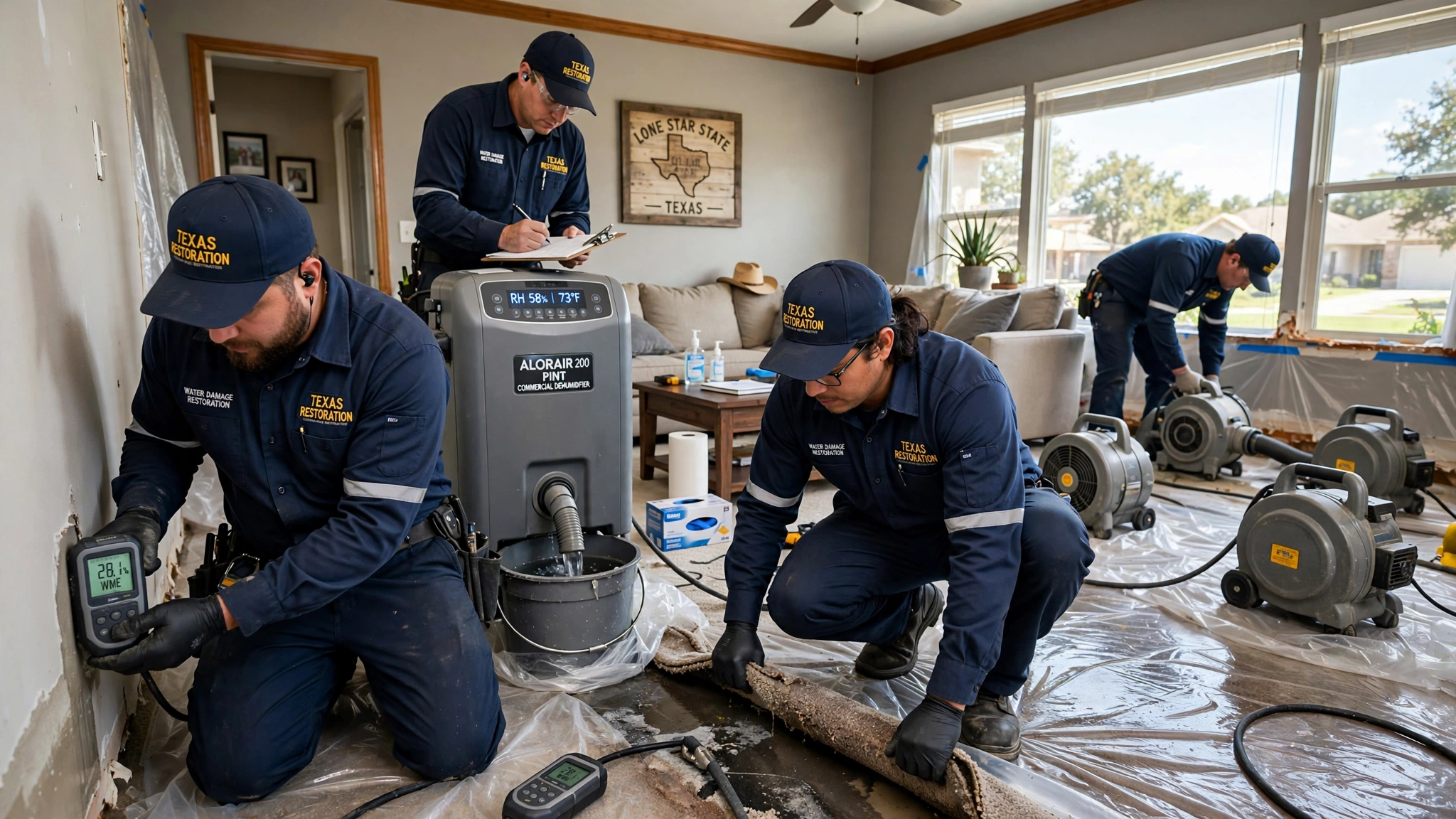
This is the phase most homeowners underestimate. Drying isn’t “run some fans overnight” — it’s a controlled process guided by the IICRC S500 professional standard:
- Commercial dehumidifiers pull indoor humidity down to 30–40%
- Air movers create directed airflow across every wet surface
- Technicians take daily moisture readings of walls, floors, and cavities
- Equipment stays until readings hit verified dry standards — not until things “feel dry”
Why Texas jobs can take longer: our humidity fights the drying process. In a Gulf Coast August, dehumidifiers work overtime against 80%+ outdoor humidity infiltrating the home. Undersized equipment extends drying by days — which is why proper equipment sizing matters more than raw speed.
Materials matter too: drywall dries faster than hardwood, which dries faster than concrete. Hardwood floors may need 7–10 days on specialty drying mats. Dense materials like plaster and concrete are the slowest of all.
Phase 4: Cleaning & Sanitizing (1–2 Days)
Overlapping with the end of drying: antimicrobial treatments on affected surfaces, HEPA vacuuming, odor removal if needed, and content cleaning for salvageable belongings. If mold was found, remediation with proper containment happens here — and adds its own timeline depending on the extent.
Phase 5: Repairs & Rebuild (Days to Weeks)
This is where timelines vary most. Replacing baseboards and repainting a room takes days. Rebuilding a flooded kitchen — cabinets, flooring, drywall, electrical — takes weeks. Factors that extend this phase:
- Material lead times — custom cabinets and specialty flooring aren’t shelf items
- Permit inspections — electrical and plumbing work in many Texas municipalities requires permits and inspections
- Insurance negotiation — supplement approvals can pause work while scope is agreed
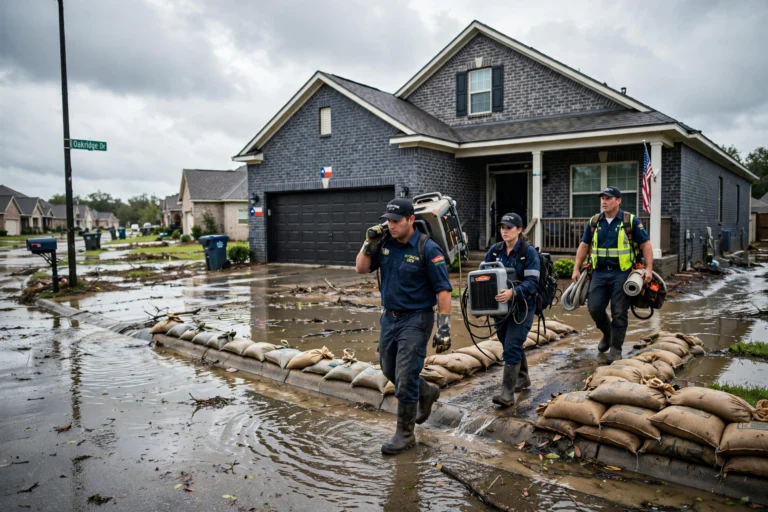
- Contractor scheduling — after major Texas storm events, every tradesperson is booked; after the 2021 freeze, some homeowners waited months for rebuild crews
What Speeds Things Up (and What Slows Them Down)
Faster: calling immediately, clean water (Category 1), small affected area, tile/concrete surfaces, quick insurance approval, materials in stock.
Slower: delayed response (mold sets in), sewage/floodwater contamination, hardwood and plaster, Texas summer humidity, large areas, custom materials, insurance disputes, post-disaster contractor backlogs.
The single biggest timeline factor is when you call. A burst pipe addressed within hours is a 3–5 day drying job. The same pipe discovered after a weekend away is a demolition, mold remediation, and rebuild project measured in weeks. Homeowners in Buda or anywhere else in Texas — the clock starts the moment water hits the floor, not the moment you notice it.
Restoration Timeline FAQs
Can I stay in my home during drying?
Usually yes for clean-water events in limited areas — the equipment is loud but safe. For sewage, widespread flooding, or extensive mold, temporary relocation is recommended. Your restoration team will advise based on your specific situation.
Why does drying take 3–5 days? Can’t you just dry it faster?
Drying too fast causes its own damage — hardwood cracks, drywall warps. Controlled drying brings materials down to verified moisture targets without secondary damage. Moisture meters, not calendars, determine when equipment comes up.
Will my insurance cover additional living expenses during restoration?
Most Texas HO-3 policies include Loss of Use / Additional Living Expense coverage if the home is uninhabitable due to a covered loss. Keep every receipt — hotels, meals, laundry — for reimbursement.
How long after drying until repairs start?
Often immediately — many companies handle both mitigation and rebuild. If you’re using separate contractors, allow a few days for estimates and scheduling between phases.
Start Your Restoration Timeline Today
Every day of waiting adds days to the job. Call now for fast assessment and drying across Texas.