Foundation Water Damage in Expansive Texas Clay Soil
Texas clay swells when wet and shrinks when dry — and your foundation rides that roller coaster every year. Here is how water wrecks foundations and how to stop it.
Request Service
Fast response across Texas. No obligation.
Texas Dirt Moves — That’s the Whole Problem
Much of Texas sits on expansive clay: the Blackland Prairie clays under Dallas-Fort Worth, the gumbo clays of Houston, the clays of Central Texas. This soil can swell up to 10% in volume when saturated and shrink dramatically in drought. Your slab foundation sits directly on it, so every wet-dry cycle flexes the slab. Over years, that movement cracks concrete, opens gaps, and lets water in — which causes more movement. It’s a feedback loop.
The cruel irony: both too much water AND too little water damage Texas foundations. Flood the soil and it heaves; let it bake in an August drought and it shrinks away from the slab, leaving voids. The goal isn’t “dry” — it’s consistent moisture around the foundation, year-round.
How Water Gets In
Hydrostatic pressure through slab cracks. When clay saturates, it pushes water against and under the slab with real force. Existing hairline cracks — from normal settling or past movement — become entry points. After heavy rain seasons, we see water wicking up through slab cracks in homes across Dallas and Fort Worth.
Plumbing leaks under the slab. Slab foundations mean water and sewer lines run through or under concrete. A slow slab leak saturates the soil in one spot, causing localized heaving that cracks the slab further. Warm spots on the floor, the sound of running water with fixtures off, or a sudden spike in the water bill are the classic signs.
Poor drainage concentrating water at the foundation. Gutters that dump at the slab, flower beds graded toward the house, and neighbors’ runoff all pool water against the foundation. In clay soil, that water doesn’t drain away — it sits, saturates, and swells.
Drought shrinkage opening pathways. During dry spells, clay pulls away from the foundation, leaving gaps. The next rain fills those gaps fast, and water finds its way into cracks and under the slab edge. This is why crawl space and pier-and-beam homes in East Texas see seasonal water intrusion.
Protecting Your Foundation: The Water Management Playbook
1. Control roof water. Clean gutters, and extend downspouts at least 6 feet from the foundation — 10 is better. A single downspout dumps hundreds of gallons against your slab in a Texas thunderstorm.
2. Grade away from the house. Soil should slope away from the foundation at roughly 6 inches over the first 10 feet. Flower beds built up against the slab are a classic mistake; they trap water exactly where you don’t want it.
3. Water the foundation in drought. This sounds insane to newcomers, but it’s standard Texas practice: run soaker hoses 12–18 inches from the foundation during dry spells to keep soil moisture consistent. Drip irrigation on a timer beats hand-watering. The goal is even moisture, not soaking.
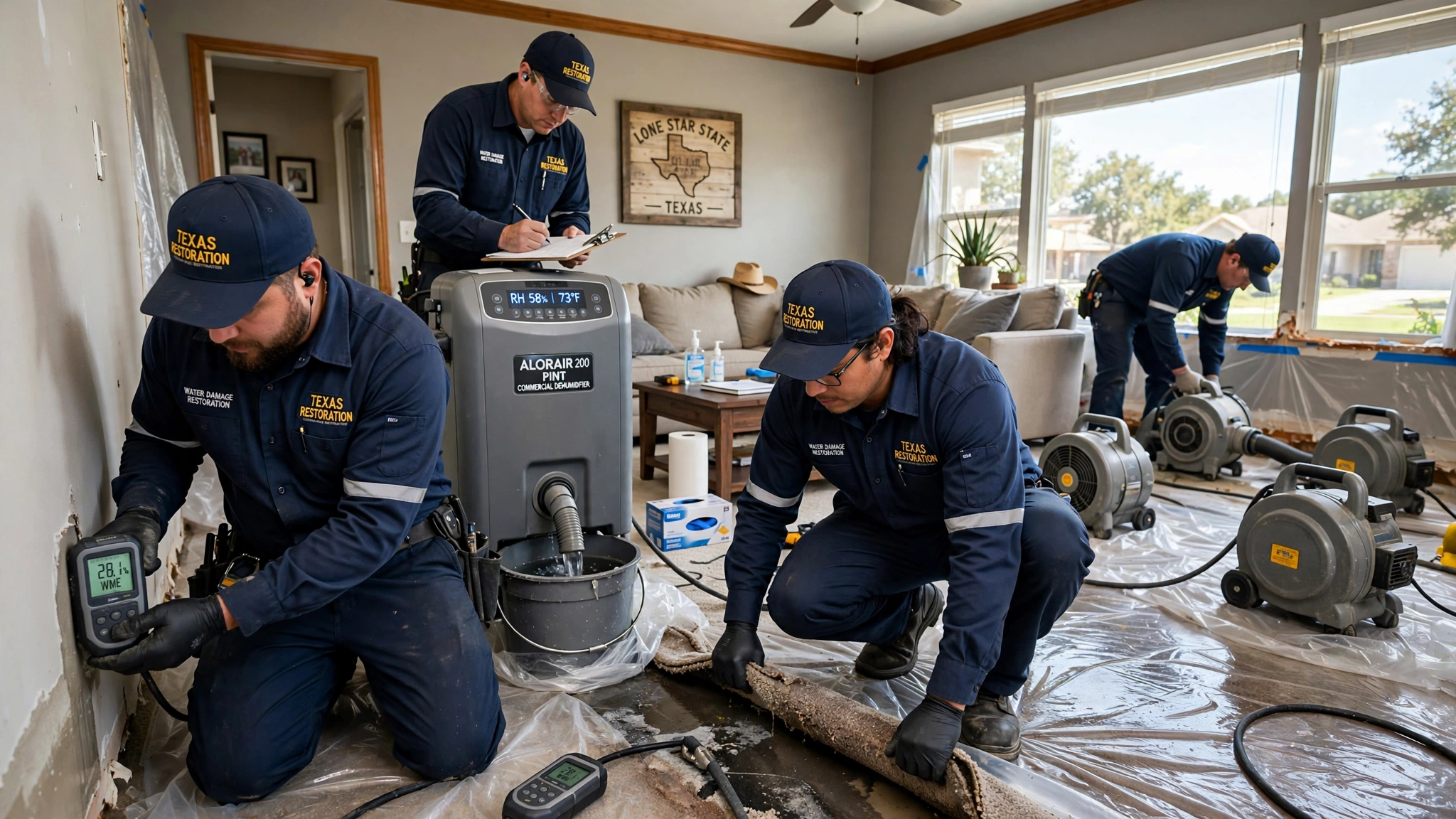
4. Fix plumbing leaks fast. A slab leak left running doesn’t just waste water — it destabilizes the soil under your home. If you suspect one, shut off the main and call. Water extraction and structural drying can save flooring and framing if the leak reached living spaces.
5. Consider a French drain for chronic issues. If your lot collects water no matter what you do, a French drain intercepts subsurface water and carries it away from the foundation. It’s the right fix for the right lot — not every lot.
Warning Signs You Shouldn’t Ignore
Doors that stick seasonally, diagonal cracks above door frames, cracks in exterior brick mortar in a stair-step pattern, and gaps between the baseboard and floor all signal foundation movement. Add any sign of water — musty smells, damp carpet edges, efflorescence (white mineral deposits) on concrete — and you have water actively exploiting that movement. Texas A&M AgriLife Extension publishes excellent guidance on managing expansive soils around home foundations.
Frequently Asked Questions
Should I water my foundation in summer?
In most of Texas, yes — during dry spells. Soaker hoses placed 12–18 inches from the foundation, run on a timer, keep clay moisture consistent and prevent the shrinkage that cracks slabs. Don’t create puddles; even, moderate moisture is the goal.
Will homeowners insurance cover foundation water damage?
Sudden plumbing leaks that damage the foundation are typically covered. Damage from long-term seepage, poor drainage, or soil movement is generally excluded as a maintenance issue. Foundation repair itself is often excluded or limited — read your policy’s foundation endorsement.
How do I know if I have a slab leak?
Watch for warm spots on floors, the sound of running water when everything is off, a water bill that jumps for no reason, low water pressure, or cracks appearing with dampness. A plumber can confirm with acoustic or thermal detection before any concrete is opened.
Can foundation cracks be sealed from the inside?
Hairline cracks can be sealed with epoxy injection, but that’s a bandage if water pressure is the cause. The real fix is managing the water outside — drainage, grading, and consistent soil moisture. Seal the crack AND fix the water.
Water Threatening Your Foundation?
Inspection with moisture readings shows exactly where water is getting in and how to stop it.