Emergency Water Damage Checklist: The Texas Homeowner’s Fridge Guide

Print this. Stick it on the fridge. When water is pouring through your ceiling at 2 AM, you won’t be thinking clearly — this will think for you.
Request Service
Fast response across Texas. No obligation.
The First 10 Minutes Matter Most
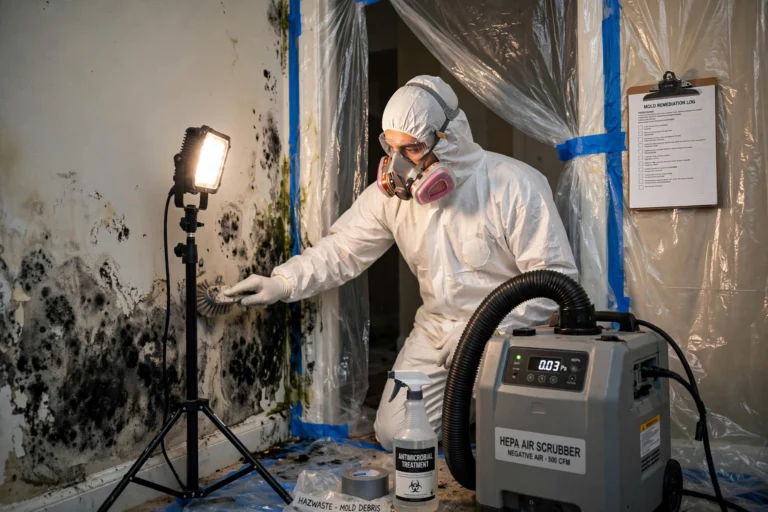
Water damage is a race against the clock. Within hours, water migrates through drywall and subflooring. Within 48 hours, mold begins. Everything you do in the first minutes after discovering water intrusion directly reduces the final damage — and the final bill. This checklist is designed to be followed in order, half-awake, in the dark.
Step 1: Stop the Water (If You Safely Can)
Find your main water shutoff NOW — before you need it. In most Texas slab homes, it’s in the garage, near the water heater, or in a ground box near the street. Go look today. Turn it a quarter-turn to confirm it works (old valves seize). If the leak is from a single fixture, use the local shutoff under the sink or behind the toilet instead.
If water is coming from the roof or outside (storm, flood), there’s no valve to turn — skip to Step 2.
Step 2: Kill the Power to Wet Areas
Water and electricity are a lethal combination. If water is near outlets, switches, or your breaker panel’s area, turn off the affected circuits at the breaker box — or the main breaker if you’re unsure. Never step into standing water to reach an electrical panel. If the panel itself is wet or you can’t reach it safely, call the fire department’s non-emergency line or 911.
Step 3: Protect People, Then Property
Get everyone — including pets — away from the affected area. If you smell sewage or the water came from a drain, toilet, or outside floodwater, treat it as contaminated: don’t touch it without gloves and boots, and keep kids away entirely. Sewage is a Category 3 biohazard requiring professional sewage cleanup, not mopping.
Move valuables, electronics, and important documents to dry areas. Lift furniture onto blocks or foil if water is on the floor — furniture stains and wood swells fast.
Step 4: Document Everything
Before you move or clean anything, photograph and video the damage: the source if visible, every affected room, water lines on walls, damaged belongings. Open closets and shoot inside. These timestamped images are the backbone of your insurance claim — adjusters can only pay for what they can see documented.
Step 5: Call for Professional Help
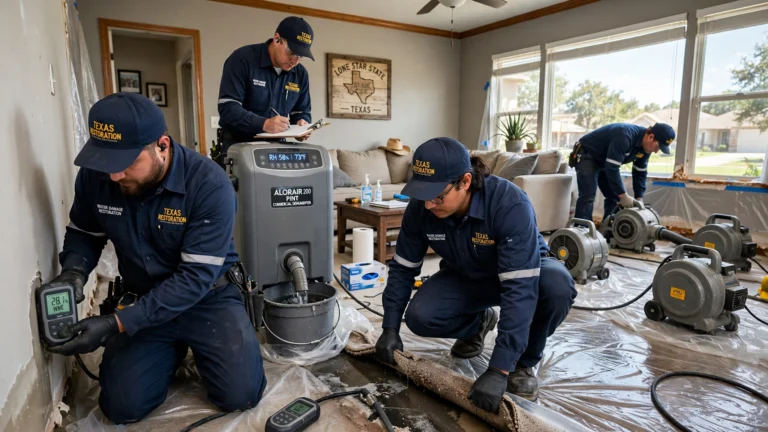
This is not a box-fan situation. Consumer fans and dehumidifiers can’t dry wall cavities, subfloors, or insulation — they dry surfaces while mold grows inside. Professional emergency water damage restoration brings truck-mounted extraction, commercial dehumidifiers, and moisture meters that verify drying to standard. Call (888) 555-0199 — the call is free, and waiting is what makes small jobs big.
Then call your insurance company’s claims line to open a claim number. You don’t need the full story yet — just report the loss and get the number.
Step 6: Start the Cleanup You CAN Do Safely
While waiting for help: blot or mop up standing water you can reach safely (clean water only — supply line leaks, not sewage or floodwater). Remove wet area rugs and prop up cushions. Open interior doors for airflow. If it’s safe and the weather allows, open windows. Don’t use a household vacuum on water, don’t pull up wall-to-wall carpet yourself (it tears and the pad underneath is the real problem), and don’t turn your HVAC fan to high hoping to “dry things out” — it can spread mold spores through the ductwork.
For the full professional process, see water extraction services and structural drying.
Your Texas Water Emergency Kit (Assemble This Weekend)
Keep these together in a known spot — garage shelf, laundry room:
- Main shutoff wrench — a curb key or meter key for the street box, plus knowing your indoor valve location
- Flashlights + batteries — power often goes with water events
- Rubber boots and work gloves — for safe movement through wet areas
- Old towels and a mop bucket — first-response water pickup
- Plastic sheeting and duct tape — temporary containment of a ceiling drip
- Your insurance policy number and agent’s phone — on paper, not just in your phone (which may be dead)
- Our number: (888) 555-0199 — save it in your phone today
Ready.gov recommends every household maintain emergency supplies for exactly these scenarios — a water event at 2 AM is when preparation pays off.
Whether you’re in Houston hurricane country, Dallas hail alley, or anywhere in between, the checklist is the same: stop the water, kill the power, protect people, document, call the pros.
Frequently Asked Questions
Should I call my insurance or a restoration company first?
Call the restoration company first if water is actively intruding — mitigation can’t wait for a claims adjuster. Then call your insurer to open a claim number. Your policy requires you to mitigate further damage, so fast professional response actually protects your claim.
Is it safe to stay in the house during water damage?
For clean-water leaks confined to one area, usually yes. For sewage backups, widespread flooding, or any situation with electrical hazards, relocate until it’s assessed. When in doubt, get out — property is replaceable.
How quickly does mold start after water damage?
Mold can begin colonizing damp drywall and wood within 24–48 hours in Texas warmth and humidity. This is why professional drying starts immediately — the 48-hour window is real, not a sales tactic.
What should I NOT do after water damage?
Don’t use household vacuums on water, don’t enter rooms with sagging ceilings, don’t touch anything electrical in wet areas, don’t throw away damaged items before documenting and checking with your adjuster, and don’t assume it will ‘dry out on its own’ — in Texas humidity, it won’t.
Save Our Number Before You Need It
Water emergency? One call — (888) 555-0199 — starts extraction, drying, and documentation.