Hurricane Season in Texas: Protecting Your Home from Water Damage
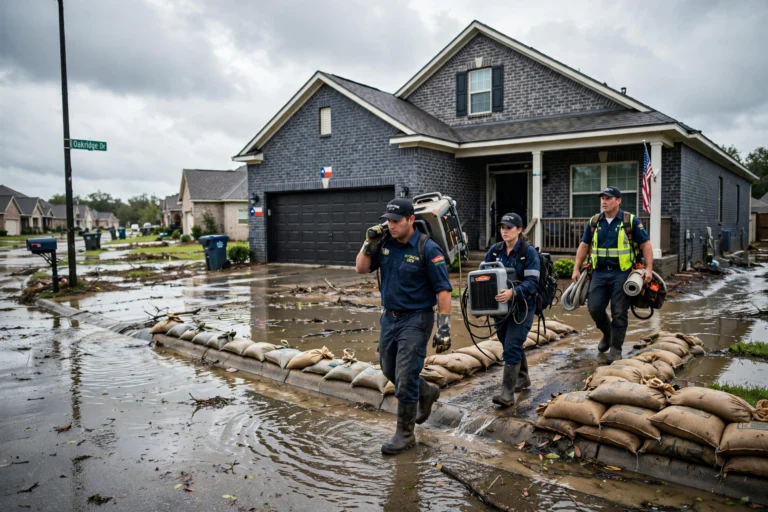
Hurricane season runs June through November, and Texas has taken some of the hardest hits in U.S. history — from Harvey’s 60 inches of rain to Ike’s devastating surge. Whether you’re on the Gulf Coast or hundreds of miles inland, here’s how to protect your home before the next storm.
How Hurricanes Damage Texas Homes
Most people picture wind when they think hurricanes. Restoration professionals picture water — because water causes the majority of hurricane damage to Texas homes:
- Storm surge — the deadliest and most destructive force, pushing Gulf water miles inland across low-lying coastal areas
- Extreme rainfall — Harvey dropped over 60 inches on parts of Southeast Texas; even tropical storms routinely deliver 10–20 inches
- Wind-driven rain — hurricane-force winds push rain sideways under shingles, through vents, and around windows
- Roof failure — once shingles or decking lift, every subsequent inch of rain pours directly into the attic and walls (roof leak damage)
- Inland flooding — remnants of Gulf hurricanes stall over Central Texas, turning Hill Country creeks and urban bayous into raging rivers far from the coast
If your home floods, our flood damage restoration teams handle everything from pump-out to complete rebuild.
Before Season: The Spring Preparation Checklist
Do this work in April and May — not when a storm is in the Gulf.
Roof and exterior
- Inspect your roof — missing, cracked, or lifting shingles are entry points for wind-driven rain. Get a professional inspection if your roof is over 10 years old.
- Clean gutters and downspouts — clogged gutters overflow directly into soffits and wall cavities during deluges
- Seal windows and doors — re-caulk failed seals; consider storm shutters or impact-rated coverings on the coast
- Trim trees — limbs overhanging the roof become projectiles and abrasion hazards in high wind
Water management
- Grade soil away from the foundation — Texas clay soils shed water poorly; make sure rainfall flows away from your slab
- Test your sump pump if you have one (rare on slabs, but some Texas homes do) — and consider a battery backup
- Clear storm drains near your property — municipal drains clogged with debris back water up into streets and homes
- Know your flood zone — check FEMA flood maps for your address; many Harvey victims discovered they were in unmapped flood risk areas
Insurance — the critical one
- Flood insurance has a 30-day waiting period. You cannot buy it when a hurricane is approaching. If you don’t have it now, get quotes in spring.
- Review your hurricane deductible — named-storm deductibles of 1–5% of dwelling value surprise many Texas homeowners after the fact
- Document your home’s condition — video every room, inside closets, the attic. This “before” footage is gold for claims (see our Texas insurance claim guide)
- Store documents waterproof — policies, inventories, and photos in a sealed container or cloud storage
When a Storm Is Coming: 48-Hour Actions
- Bring in outdoor furniture, grills, and anything that becomes a missile in 100+ mph wind
- Charge phones and battery banks; fill bathtubs with water (for flushing if utilities fail)
- Move valuables, electronics, and important papers to the highest floor
- Shut off the main water valve if evacuating — a storm-damaged pipe flooding an empty house for days is catastrophic
- Photograph everything once more — your pre-storm condition evidence
- If told to evacuate, go — no possession is worth a life, and Texas storm surge kills
After the Storm: Water Damage Triage
Once authorities say it’s safe to return:
- Safety sweep first — check for downed power lines, gas smells, and structural damage before entering. Don’t wade through standing water inside.
- Document immediately — photograph water lines on walls, damaged belongings, and the exterior before touching anything
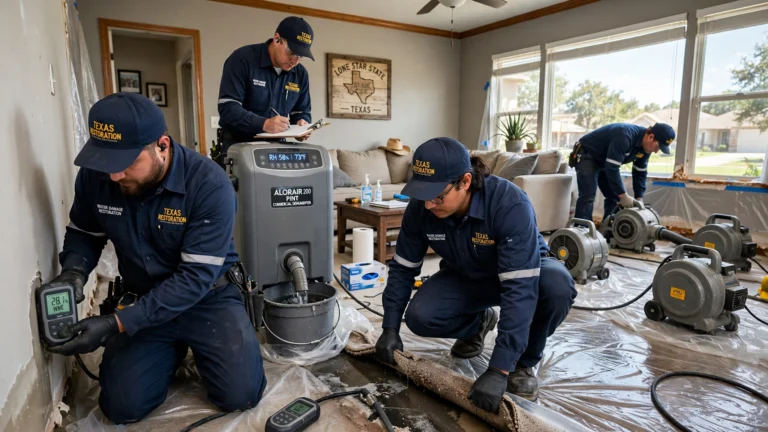
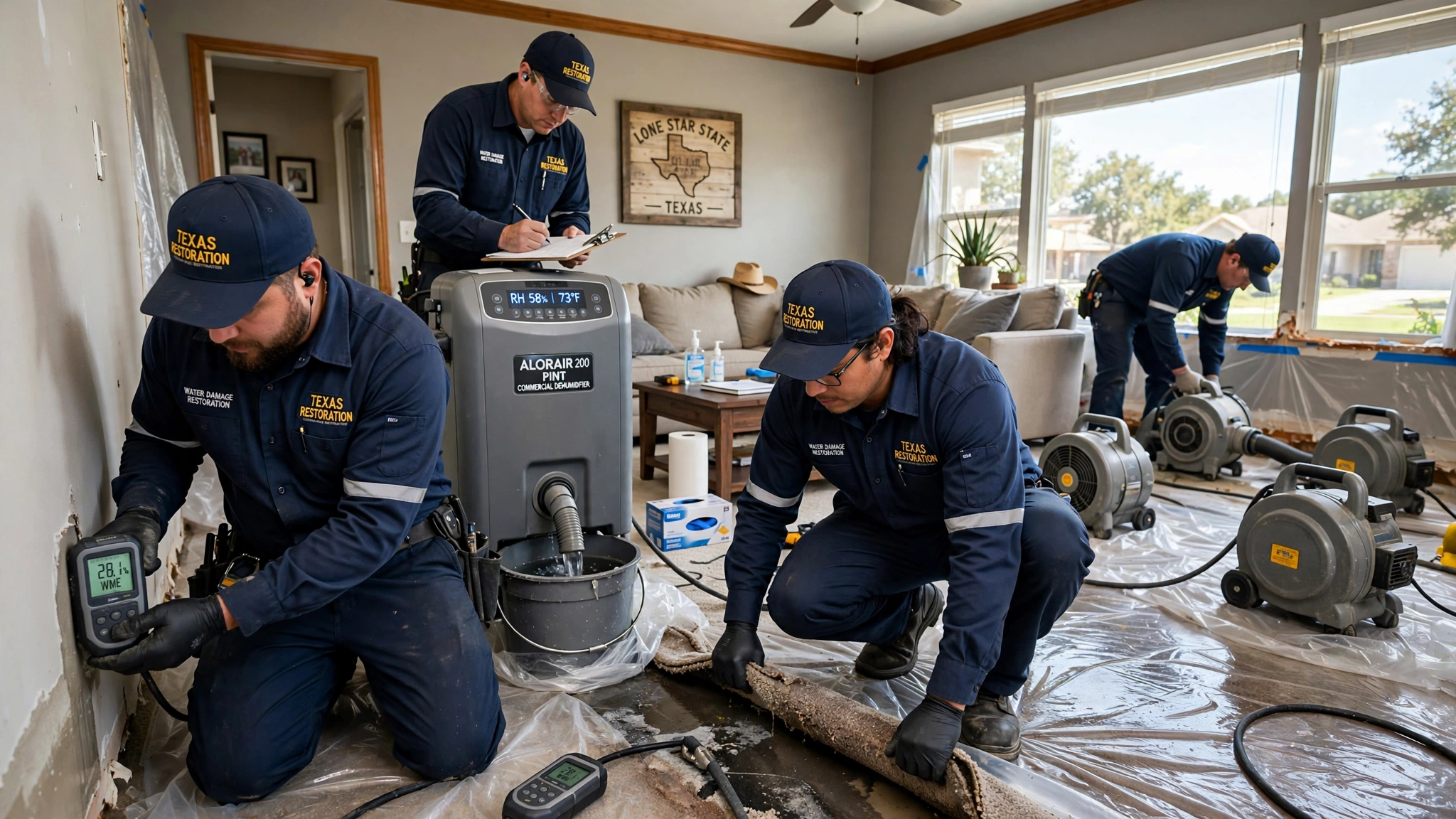
- Start drying within 24–48 hours — Texas heat turns a wet house into a mold incubator terrifyingly fast. Get professional emergency restoration started; don’t wait for the adjuster
- File your claim promptly — and file flood claims (NFIP) separately from homeowners claims; they’re different policies with different adjusters
- Beware storm-chaser contractors — after every major Texas hurricane, unlicensed door-knockers flood neighborhoods. Verify licensing, never pay large deposits upfront, and never sign away your claim rights under pressure
- Watch for delayed damage — roof leaks from lifted shingles may not show inside for weeks. Inspect your attic after every major storm.
For wind-torn roofs and broken windows letting rain in, emergency storm damage services — tarping, board-up, and water mitigation — prevent the second storm from doubling your losses.
Inland Texas Isn’t Safe Either
A common misconception: hurricanes are a coastal problem. Harvey’s remnants devastated areas far inland. Tropical systems stalling over Central Texas have repeatedly turned normally placid creeks around Dripping Springs, Buda, and the Hill Country into deadly flash floods. Inland homeowners need the same preparation mindset — drainage, insurance review, and documentation — because the water doesn’t care how far you are from the beach.
Hurricane Season FAQs
When is hurricane season in Texas?
June 1 through November 30, with peak activity from mid-August through October. The most destructive Texas landfalls have historically clustered in August and September.
Does homeowners insurance cover hurricane water damage?
Wind-driven rain entering through storm-damaged roofs is typically covered. Rising floodwater and storm surge are not — those require separate flood insurance. This distinction causes more claim disputes than any other issue after Texas hurricanes.
What should I do if my roof is damaged but it’s still raining?
Get emergency tarping as soon as winds allow safe access — every additional inch of rain multiplies interior damage. Then start interior water mitigation immediately; don’t wait for the adjuster while mold colonizes wet drywall.
Storm Damage? Act Fast.
Emergency tarping, water extraction, and full restoration across Texas. Call now — before mold moves in.