How to Prevent Mold After Water Damage in Texas Homes
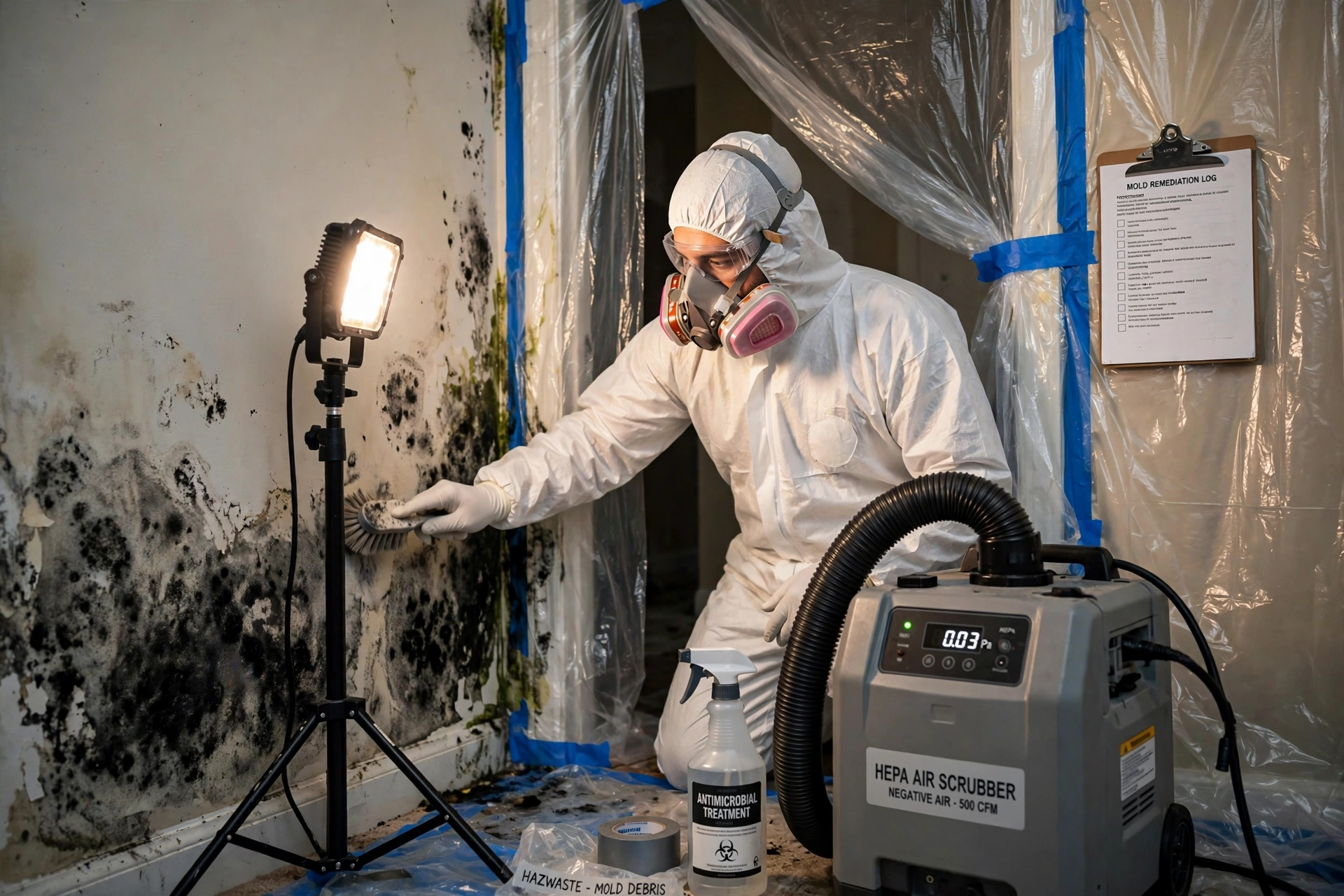
In Texas heat and humidity, mold can start growing within 24–48 hours of water damage. The good news: fast, thorough drying stops it cold. Here’s the exact playbook restoration professionals use — and what you can do in the critical first two days.
Why Texas Homes Are Mold Magnets
Mold needs three things: moisture, food (drywall, wood, dust), and warmth. Texas serves up all three generously. Our long hot seasons keep indoor temperatures in mold’s sweet spot, Gulf and East Texas humidity regularly sits above 60%, and most Texas homes are built on slabs with drywall directly absorbing any water that hits the floor.
The timeline is unforgiving: mold spores are everywhere in Texas air, and once materials stay wet for 24–48 hours, colonies begin forming inside walls and under flooring — often invisible. By day 3–5, that musty smell appears. By week two, you’re looking at professional mold remediation instead of simple drying. Prevention is always cheaper than remediation.
Step 1: Remove the Water Fast
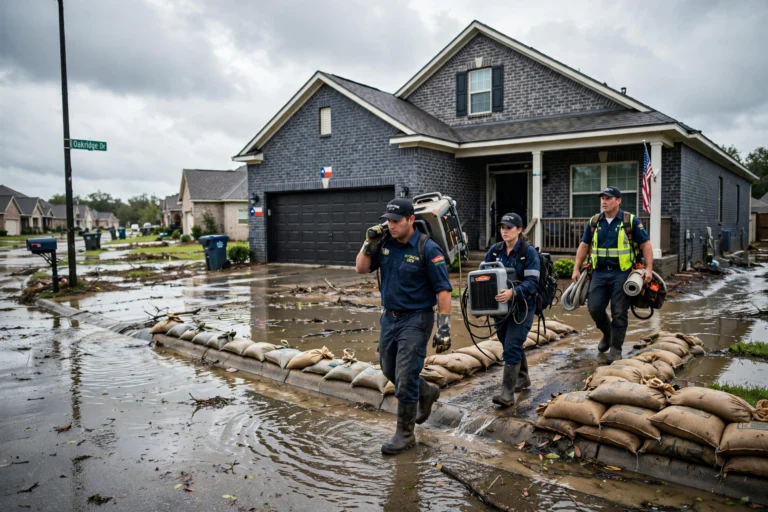
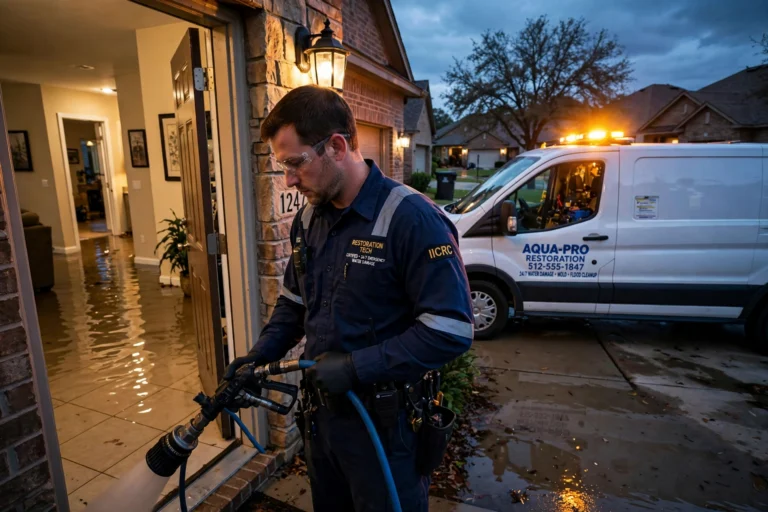
Every hour of standing water is an hour of wicking into drywall, baseboards, and subflooring. Use a wet/dry vacuum for small areas, mop up what you can, and get air moving. For anything beyond a minor spill, professional water extraction with truck-mounted equipment removes water orders of magnitude faster than consumer tools — and speed is the whole game here.
Pull up wet area rugs and move furniture off damp carpet. Anything upholstered sitting in water for more than a day or two is usually a loss; get it out before it becomes a mold factory.
Step 2: Dry Aggressively — Don’t Just Air-Dry
Here’s the mistake Texas homeowners make most: pointing a box fan at the wet spot and calling it done. Surface-dry is not dry. Moisture hides inside wall cavities, under baseboards, and in subflooring — exactly where mold grows unseen.
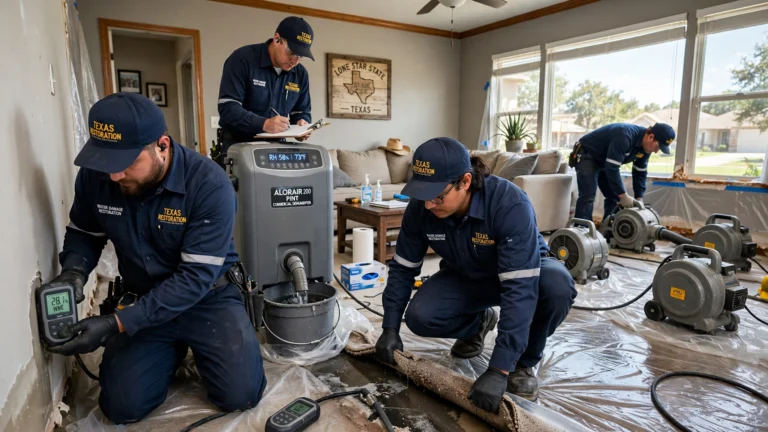
Proper structural drying means:
- Commercial dehumidifiers pulling indoor humidity below 50% (ideally 30–40%)
- High-velocity air movers aimed at walls and floors at angles that drive evaporation
- Moisture meter readings — walls, baseboards, and floors checked daily until readings hit dry standards for the material
- Wall cavity drying or flood cuts when drywall wicked water upward — wet drywall behind the baseboard won’t dry through paint
In Texas summer humidity, drying without dehumidification barely works — you’re trying to evaporate water into air that’s already saturated. This is the step where professional equipment earns its keep.
Step 3: Clean and Treat Surfaces
Once dry, clean hard surfaces with a detergent solution and consider an EPA-registered antimicrobial on materials that got wet — especially in Texas, where our climate gives mold every advantage. The EPA’s mold guidance is clear: the key to mold control is moisture control, and porous materials (drywall, carpet pad, insulation) that stayed wet beyond 48 hours generally can’t be cleaned — they must be removed.
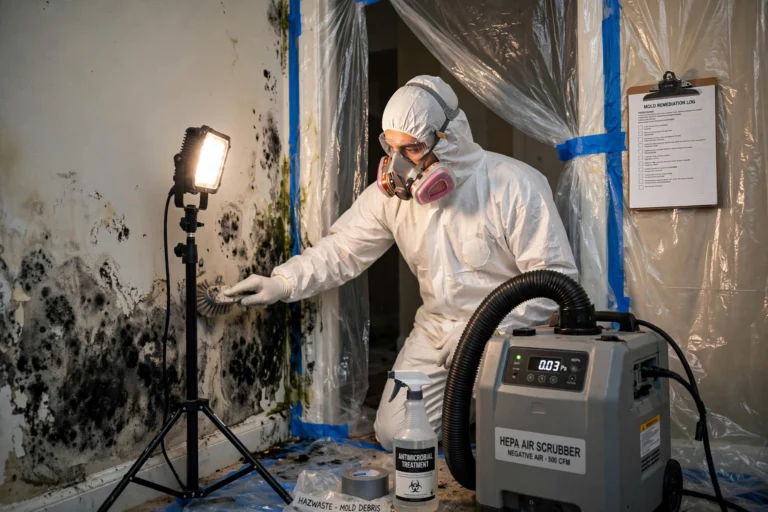
Don’t just spray bleach on visible mold and paint over it. Bleach doesn’t kill mold roots in porous materials, and paint seals the problem in — until it comes back worse. If you see mold covering more than about 10 square feet, or smell mustiness you can’t locate, that’s a job for professional mold remediation with proper containment.
Step 4: Watch, Monitor, and Follow Up
Mold prevention doesn’t end when the fans come up. For the next two weeks:
- Sniff test daily. Musty or earthy odors mean active mold somewhere — investigate immediately.
- Watch for discoloration. Yellow-brown stains blooming on walls or ceilings signal moisture still present.
- Keep humidity down. Run your AC (it dehumidifies) and consider a standalone dehumidifier in the affected area. Texas homes should stay under 50% indoor humidity.
- Check hidden spots. Inside closets on exterior walls, behind toilets, under sinks — mold loves undisturbed, slightly damp corners.
Homeowners in humid areas like Dripping Springs and the Hill Country should be especially vigilant — limestone-country humidity plus summer heat is prime mold territory.
When to Call a Professional Instead of DIY
- Water came from a sewage backup or floodwater (contamination risk — see sewage cleanup)
- More than one room is affected, or water wicked up walls
- You smell mustiness but can’t find the source
- Anyone in the home has allergies, asthma, or immune issues
- Visible mold covers a large area
Professional drying costs a fraction of professional mold remediation. When in doubt, get an assessment early — most reputable Texas restoration companies will check moisture levels and give you an honest answer about whether you need help.
Mold Prevention FAQs
How fast does mold grow after water damage in Texas?
Mold can begin colonizing wet materials within 24–48 hours, and Texas heat and humidity accelerate the process. Visible growth and musty odors typically appear within 3–7 days if materials stay damp.
Can I prevent mold by just running fans?
Fans help with surface evaporation but can’t dry wall cavities or bring humidity down in a Texas summer. Without dehumidification and moisture-meter verification, hidden moisture remains — and hidden moisture grows hidden mold.
Does bleach kill mold on drywall?
Bleach may lighten surface staining but doesn’t kill mold roots inside porous drywall, and the water in bleach can feed the problem. Wet porous materials generally need removal, not surface treatment.
What indoor humidity level prevents mold?
Keep indoor relative humidity between 30% and 50%. Above 60%, mold risk climbs sharply — a real concern in Gulf Coast and East Texas homes during summer.
Worried About Mold After Water Damage?
Get professional drying and moisture verification before mold takes hold. Serving homeowners across Texas.