How Much Does Water Damage Restoration Cost in Texas?
Texas-Specific Factors That Affect Your Bill
Slab foundations. Most Texas homes sit on concrete slabs, not basements or crawl spaces. That’s actually good news for costs — there’s no basement to pump out. But water wicking up into walls and under flooring on a slab can be sneaky, and slab moisture testing takes specialized equipment.
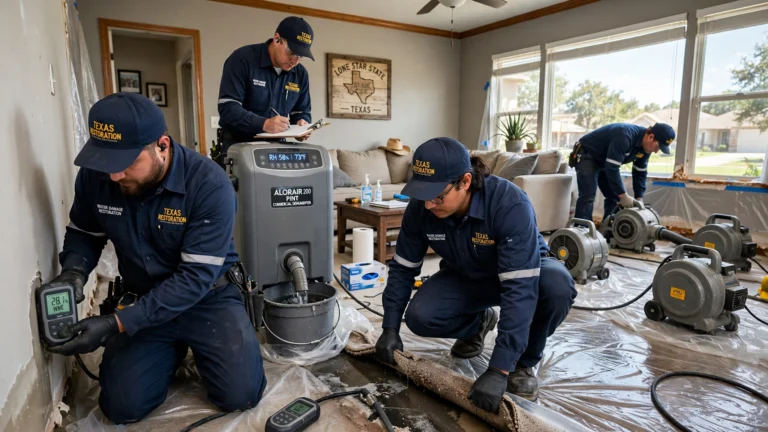
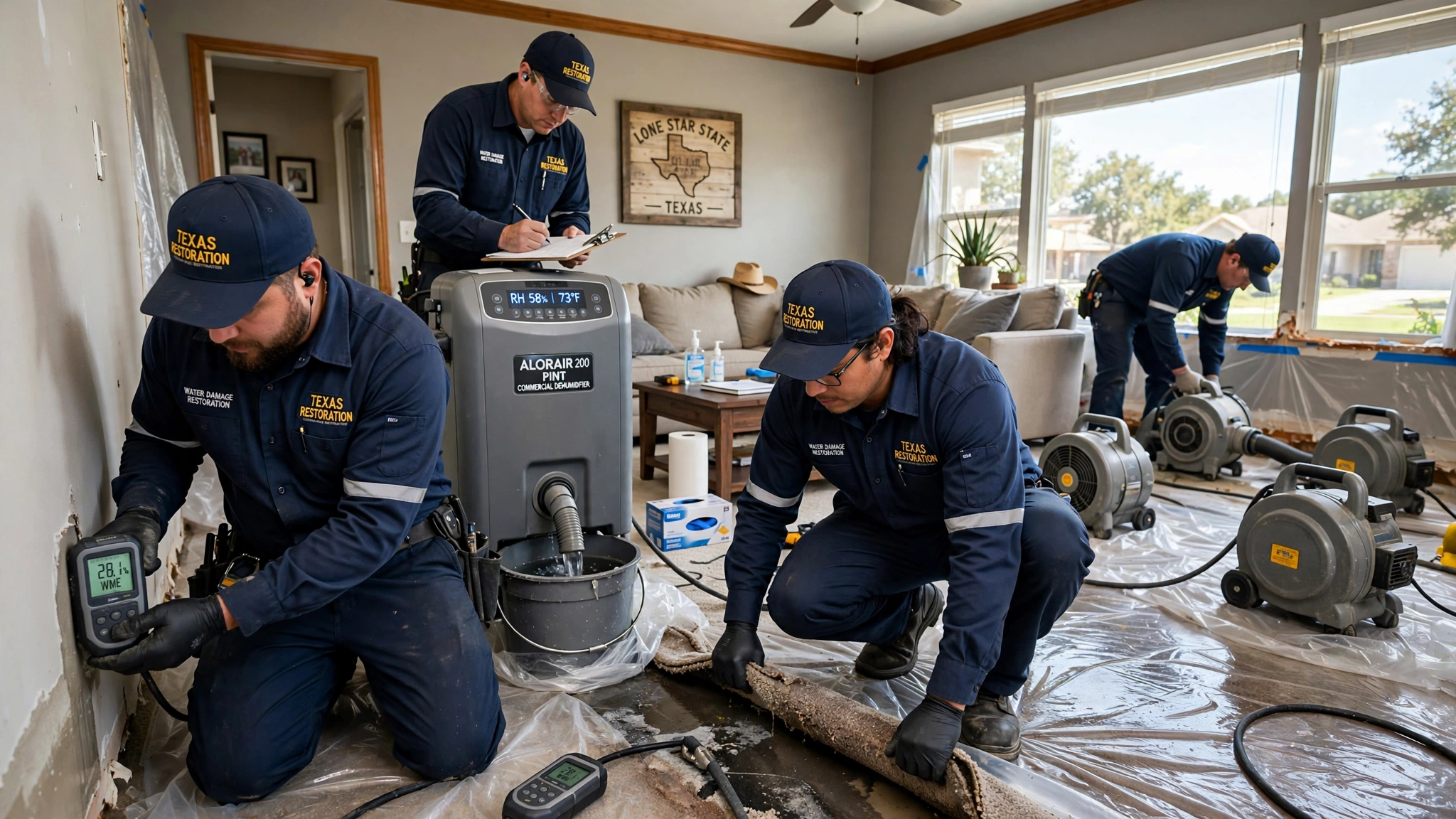
Humidity slows drying. Texas humidity — especially along the Gulf Coast — means drying takes longer and requires more dehumidification capacity than the same job in a dry climate. More equipment days = higher cost. Running the job with undersized equipment to save money is false economy; incomplete drying leads to mold, which costs far more.
Hard water eats appliances. Texas hard water shortens water heater and appliance lifespans, making supply-line and tank failures more common here. If your 12-year-old water heater let go, budget for replacement on top of restoration.
Wondering about insurance? Sudden and accidental water damage is typically covered under a standard Texas homeowners policy — see our guide on water damage insurance claims in Texas.
How to Keep Your Restoration Costs Down
- Act fast. The 48-hour rule is real. Every day of delay converts a drying job into a demolition job. Call a restoration company the moment you find water.
- Document everything. Photos and video before cleanup starts. This protects your insurance claim and prevents disputes.
- Get a written estimate. Reputable contractors put the scope and price in writing before work begins. Vague verbal quotes are a red flag.
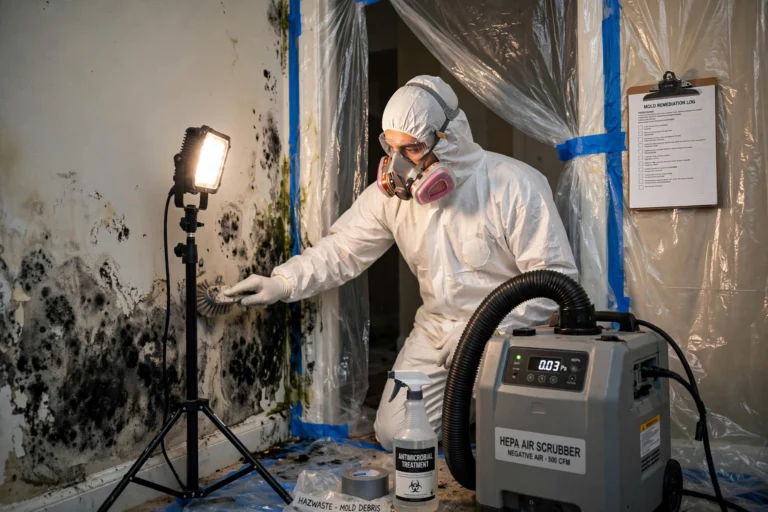
- Don’t DIY Category 2 or 3 water. Gray and black water carry real health risks, and improper cleanup leads to mold — the most expensive outcome of all.
- Ask about your deductible. If the job costs less than your deductible, filing a claim may not make sense. A good contractor will tell you honestly.
Water Damage Cost FAQs
Does homeowners insurance cover water damage restoration in Texas?
Sudden and accidental damage — burst pipes, appliance failures, storm-driven rain through a damaged roof — is usually covered. Gradual leaks, neglect, and rising floodwater are typically excluded. Flood damage requires a separate flood insurance policy.
Why do estimates vary so much between companies?
Scope differences explain most of it: one company may quote drying only while another includes demolition, antimicrobial treatment, and rebuild. Compare written scopes line by line, not just bottom-line prices.
Can I just dry it myself with fans?
For a tiny, clean-water spill caught immediately — maybe. But household fans can’t match commercial dehumidification, and moisture trapped inside walls will grow mold within days. Professional moisture readings are the only way to know it’s truly dry.
Get a Free, Honest Estimate
Water damage in your Texas home? We’ll assess it, explain your options, and give you a written estimate — no obligation.