Choosing a Water Damage Restoration Company in Texas: 10 Questions to Ask
You’re hiring under stress, possibly at 2 a.m. These ten questions separate true professionals from storm-chasers — ask them before you sign anything.
Water damage puts you in a vulnerable position: your home is wet, the clock is ticking on mold, and a stranger is quoting you thousands of dollars. Texas has excellent restoration companies — and, after every major storm, a wave of out-of-state operators and fly-by-night outfits. These ten questions help you tell them apart.
The 10 Questions
1. Are your technicians IICRC-certified?
The IICRC sets the industry standards for water damage restoration (S500) and mold remediation (S520). Certification means technicians trained in psychrometry, proper equipment use, and safety protocol — not just guys with fans. Ask which certifications the actual crew holds, not just the company.
2. How fast can you get here — really?
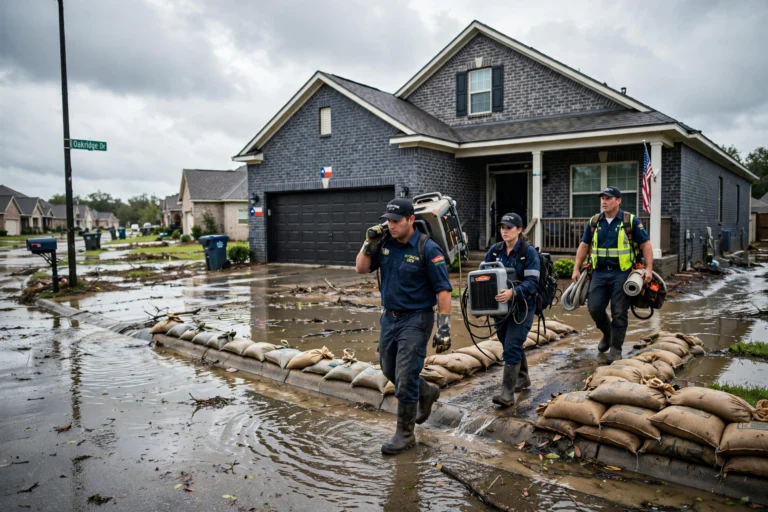
Everyone says “fast.” Ask for a specific ETA and whether they have crews stationed near you or are driving in from two counties away. In emergency situations, the first hours decide the scope of damage.
3. Will you document moisture with meters and photos?
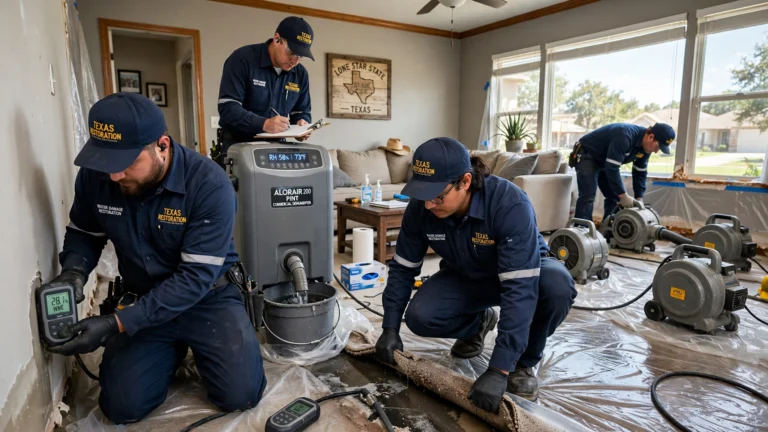
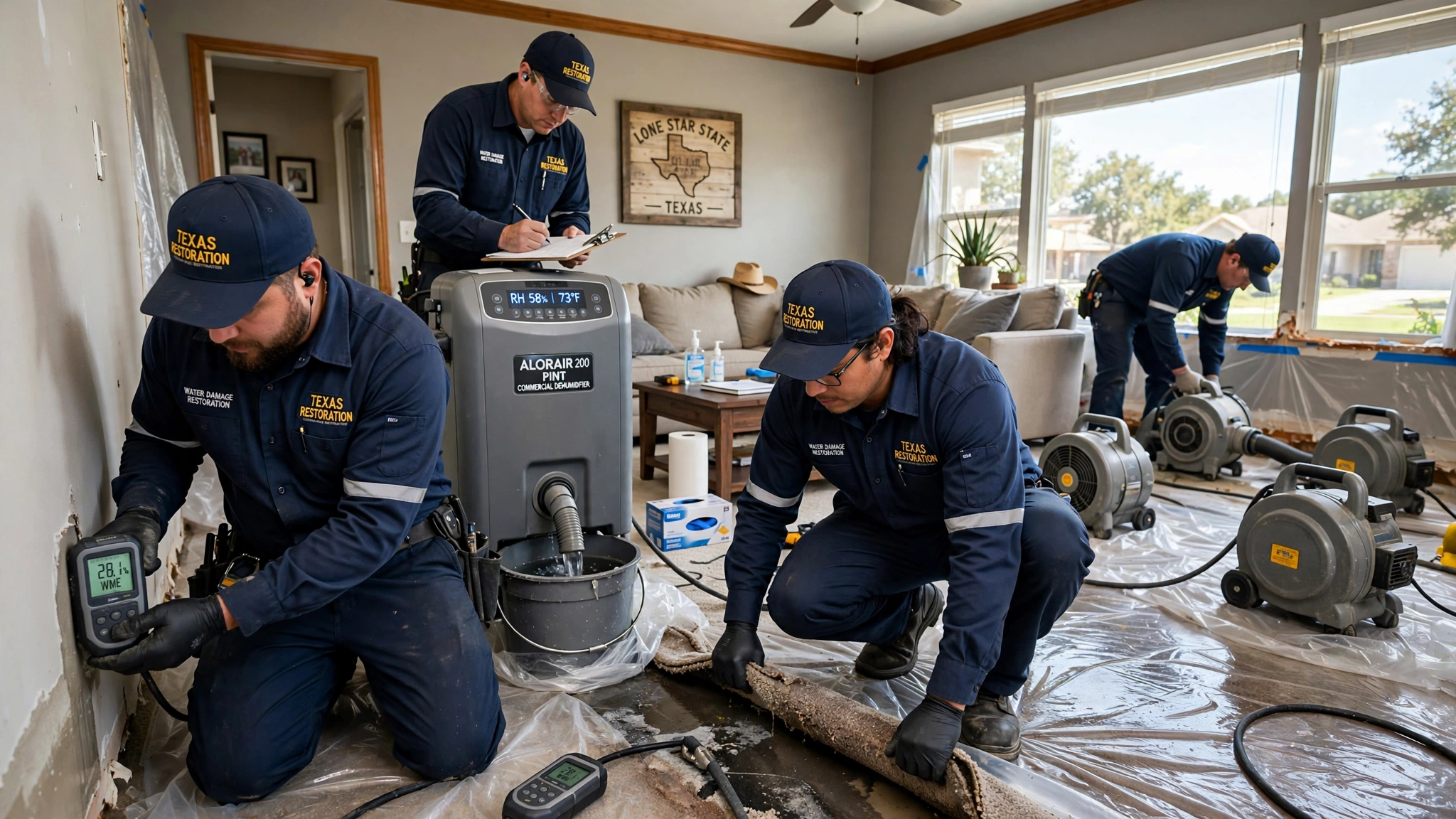
Professionals take baseline moisture readings, thermal images, and daily drying logs. This documentation proves the job was done right — and it’s the evidence your insurance adjuster needs. No meters, no hire.
4. Do you provide a written, line-item estimate?
Vague lump-sum quotes hide padding and make insurance supplements painful. Line items (extraction, equipment days, demolition square footage) keep everyone honest.
5. Who actually does the work — your employees or subcontractors?
Neither is automatically bad, but you deserve to know who’s in your home and who’s accountable for quality. High subcontractor turnover is a red flag.
6. Will you help with my insurance claim?
Good companies document to insurance standards, communicate with adjusters, and handle supplements when hidden damage is found. They should know Texas prompt-payment rules — see our insurance claim guide.
7. What’s your mold protocol?
If they find mold mid-project — common — what happens? Proper answer: containment, HEPA negative air, and remediation per IICRC S520. Wrong answer: “we’ll just spray some bleach.”
8. What equipment will you use, and how long will it run?
Expect specifics: commercial dehumidifiers and air movers sized to your space, typically running 3 to 5 days with daily monitoring visits. “We’ll leave a fan for a week” isn’t a drying plan — it’s how you get mold. Learn what proper structural drying involves.
9. Can you provide local references?
Established Texas companies have local reviews and references. Be wary of anyone who just arrived in town after the storm — check how long they’ve served your area.
10. Do you warranty your work?
Reputable companies stand behind drying and repairs with a written warranty. Get it in writing, including what’s covered and for how long.
Red Flags: Walk Away If…
- They demand full payment upfront before work begins.
- They won’t provide documentation or a written estimate.
- They promise your home will be “completely dry in one day.”
- They knock on your door unsolicited right after a storm.
- They pressure you to sign an “assignment of benefits” you don’t understand.
- They have no physical Texas address or local track record.
Get two estimates for large jobs when time allows — but don’t delay emergency water damage restoration to shop around. Mitigation first, comparison second; the mold clock doesn’t pause for quotes.
FAQs
Should I use the company my insurance recommends?
You have the legal right to choose your own contractor in Texas. Insurer-preferred vendors can be fine, but compare them against these questions like anyone else.
What if the company finds more damage mid-project?
Normal — hidden damage is common. They should document it, explain it, and submit a supplement to your insurer. Surprise lump-sum bills with no documentation are not normal.
Can one company handle both mitigation and rebuild?
Many full-service Texas restorers do both, which simplifies your life and your claim. Just verify they’re qualified for each phase — mitigation expertise and rebuild quality are different skills.
How do I verify IICRC certification?
Ask for certificate numbers and check them — the IICRC maintains standards for the industry. Homeowners in Prosper, Addison, and across Texas deserve verified professionals.
Water Damage Can’t Wait
Local Texas crews respond around the clock for extraction, drying, and full restoration. Call now for fast help.