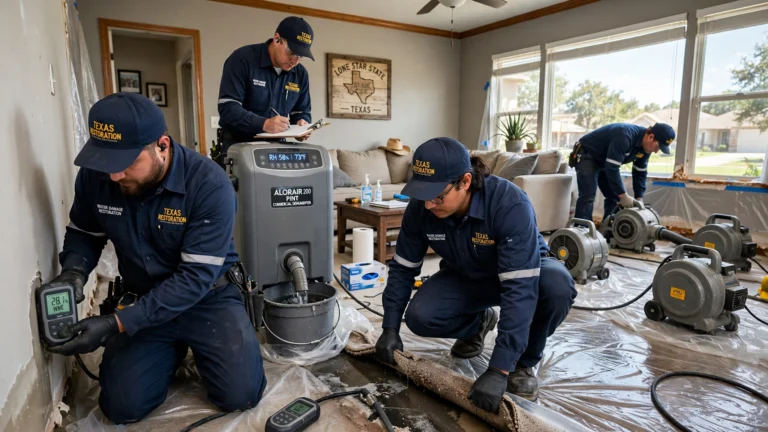
Attic Water Damage in Texas: Causes, Signs, and Fixes
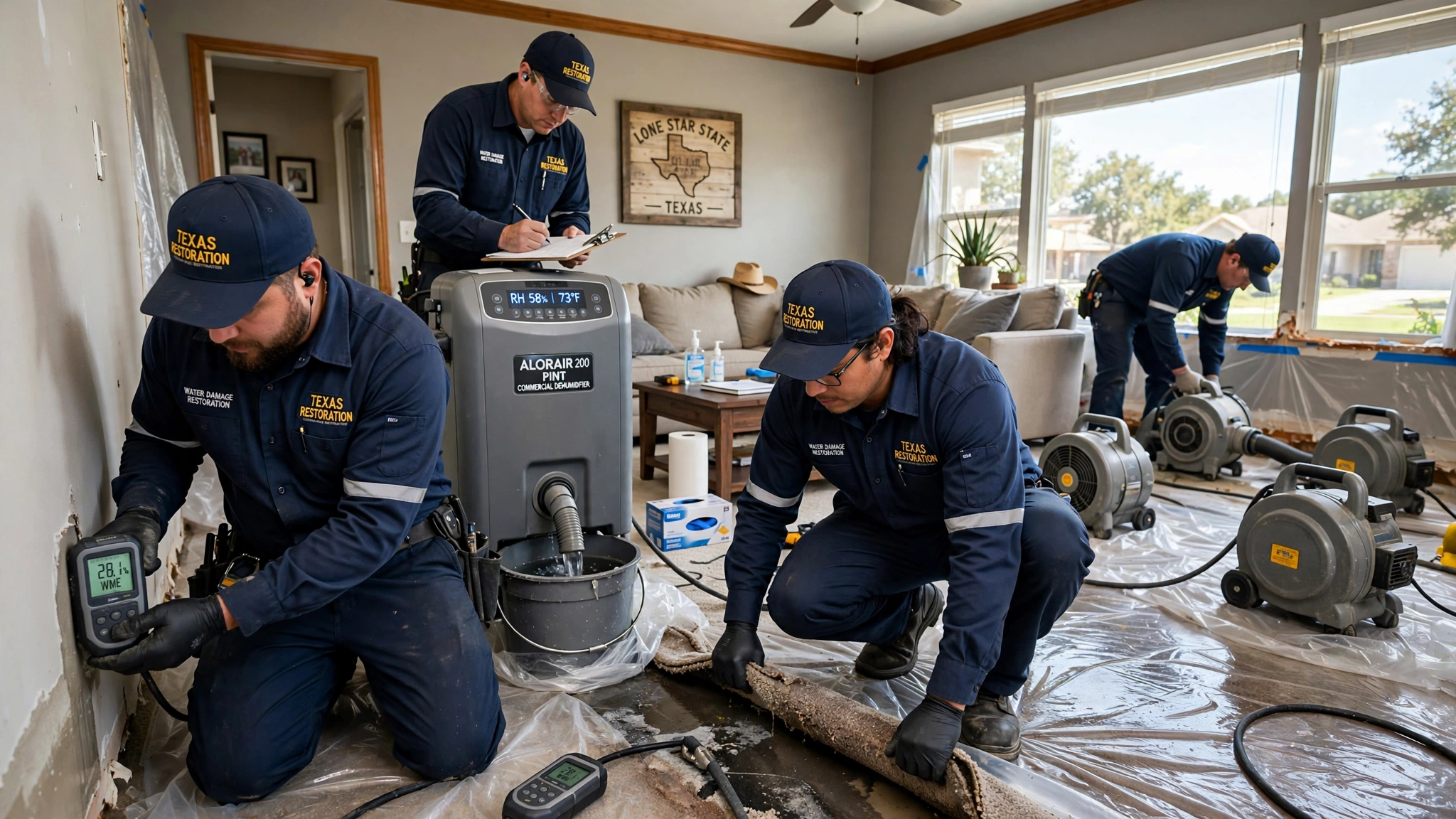
Your attic endures the most extreme conditions in your Texas home — 150°F+ heat in August, then a spring hailstorm hammering the shingles above it. It is also the place water damage hides longest, because nobody looks up there until a brown stain blooms on the living-room ceiling. By then, the leak may be months old. Here is how attic water damage starts, how to catch it early, and how to fix it right.
How Water Gets Into Texas Attics
- Hail and wind roof damage. DFW’s “hail alley” and Gulf hurricanes bruise shingles, lift tabs, and tear flashing — the #1 attic water source statewide. Damage is often invisible from the ground.
- Failed flashing and vent boots. The rubber boots around plumbing vents crack in Texas UV within 8–12 years, letting rain run straight down the pipe into the attic.
- Condensation from HVAC and ducts. Cold ductwork sweating in a superheated attic drips steadily all summer — a slow leak no storm required.
- Bathroom vents terminating in the attic. Still depressingly common in older Texas homes: every shower pumps warm moist air onto cold roof decking. Code requires venting outdoors, but attics full of disconnected flex duct tell another story.
- Ice dams — rare here, but the 2021 freeze proved “rare” is not “never” in Texas.
Signs of Trouble (Check Twice a Year)
Grab a flashlight and look for: dark staining or streaks on the underside of roof decking; insulation that is matted, compressed, or discolored; a musty smell that hits you at the attic hatch; rusted nail heads or drip marks below them; daylight visible around vents or chimneys; and mold growth on sheathing — often appearing as dark blotches following the rafters. Inside the living space, the tell is ceiling stains, bubbling paint, or a ceiling leak that appears during rain. In Cedar Hill and across hail-prone North Texas, we recommend an attic check after every major hailstorm, not just the scheduled ones.
Why Texas Attics Grow Mold So Fast
Mold needs three things: moisture, food, and warmth. A Texas attic in summer delivers all three in abundance — roof decking and rafters are an all-you-can-eat wood buffet sitting at 130°F+. That is why a small, slow leak that would be a nuisance in a cooler climate becomes a mold remediation project here within weeks. If you see widespread dark growth on sheathing, that is a job for professional mold removal with proper containment — attic mold spores drop straight into your living space through recessed lights and the hatch.
Fixing It Right: Source First, Then Damage
The order matters. First, fix the source: roof repair for storm or flashing damage, re-vent bath fans through the roof or gable to the outdoors, insulate or seal sweating ducts. Second, address the damage: remove and replace wet insulation (it loses R-value when compressed and wet), dry the decking with dehumidification, remediate any mold, and repair stained ceilings below. Third, prevent recurrence: verify balanced ventilation (soffit intake + ridge exhaust), consider radiant barrier decking at re-roof time, and keep trees trimmed back from the roofline.
Ventilation deserves special attention in Texas: you need balanced intake (soffit vents) and exhaust (ridge vent) so air actually flows through the attic. Powered attic fans can help, but they may depressurize the attic and pull conditioned air from your living space if the ceiling is not well sealed — a good contractor checks this balance rather than just selling you a fan. Radiant-barrier roof decking, increasingly common on new Texas builds, can drop attic temperatures significantly and reduce the condensation cycles that feed mold.
One last Texas reality check: our hailstorms often damage roofs without any interior sign for months. Granule loss from hail shortens shingle life silently, and the leak appears a season or two later — long after you have forgotten the storm. If your neighbors are getting new roofs after a hail event and yours “looks fine” from the driveway, get a professional inspection anyway. Catching it early is the difference between a shingle repair and a full mold remediation.
Frequently Asked Questions
How often should I inspect my attic?
Twice a year — spring and fall — plus after any major hailstorm or hurricane. It takes ten minutes with a flashlight and can save you thousands.
Is a small ceiling stain urgent?
Yes. A visible stain means water already traveled through decking, insulation, and drywall — the leak is established, not starting. The EPA recommends fixing the water problem promptly and drying or removing wet materials to prevent mold.
Does homeowners insurance cover roof-leak damage?
Sudden storm damage (hail, wind) is typically covered, including resulting interior water damage. Gradual leaks from wear, neglect, or long-dead vent boots usually are not — another reason for regular inspections.
Can I clean attic mold myself?
Small, surface-level spots on a limited area can be a careful DIY job with proper respirator protection. Widespread sheathing growth needs professional remediation with containment and HEPA filtration.
Stain on the Ceiling? Find the Source Fast.
We trace attic leaks to their source, dry the structure, and remediate mold — start with roof leak water damage repair.