Crawl Space Moisture Problems in East Texas Homes
East Texas is pier-and-beam country — from Athens to the Piney Woods, generations of homes sit on raised foundations with crawl spaces underneath. That design handles our clay soil beautifully, but it creates a shallow, dark, humid zone under your home that demands attention. In a region getting 45–55 inches of rain a year with relentless humidity, crawl space moisture is not a question of if but when — and what you do about it.
Why East Texas Crawl Spaces Stay Wet
Three forces conspire here. First, rainfall volume: East Texas gets nearly double the rain of West Texas, and much of it arrives in intense bursts that overwhelm grading. Second, clay soil that holds water against the foundation instead of draining it away. Third, humidity: summer air in the Piney Woods sits at 80–90% relative humidity, and traditional vented crawl spaces invite that saturated air straight in — where it condenses on cooler ductwork, pipes, and joists. Add poor exterior grading or missing gutters (common on older rural homes), and the crawl space becomes a year-round damp zone.
Signs of a Moisture Problem
- Musty odors inside the home — the “stack effect” means a large share of the air you breathe upstairs originates in the crawl space. If it smells earthy down there, you are breathing it up here.
- Sagging, bouncy, or uneven floors — moisture-softened joists and subflooring lose stiffness long before they visibly rot.
- Condensation on ductwork or pipes — visible sweating is proof the air down there is saturated.
- Mold on joists or subfloor — dark blotching or white fuzzy growth on the wood framing.
- Pest activity — termites, roaches, and rodents all prefer damp environments; moisture damage and pest damage often arrive together.
- High energy bills — saturated insulation under the floor loses R-value, and damp air is harder to condition.
The Damage Cycle (Why It Gets Worse, Not Better)
Moisture feeds mold, mold digests wood, and softened wood invites wood-destroying insects — each stage accelerating the next. Meanwhile, everything the crawl space grows — mold spores, dust-mite allergens, soil gases — rides the stack effect into your living space, which is why chronic crawl space moisture so often shows up as allergy symptoms and musty indoor air rather than an obvious puddle. Our crawl space repair work routinely finds joists with surface mold the homeowner never knew existed — because nobody had looked underneath in a decade.
What Actually Fixes It
Effective crawl space work follows an order. First, water management outside: grade soil away from the foundation, extend downspouts, and fix any drainage that ponds water near the house — no interior solution survives bad exterior drainage. Second, ground cover: a heavy (20-mil) sealed vapor barrier over the soil cuts ground-moisture evaporation dramatically. Third, close the vents: in humid East Texas, sealed/conditioned crawl spaces consistently outperform vented ones — vents were designed for drier climates and here they import humidity. Fourth, active dehumidification: a dedicated crawl space dehumidifier holds relative humidity below 60%, the threshold where mold and dust mites thrive. Standing water issues may also need a sump pump. The EPA’s mold guidance reinforces the core principle: control the moisture and you control the mold.
For homes with chronic standing water, a sump pump with battery backup handles what grading cannot — East Texas cloudbursts can drop inches of rain in an hour, and a pump is cheap insurance against the one storm that overwhelms everything else.
What Professionals Do on an Assessment
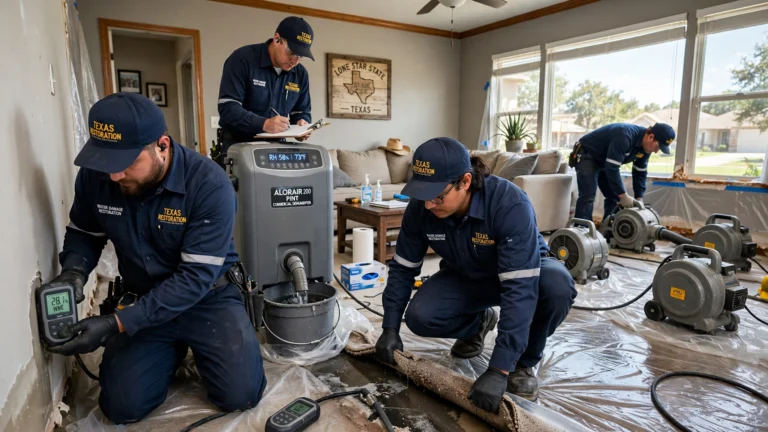
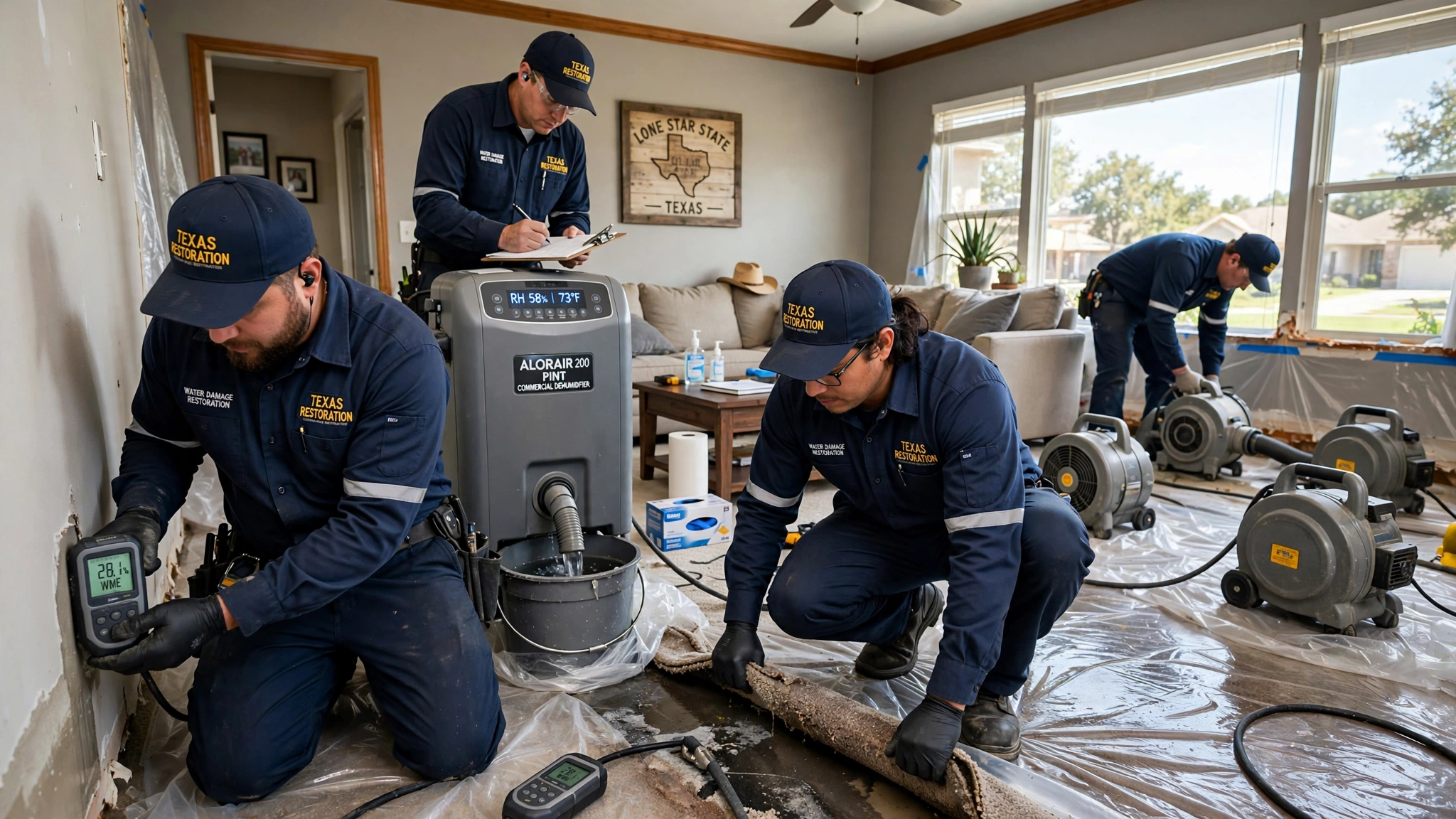
A proper assessment means suiting up and going underneath: measuring wood moisture content with pin meters, checking joists and subfloor for rot and mold, evaluating grading and drainage outside, and testing humidity levels. Then comes the remediation sequence — mold remediation on framing, structural drying to verified dry standards, then the prevention stack: drainage, barrier, sealing, and dehumidification. Band-aid fixes (just a vapor barrier, just closing vents) underperform because moisture finds the gap you left.
Frequently Asked Questions
Should crawl space vents be open or closed in Texas?
In humid East Texas, sealed and conditioned outperforms vented. Open vents invite saturated summer air that condenses on cooler surfaces — the opposite of drying.
How often should I check my crawl space?
At least once a year, plus after any major rain event or if you notice musty odors, sagging floors, or allergy symptoms worsening at home.
Is a vapor barrier alone enough?
It helps significantly with ground moisture, but without exterior drainage correction and humidity control, it is an incomplete fix. Moisture enters from air and leaks too, not just soil.
Does crawl space work affect home value?
A dry, clean, documented crawl space removes one of the most common buyer objections and inspector flags in East Texas — moisture and mold under the house kill deals.
Musty Smell? Soft Spots in the Floor?
Get a professional crawl space assessment — moisture readings, mold check, and a real fix plan. See crawl space water damage repair.