Water Heater Leaks: Preventing Water Damage in Texas Homes
A failed water heater can dump 40 to 80 gallons into your home in minutes — and Texas conditions make failures more likely.
A water heater doesn’t leak politely. When the tank fails, it can release its entire contents across your floors in minutes — and if the supply line keeps feeding it, the flooding doesn’t stop until someone shuts the water off. In Texas, hard water shortens tank life and attic installations turn a leak into a ceiling collapse. Here’s how to prevent it.
Why Texas Water Heaters Fail Earlier
Most tank water heaters last 8 to 12 years nationally. In much of Texas, mineral-heavy hard water accelerates the timeline: sediment bakes onto the bottom of the tank, creating hot spots that weaken the steel, while dissolved minerals eat through the sacrificial anode rod that protects the tank lining. Once the anode is gone — typically within 3 to 5 years in hard-water areas — the tank itself starts corroding. If your heater is over 8 years old and you’ve never flushed it, you’re on borrowed time.
Warning Signs Your Heater Is Failing
- Rusty or discolored hot water — the tank lining is corroding from the inside.
- Rumbling or popping sounds — hardened sediment boiling at the tank bottom.
- Moisture, rust streaks, or puddles around the base.
- Inconsistent temperatures or running out of hot water faster than before.
- Age — check the serial number; the manufacture date is encoded in the first characters.
The Texas Attic Problem
Thousands of Texas homes — especially newer builds around Dallas, Austin, and Houston — have water heaters installed in the attic to save space. When an attic unit leaks, water pours through the ceiling into living areas below, destroying drywall, insulation, flooring, and furniture in multiple rooms. Many Texas municipalities now require a drain pan with a drain line to the exterior for attic installations, plus some require a secondary shutoff. If your attic heater has a pan that drains nowhere, that’s a code and insurance problem waiting to happen.
If your heater is leaking right now: shut off the cold water supply valve above the unit, then kill power at the breaker (electric) or turn the gas valve to “pilot” (gas). Attach a hose to the drain valve only if you can do so safely — then call for appliance leak cleanup.
Prevention Checklist
- Flush sediment annually. In hard-water Texas cities, yearly flushing is the single best life-extender.
- Inspect and replace the anode rod every 3 to 5 years.
- Install a drain pan plumbed to the exterior — required by code for attic and many garage installs.
- Add an automatic shutoff valve with a water sensor; it closes the supply line the moment it detects a leak.
- Test the TPR (temperature-pressure relief) valve yearly — a failed TPR valve is a safety hazard, not just a leak risk.
- Replace proactively at 10 years. A planned Saturday replacement beats a 2 a.m. flood.
After a Leak: What Needs Drying
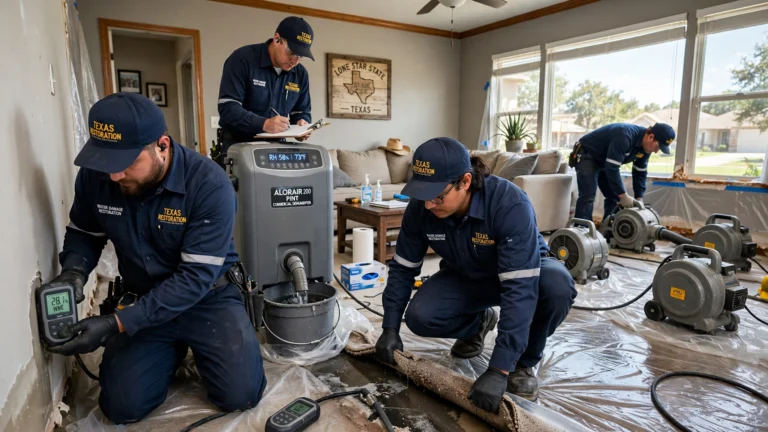
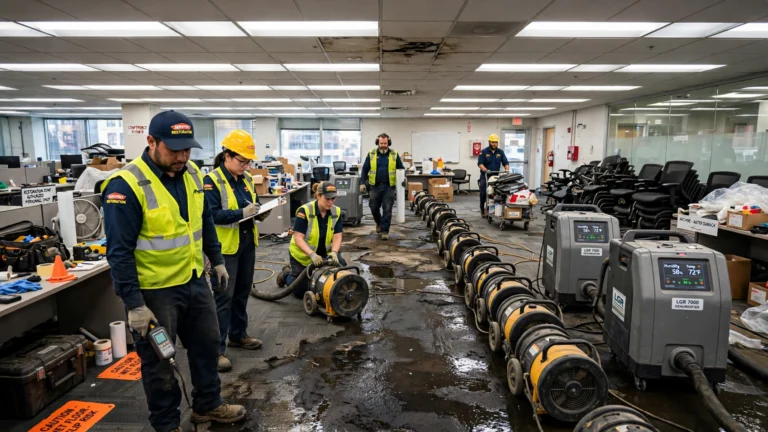
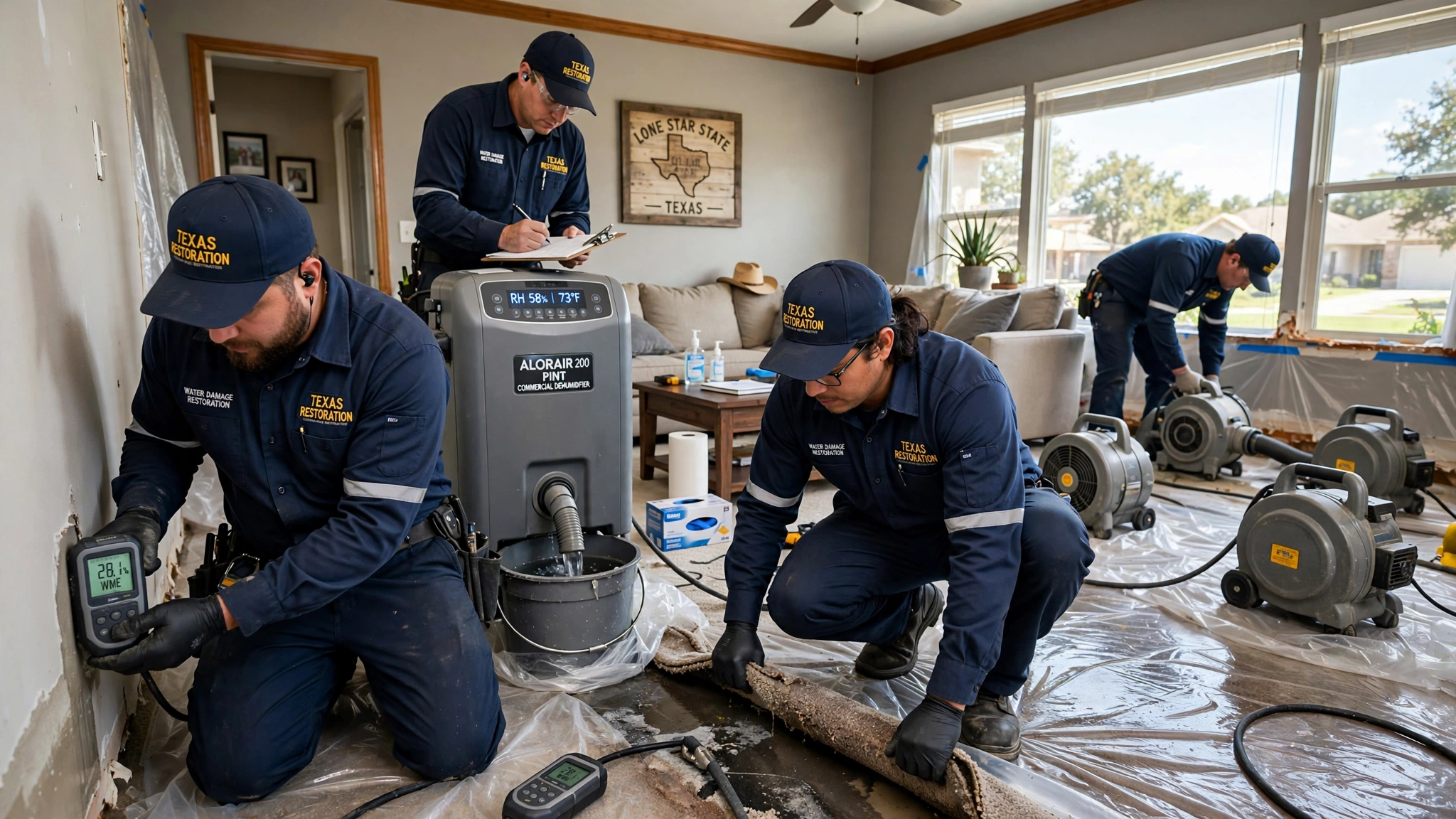
Water from a heater soaks subflooring, wall base plates, and — in attic installs — ceiling drywall and insulation. Wet insulation loses its R-value and must be removed. Extraction followed by ceiling and wall repair restores the structure, and verified drying prevents the mold growth that follows slow, hidden leaks.
FAQs
How often should I flush my water heater in Texas?
Once a year in hard-water areas — which covers most of the state. If you’ve never flushed an older unit, have a plumber assess it first; disturbing heavy sediment in a very old tank can occasionally cause problems.
Is a tankless water heater better for Texas homes?
Tankless units eliminate the catastrophic tank-rupture scenario and last 15 to 20 years, but they still need annual descaling in hard water and cost more upfront. Either way, a leak sensor and shutoff valve are cheap insurance.
Does homeowners insurance cover water heater leaks?
Sudden bursts are typically covered for the resulting water damage, but gradual seepage and the heater replacement itself usually aren’t. Attic units without proper drain pans can complicate claims — see our insurance claim guide.
My water heater is in the attic — what should I check today?
Confirm there’s a drain pan, that the pan has a drain line running to the exterior (not just terminating in the attic), and that the TPR discharge pipe also routes outside. Homes in Keller, Boerne, and other fast-growing suburbs often have attic units. The EPA’s WaterSense program has guidance on efficient water heating choices.
Water Damage Can’t Wait
Local Texas crews respond around the clock for extraction, drying, and full restoration. Call now for fast help.