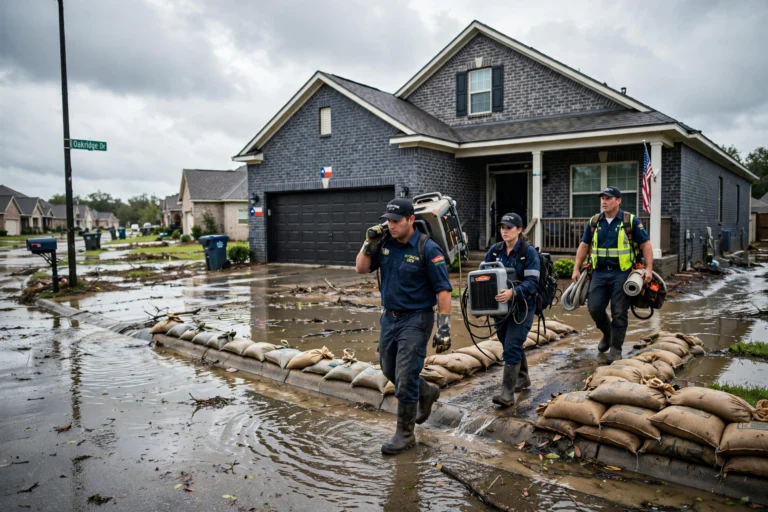
Carpet After Flooding Can It Be Saved
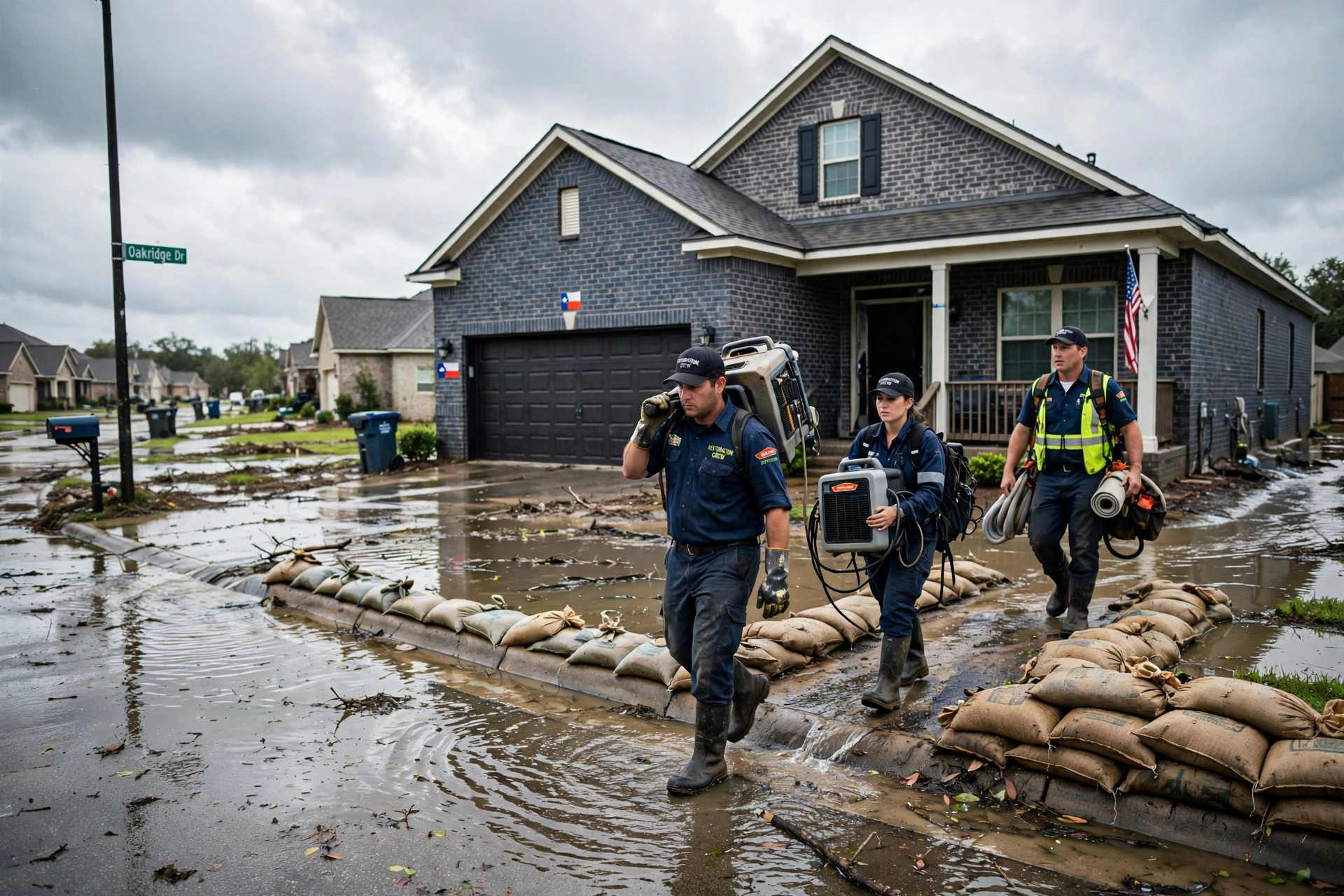
The floodwater receded, the carpet looks… okay? It’s damp, it smells a little, but ripping out wall-to-wall carpet feels drastic. So here’s the question I get asked in nearly every flooded Texas home: can this carpet be saved?
The honest answer: sometimes — but less often than homeowners hope, and the deciding factors have nothing to do with how the carpet looks. Here’s the straight truth from someone who’s tried to save hundreds of them.
The Three Questions That Decide Everything
1. What kind of water was it?
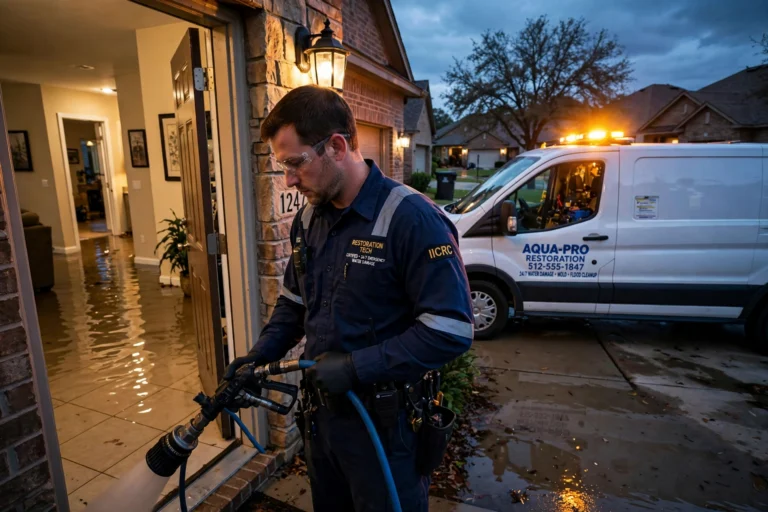
This is the big one. Category 1 (clean water) — a supply line, a rainwater intrusion with no ground contact — is the only floodwater where carpet has a real chance. Category 2 (gray water) from washing machines or dishwashers: carpet can sometimes be saved with thorough extraction and sanitization, but the pad cannot. Category 3 (black water) — sewage, rising floodwater, bayou overflow — means the carpet is done, full stop. Floodwater carries bacteria, chemicals, pesticides, and worse; no cleaning process makes a porous carpet safe after that. This isn’t my opinion — it’s the IICRC S500 standard (iicrc.org).
2. How long was it wet?
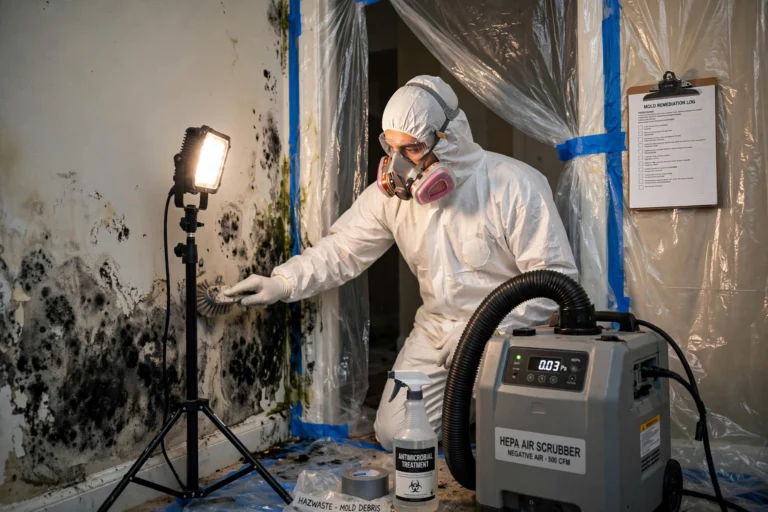
Carpet wet for under 24–48 hours with clean water is salvageable. Past 72 hours in Texas heat and humidity, microbial growth is established in the backing and pad — and carpet backing is essentially glue and latex, a perfect food source. Time is even less forgiving here than in drier states.
3. What about the pad?
Here’s what surprises people: the pad is almost always a loss, even when the carpet survives. Carpet pad is a sponge — it holds gallons of water, it’s nearly impossible to dry in place, and it’s cheap to replace relative to the carpet. Standard practice: the carpet gets lifted, the pad gets removed and discarded, the slab or subfloor gets cleaned and dried, then new pad goes under the salvaged (or new) carpet.
Texas-Specific Complications
- Slab foundations. Most Texas homes sit on concrete slabs, and slabs wick and hold moisture. Even after the carpet feels dry on top, the slab underneath can stay damp for days, feeding mold growth under the pad. Pros test slab moisture with calcium chloride or RH probes — not just the carpet surface.
- Delamination. Prolonged wetting breaks down the latex adhesive bonding the carpet face to its backing. Once delaminated, carpet wrinkles, bubbles, and can’t be restretched — it’s structurally finished even if it looks okay.
- Humidity. Our ambient humidity fights every drying effort. Carpet that would dry in two days in Arizona takes four here — and mold doesn’t wait.
- Stretch-in vs. glue-down. Stretch-in carpet can be lifted, dried, and reinstalled. Glue-down carpet (common in Texas on slabs) often can’t be removed without destroying it.
When Carpet CAN Be Saved: The Process
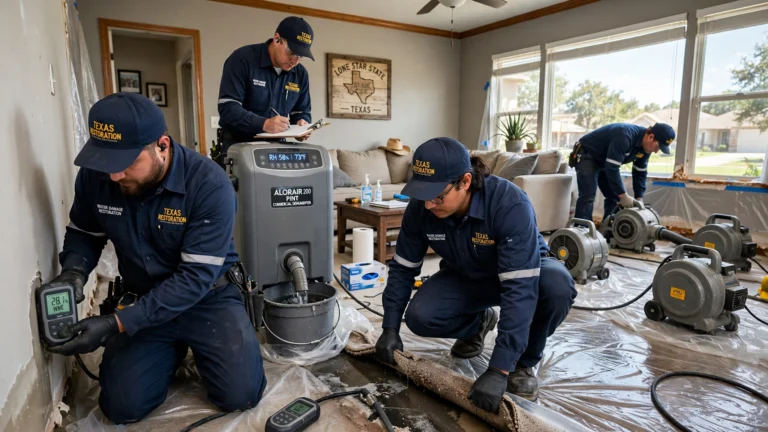
- Extract immediately with professional equipment — weighted extraction tools squeeze water from the pad that shop vacs can’t touch. Every hour matters.
- Remove and discard the pad. (See above — non-negotiable in most cases.)
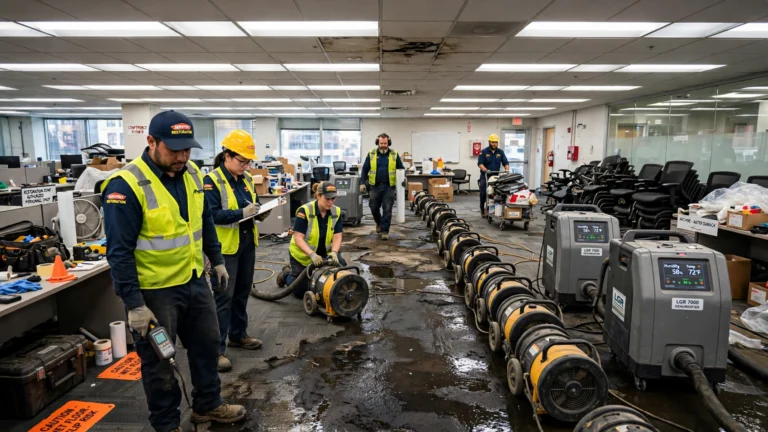
- Lift the carpet and dry both sides with directed airflow plus dehumidification.
- Clean and sanitize the slab/subfloor and the carpet backing.
- Verify dry with moisture meters — carpet, slab, and adjacent drywall (which wicks water up from wet carpet edges).
- Install new pad, reinstall carpet, restretch where needed.
Frequently Asked Questions
The Bottom Line
Carpet after clean water, caught fast, professionally extracted: usually saveable. Carpet after floodwater or sewage, or wet for days in Texas humidity: replace it. The pad is nearly always a loss either way. Don’t let wishful thinking turn a carpet problem into a mold problem — get moisture readings, make the call on data, and move on.