Drywall Water Damage Dry Vs Replace

“Can you just dry it?” It’s the question I hear on nearly every job with wet drywall — and the honest answer is: sometimes yes, sometimes absolutely not. Drywall is gypsum wrapped in paper, and paper is mold food. The dry-vs-replace decision comes down to how wet it got, what kind of water it was, and how long it stayed wet. Get it wrong in either direction and you either pay for demolition you didn’t need, or seal mold inside your walls.
Here’s how restoration professionals actually make the call.
How Drywall Gets Wet (and Why It Matters)
Drywall wicks water upward like a paper towel — typically 12 to 24 inches above the visible waterline, sometimes more in Texas humidity. That means a two-inch flood can wet drywall two feet up the wall. The paper facing saturates first, then the gypsum core softens. The three variables that decide everything:
- Water category. Clean water (supply line) is the only candidate for drying. Gray water (dishwasher, washing machine) usually means removal. Black water (sewage, floodwater) always means removal — no exceptions, per IICRC S500 standards (iicrc.org).
- Duration. Drywall wet for under 24–48 hours can often be saved. Past 72 hours in Texas heat, microbial growth is usually established in the paper facing — replacement is the safe call.
- Extent and swelling. If the gypsum core has swollen, crumbled, or lost structural integrity, drying won’t restore it. Press it gently: if it dents like wet cardboard, it’s done.
When Drying Works
Drying in place is appropriate when all of these are true:
- Clean (Category 1) water source
- Caught within 24–48 hours
- No visible swelling, sagging, or delamination of the paper
- No pre-existing mold or contamination
- Insulation behind the wall is unaffected (or is non-organic like closed-cell foam)
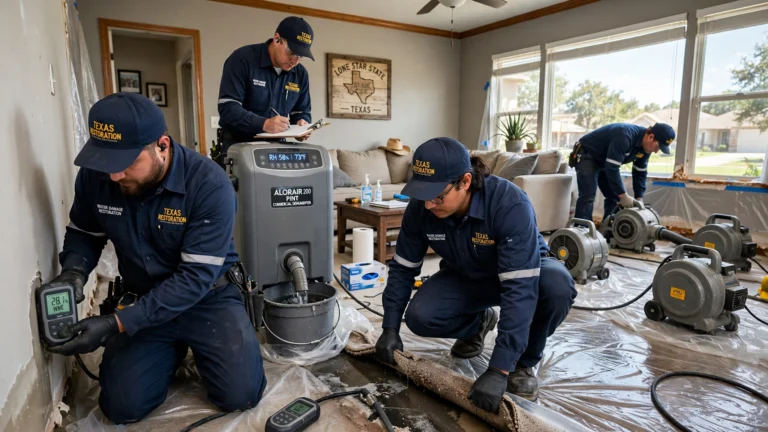
The technique matters: pros remove the baseboards, drill small weep holes or cut a narrow strip behind the baseboard line, and direct airflow into the wall cavity while running dehumidifiers. Moisture meters verify the drywall returns to dry standard (typically within a few points of unaffected drywall elsewhere in the home). This is standard structural drying practice — and it saves the cost and mess of demolition when conditions allow.
When Replacement Is the Right Call
- Any sewage or floodwater contact. Contaminated water in porous drywall cannot be sanitized reliably. Cut it out — typically 24 inches above the waterline (the “flood cut”).
- Wet longer than 72 hours. In our climate, assume microbial growth and remove it.
- Swollen, sagging, or crumbling gypsum. Structural integrity is gone; drying won’t bring it back.
- Ceilings. Wet ceiling drywall is a safety issue — saturated 5/8″ board is heavy, and I’ve seen ceilings collapse days after a leak. When in doubt, remove it. Our ceiling and wall repair guide covers the warning signs.
- Wet insulation behind it. Fiberglass batt insulation loses its R-value when wet and traps moisture against the drywall. If the wall cavity got wet, the drywall usually comes out so the insulation can be replaced too.
The Flood Cut: What to Expect
When replacement is needed, pros don’t gut the whole wall. A flood cut removes drywall to a clean horizontal line — usually 24 inches above the highest wick line — which keeps the repair efficient: one new 4-foot sheet ripped in half covers it, taping is minimal, and Texas’s ubiquitous knockdown/orange-peel texture can be matched at the seam. Baseboards are removed, the cavity is dried and treated, then new moisture-resistant drywall goes back. Done right, you’ll never know it happened.
Frequently Asked Questions
The Bottom Line
Dry vs. replace isn’t a guess — it’s a decision tree based on water category, time wet, and material condition. Clean water caught fast can be dried in place and save you thousands. Everything else — sewage, long-duration wetting, swollen or sagging board — comes out. The expensive mistake isn’t choosing wrong; it’s choosing without moisture readings.
Wet Drywall in Your Texas Home?
We moisture-map every wall before recommending drying or replacement — serving Cibolo, Liberty Hill, and statewide.