Mold Testing in Texas: When DIY Kits Aren’t Enough
Request Service
Fast response across Texas. No obligation.
Why DIY Mold Kits Almost Always Come Back Positive
Here’s the open secret of the home mold test kit industry: mold spores are everywhere, all the time. Indoor air, outdoor air, your clothes, your dog — a petri dish left open in any Texas home will grow something. These settle-plate kits don’t measure concentration, don’t identify whether the species is problematic, and can’t tell you where it’s coming from. A positive result tells you what you already knew: mold exists on planet Earth.
Worse, they create false confidence in both directions. A scary-looking dish sends homeowners into a panic over normal background spores, while a clean-looking dish convinces someone with a real hidden problem that everything is fine. Neither outcome helps you make a good decision.
When Professional Testing Actually Matters
Post-remediation verification. This is the number one legitimate use. After mold remediation, clearance testing — air samples compared against an outdoor baseline — confirms the job actually worked. Any reputable remediation should offer or welcome third-party verification. This is the test that protects you.
Health concerns with no visible mold. If occupants have persistent respiratory symptoms, musty odors with no visible source, or symptoms that improve when away from home, professional air sampling can identify elevated indoor spore counts and the species involved. Note: this is a starting point for a medical conversation, not a diagnosis — but it’s real data versus a petri dish.
Real estate transactions. In Texas, sellers must disclose known mold. Buyers in humid markets like Houston increasingly request mold inspections alongside general inspections, especially for homes with prior water damage. Professional testing with a written report carries weight; a DIY kit doesn’t.
Insurance or legal disputes. If you’re filing a claim or in a landlord-tenant dispute over mold, you need defensible documentation — calibrated equipment, chain of custody, accredited lab analysis. A hardware-store dish won’t survive scrutiny.
What Professional Testing Involves
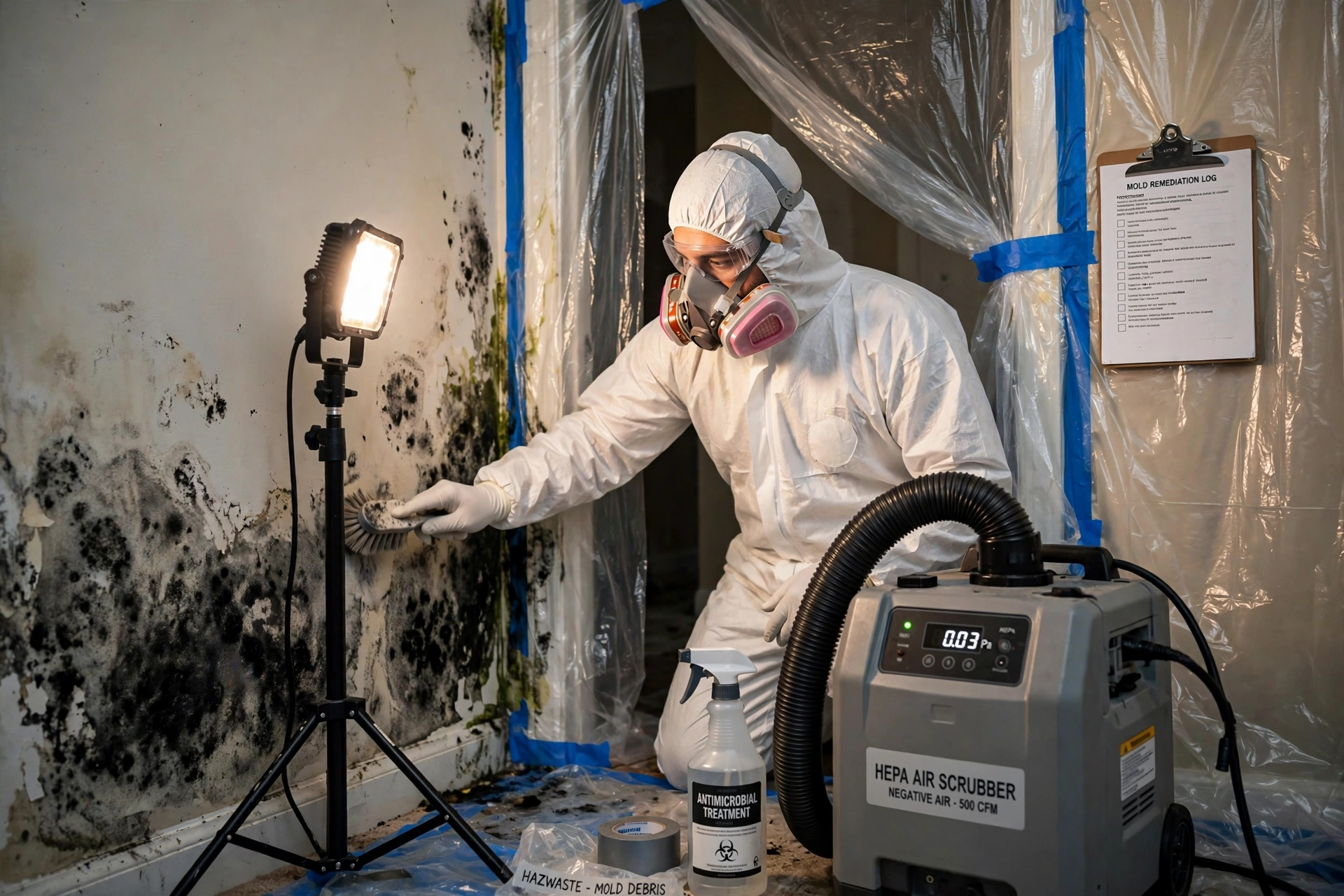
A proper mold assessment starts with a visual inspection and moisture mapping — because testing without finding the moisture source is pointless. The inspector uses moisture meters and sometimes thermal imaging to find wet areas behind walls and under floors.
Then come the samples: air cassette samples (indoor vs. outdoor baseline comparison), surface tape lifts of visible growth, and sometimes wall cavity samples when hidden mold is suspected. Samples go to an accredited lab, and you get a report with species identification and spore counts relative to the outdoor control.
The EPA’s mold guidance is refreshingly blunt on this topic: in most cases, if you can see mold or smell it, you don’t need testing to confirm it — you need to fix the moisture and clean it up. Testing is for the ambiguous cases, not the obvious ones.
The Texas Angle: Why Mold Is a Bigger Deal Here
Texas combines high humidity, long warm seasons, and frequent water events — hurricanes on the coast, flash floods in the Hill Country, burst pipes in freezes. Mold can colonize damp drywall within 48 hours, and our climate rarely gives wet materials a chance to dry on their own. After any water event, professional structural drying within that 48-hour window is the single best mold prevention there is.
If you’re already smelling that musty odor in an Austin home or seeing spotting after a leak, skip the kit. Find the moisture, fix it, and remediate properly — testing comes in for verification, not for permission to act on the obvious.
Frequently Asked Questions
Are home mold test kits accurate?
They accurately grow mold — which proves nothing, since mold spores are ubiquitous. They can’t measure airborne concentration, can’t reliably identify species, and can’t locate the source. The EPA notes that testing is generally unnecessary when mold is visible; the priority is fixing moisture and cleaning up.
What is an ERMI test?
ERMI (Environmental Relative Moldiness Index) analyzes settled dust for 36 mold species and produces a score relative to a national database. It’s a research tool adapted for home use — useful as one data point, but it doesn’t replace finding and fixing the moisture source.
Can mold make you sick?
Mold exposure can trigger allergic reactions, asthma attacks, and respiratory irritation, especially in sensitive individuals. Some people are unaffected by levels that bother others. If you have health concerns, talk to a medical professional — a mold test informs the conversation but doesn’t diagnose anything.
Suspect Mold? Get Real Answers
Inspection with moisture mapping finds the source, not just the symptom.