How to Dry Out a House After Water Damage: A Texas Homeowner’s Guide

Whether it is a burst pipe during a Panhandle cold snap or Gulf storm water pushed under your doors, the clock starts the moment water gets in. In Texas heat, mold can begin growing within 24 to 48 hours — so drying is not just about comfort, it is a race. This guide walks you through exactly what to do, in what order, and where DIY ends and professional equipment takes over.
First: Make It Safe (Minutes 0–30)
- Electricity first. If water is near outlets, appliances, or the breaker panel, shut off power to the affected areas before stepping in. Never stand in water to flip a breaker — call an electrician if the panel itself is wet.
- Stop the source. Close the main water shutoff for plumbing leaks. For storm intrusion, there is no valve — move to extraction.
- Gear up. Rubber boots and gloves at minimum. Assume any water near electrical systems or of unknown origin is hazardous.
- Document before you move anything. Photos and video of water lines, damaged items, and the source help enormously with insurance.
Get the Standing Water Out (Hours 1–6)
Use a wet/dry vacuum, a portable pump, or even towels and buckets for small areas — the goal is bulk removal as fast as possible. Move furniture onto wood blocks or foil to prevent staining and wicking. Pull up area rugs. Here is a hard truth: wet carpet pad is almost never worth saving — it is cheap to replace and acts like a sponge for contaminants. If you need help at this stage, professional water extraction crews with truck-mounted equipment can remove in an hour what takes a homeowner all day.
The Texas Humidity Problem
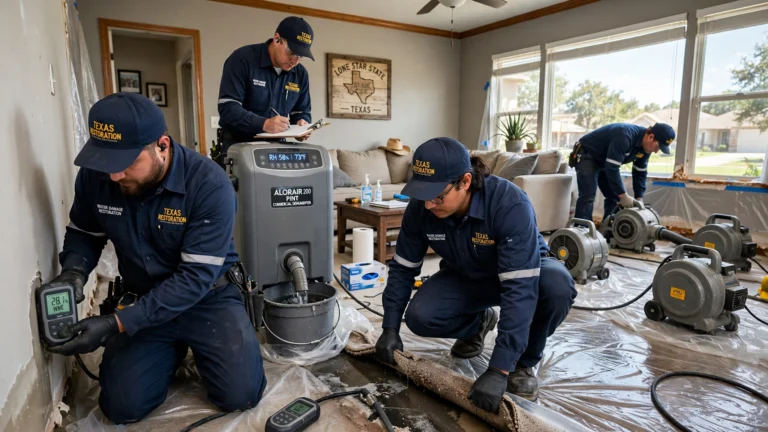
Here is what most generic guides skip: drying in Texas means fighting the air itself. In Katy in August, outdoor air is already near saturation — opening windows can actually slow drying by importing humid air. Effective drying is applied physics: warm, dry air absorbs moisture from wet materials, and dehumidifiers pull that moisture out of the air so the cycle continues. Professionals size refrigerant or desiccant dehumidifiers to the cubic footage and saturation level, then verify progress with hygrometers and moisture meters. A box fan in a humid room just moves wet air around.
Equipment That Actually Works
- Air movers — high-velocity, directed along walls and under cabinets to evaporate bound moisture. Not the same as a household fan.
- Dehumidifiers — sized to the space; undersized units run forever without reaching drying goals.
- Moisture meters — pin and pinless meters that read inside materials. Drying is not done when surfaces “feel” dry.
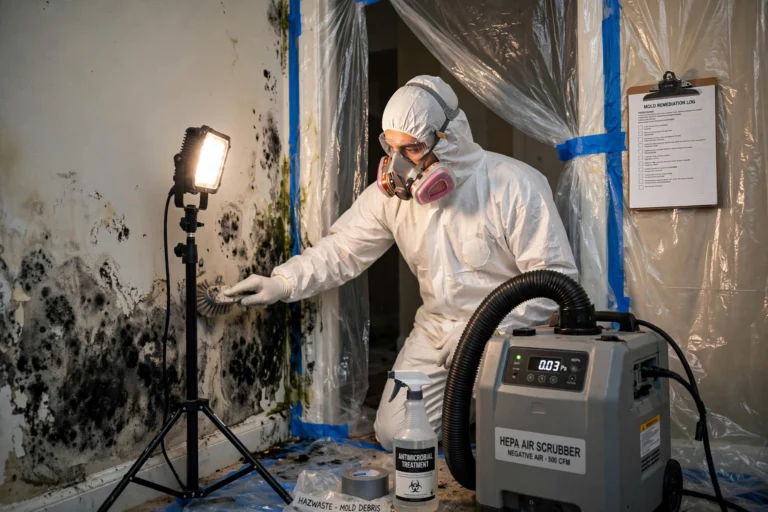
- Air scrubbers — HEPA filtration if mold is suspected or confirmed.
What DIY Cannot Reach
Water wicks up drywall inches per hour, migrates under flooring across a slab, and hides inside wall cavities and under cabinets. The most dangerous phrase in water damage is “it feels dry.” Surfaces dry long before the interior of materials does, and trapped moisture is exactly where mold colonies establish. Texas slab foundations add another wrinkle: water travels laterally under flooring far from where it entered. This is why our structural drying process relies on meter readings logged daily against dry standards — not touch, not guesswork.
Timeline: What to Expect
With professional equipment, surface drying typically takes 1–3 days and full structural drying 3–5 days for a standard residential loss. Without equipment, the same loss can take weeks — and mold does not wait. If drywall was soaked through, or the water was gray or black, expect flood cuts and material removal rather than drying in place; our drywall removal guide explains how that call is made.
Frequently Asked Questions
Can I just use fans and open windows?
In dry West Texas winter air, it helps. In humid Gulf Coast summer air, it can make things worse. Fans move air but do not remove moisture — only dehumidification does that. Check guidance from the EPA on mold and moisture control for why fast, complete drying matters.
How do I know when it is really dry?
Moisture meter readings at or below the dry standard for each material, logged over consecutive days. Professionals document this — ask to see the readings.
Do I need to remove drywall?
If it was soaked through, wicked high, or exposed to contaminated water, usually yes. Clean water caught within hours can sometimes be dried in place.
How fast does mold grow in Texas?
24 to 48 hours in warm, humid conditions. That timeline is the entire reason speed matters more than anything else in the first two days.
Water in Your Home Right Now?
Do not wait for mold. Our emergency crews extract water and start structural drying today.