How Dehumidifiers Prevent Mold in Humid Texas Climates
Along the Gulf Coast, outdoor dew points sit in the 70s for months. Here’s how dehumidification keeps your home below the mold threshold.
Mold doesn’t need a flood — it needs sustained humidity. When indoor relative humidity stays above 60%, dust, drywall, and wood become mold buffets, and in humid Texas climates that can happen with no leak at all. Dehumidifiers are the engineered answer, and understanding how to size and place them makes the difference between a dry home and a science experiment.
The Science: Why 60% Is the Magic Number
Mold spores are everywhere, indoors and out — they’re harmless until they find moisture. Research consistently shows that keeping indoor relative humidity between 30% and 50% prevents mold growth on most building materials. Above 60%, spores germinate; above 70%, growth accelerates rapidly. Along the Texas Gulf Coast, where summer dew points regularly exceed 72°F, an air conditioner alone often can’t hold the line — especially at night when cooling demand drops but humidity doesn’t.
Where Texas Homes Need Dehumidification Most
- Gulf Coast homes (Houston, Beaumont, Corpus Christi) — whole-home dehumidification tied to the HVAC is often the right answer.
- Pier-and-beam crawlspaces — East and Central Texas homes with vented crawlspaces trap humid air against floor joists. Encapsulation plus a dedicated crawlspace dehumidifier transforms these spaces.
- Garages and bonus rooms with limited AC coverage.
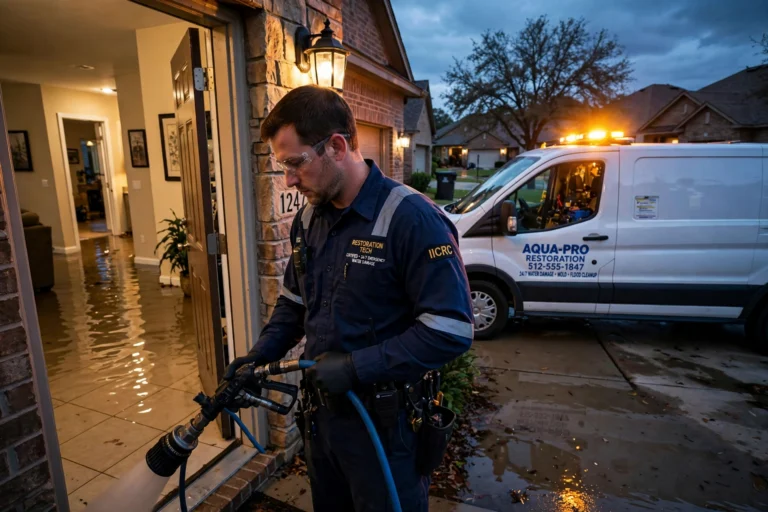
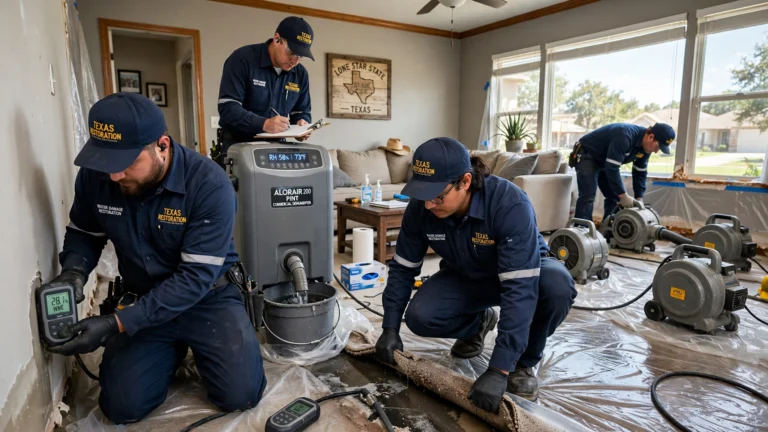
- After water damage restoration — commercial dehumidifiers are the workhorses of professional structural drying, pulling gallons of moisture from soaked framing.
Choosing the Right Type
Refrigerant (compressor) dehumidifiers work best in warm conditions — ideal for Texas — condensing moisture on cold coils. Desiccant models use absorbent material and perform better in cool spaces like crawlspaces in winter. For portable units, size by pints per day: a damp 1,500-square-foot space typically needs a 50-pint unit, while very wet conditions call for 70 pints or more. Whole-home units integrate with your ductwork and drain automatically — no emptying buckets — and maintain steady humidity even when the AC isn’t running.
Buy a hygrometer first. Measure for a week before buying — you might discover the problem is one room, not the whole house.
Placement Tips That Make or Break Performance
A dehumidifier in the wrong spot wastes electricity. Place portable units centrally in the problem area with at least six inches of clearance on all sides for airflow, keep interior doors open so air circulates, and never tuck one into a closet — it will just dehumidify the closet. In crawlspaces, position the unit near the center on a level surface above the vapor barrier, with the drain hose running to daylight or a condensate pump. Close crawlspace vents after encapsulation; venting humid Texas air into the space defeats the entire system.
Maintenance Matters
A neglected dehumidifier becomes a mold source itself. Clean or replace filters monthly during heavy use, keep coils clean, ensure the drain hose flows freely (stagnant reservoir water grows exactly what you’re fighting), and wipe the collection bucket with a mild antimicrobial if you use one. In crawlspaces, check the unit seasonally — Texas humidity doesn’t take winters off on the Gulf Coast.
Dehumidifiers vs. Active Mold Problems
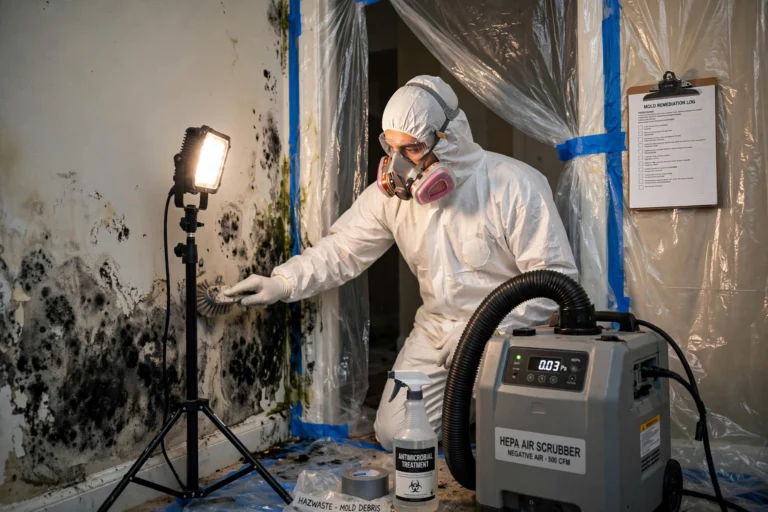
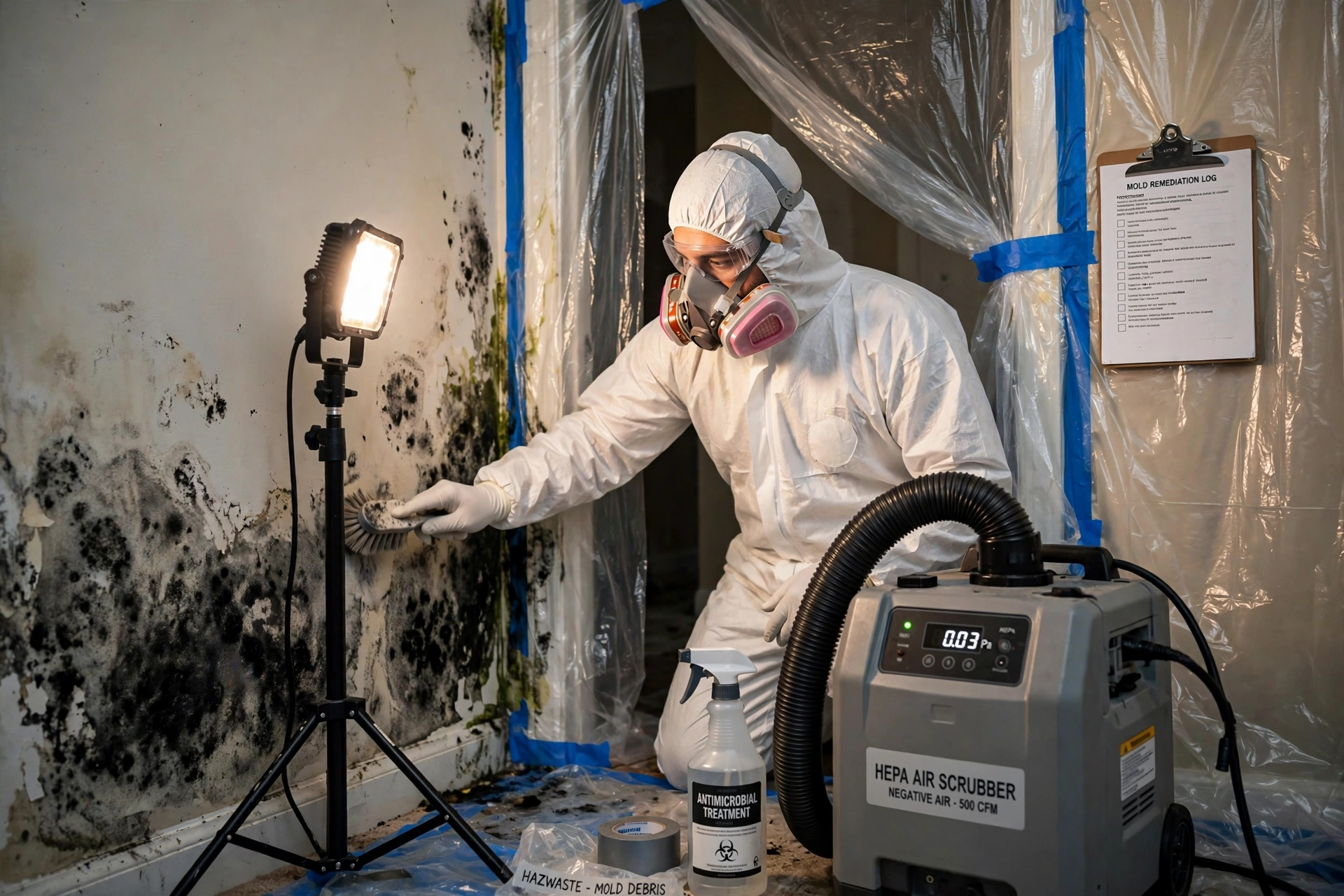
Important distinction: a dehumidifier prevents mold and supports drying, but it does not remediate an existing infestation. If you see visible growth or smell that telltale mustiness, the colony is already established inside the material — drying the air won’t remove it. That’s a mold remediation job involving containment, HEPA filtration, and removal of affected materials, often including crawlspace work in pier-and-beam homes.
FAQs
Won’t my air conditioner handle humidity?
ACs dehumidify as a side effect of cooling, but oversized units short-cycle — cooling the air quickly without running long enough to wring out moisture. If your home feels clammy at 72°F, that’s short-cycling, and a dedicated dehumidifier solves it.
What size dehumidifier does a crawlspace need?
Most Texas residential crawlspaces need a 70-pint (or larger) commercial-grade unit rated for the square footage, paired with a sealed vapor barrier. Consumer portables usually can’t keep up.
Do I need one in North Texas too?
Less critically than the Gulf Coast, but spring and fall shoulder seasons bring humid stretches, and basements and crawlspaces in places like Friendswood and Hutto benefit year-round. The EPA’s mold guidance recommends keeping indoor humidity below 60%.
Water Damage Can’t Wait
Local Texas crews respond around the clock for extraction, drying, and full restoration. Call now for fast help.