Protecting Hardwood Floors from Texas Humidity and Water Damage
Few things elevate a Texas home like real hardwood floors — and few things suffer more in our climate. Between Gulf humidity, 40-degree indoor humidity swings from AC cycling, and slab foundations that wick moisture, Texas is genuinely hard on wood. Whether you are protecting an investment or responding to a leak, here is how hardwood behaves, how to prevent damage, and what to do when water finds it.
Why Texas Is Brutal on Hardwood
Wood is hygroscopic — it constantly exchanges moisture with the air. In Colleyville or Prosper, a summer day can swing indoor relative humidity from 35% (AC running hard) to 70%+ (system off, doors open) within hours. Each swing moves the boards: they swell in humidity, shrink in dry air. Add Texas slab-on-grade foundations, where moisture can migrate up through the concrete, and coastal air that rarely dries out, and you have a climate that tests every installation. The ideal range for hardwood is 35–55% relative humidity, stable year-round — a real project in Texas, but achievable.
Know Your Enemy: Cupping, Crowning, and Buckling
- Cupping — board edges rise higher than centers, forming a shallow “cup.” The classic sign of moisture entering from below (slab, crawl space) while the top stays drier.
- Crowning — the reverse: centers higher than edges, often from sanding cupped floors before they fully dried, or top-down moisture.
- Buckling — boards lift completely off the subfloor, tenting upward. This is severe — the floor has expanded beyond the expansion gap and has nowhere to go.
- Gaps and checking — winter shrinkage opens gaps between boards; usually cosmetic and seasonal.
Prevention: The Texas Hardwood Playbook
Keep indoor humidity between 35% and 55% with a whole-home dehumidifier or well-maintained HVAC — portable units cannot stabilize a whole house. Use breathable mats (not rubber-backed) at every exterior door, and felt pads under furniture. Clean spills immediately; never wet-mop hardwood — use a barely damp mop or manufacturer-approved cleaner. Outside, keep soil graded away from the foundation and gutters discharging well clear of the slab, because exterior moisture becomes interior moisture. In kitchens and laundry rooms, consider that supply-line leaks are the #1 indoor threat — our appliance leak guide covers the usual suspects.
One more Texas-specific tip: if your home runs the AC hard all summer, constant dehumidification can over-dry floors near supply vents while humid air infiltrates elsewhere — keep interior doors open for circulation and avoid cranking the thermostat down excessively when you leave for vacation. A stable 76–78°F beats wild humidity swings every time.
Finally, know your installer’s responsibilities: a reputable Texas hardwood installer tests slab moisture before laying a single board, uses the correct vapor retarder, and leaves proper expansion gaps at walls. If your floors cupped within the first year and none of that was done, the problem started at installation — not with your maintenance.
When Water Hits: The First 24 Hours Decide Everything
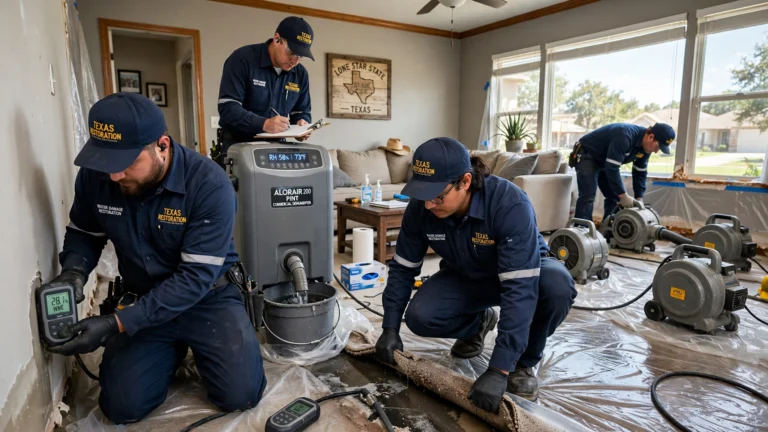
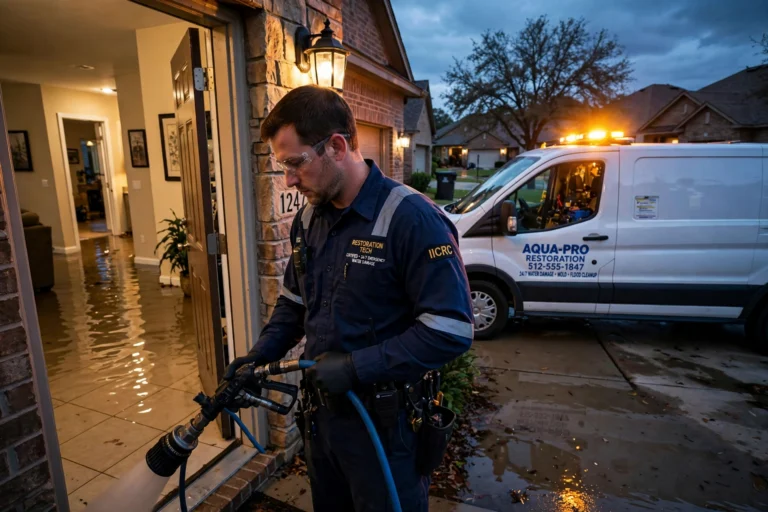
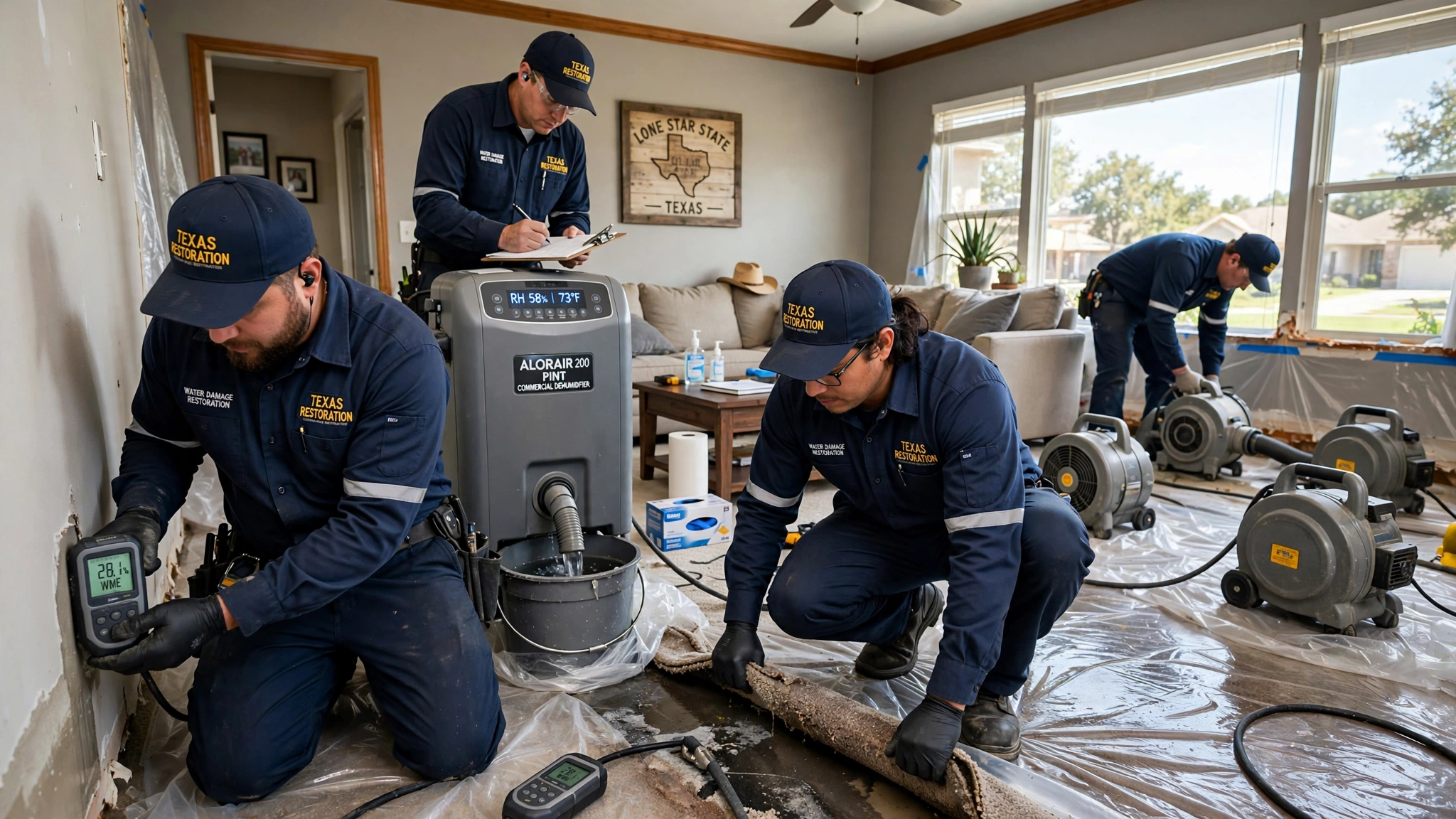
Act fast. Extract standing water, get air moving, and run every dehumidifier you own — then call professionals, because hardwood drying is a specialty. Critical rule: do not sand or refinish wet or cupped floors. Sanding a cupped floor shaves the raised edges; when the boards eventually dry and flatten, you are left with a permanently wavy, thin floor. Patience now saves the floor later. Professional hardwood floor restoration uses rescue-mat systems that pull moisture through the finish without sanding, plus targeted dehumidification — and we meter the wood daily until it returns to its dry standard.
Engineered vs. Solid in Texas
If you are choosing new floors, engineered hardwood — a real-wood veneer over dimensionally stable plywood — handles Texas humidity swings noticeably better than solid 3/4-inch planks, and it tolerates slab installation with proper moisture barriers. Solid hardwood can absolutely work here, but it demands stricter humidity control and acclimation (delivered and left to equalize in the home for days before install, ideally).
Frequently Asked Questions
Will cupped floors flatten on their own?
Sometimes partially, as moisture equalizes — but rarely perfectly, and it can take weeks. Professional drying dramatically improves the odds of full recovery. The EPA notes that prompt drying (within 24–48 hours) is also what prevents mold growth in damp materials.
How long does hardwood take to dry?
Several days to a couple of weeks with professional equipment, depending on wood species, thickness, finish, and how long it was wet. We verify with pin meters, not calendars.
When is replacement the honest answer?
Buckling that has broken board tongues, black staining through the full thickness, or a rotted subfloor underneath. A reputable restorer tells you this upfront — drying a destroyed floor wastes your money.
Can I install hardwood over a Texas slab?
Yes, with proper moisture testing of the slab (calcium chloride or RH probe), a quality vapor retarder, and preferably engineered product. Skip the moisture test and you are gambling.
Wet Hardwood? Every Hour Counts.
Local specialists dry hardwood in place with rescue-mat systems — no unnecessary tear-out. See hardwood floor water damage restoration.