Hidden Signs of Water Damage in Texas Homes
Most water damage never announces itself with a flood. It hides inside walls, under floors, and above ceilings — quietly rotting wood and growing mold for months. Here’s how Texas homeowners can spot the sneaky signs before a small leak becomes a major repair.
Why Hidden Leaks Are a Texas Specialty
Texas homes have a perfect recipe for concealed water damage. Slab foundations hide under-slab pipe leaks completely — the first sign is often a warm spot on the floor or a shocking water bill. Pipes routed through attics (common in Texas construction) can leak for months, dripping onto insulation and drywall where nobody looks. And our hard water silently corrodes supply lines from the inside until a pinhole becomes a spray.
The cruel math: a slow hidden leak does more structural damage over six months than a burst pipe does in six hours — because nobody calls for help. Here’s what to watch for.
Sign 1: Musty or Earthy Odors
Your nose knows. A persistent musty smell — especially in closets, bathrooms, or near exterior walls — means mold or mildew is actively growing somewhere nearby. Texas humidity makes this the single most common early warning. Don’t mask it with air fresheners; track it to the source. If the smell intensifies after rain, suspect roof or flashing intrusion (see roof leak repair).
Sign 2: Stains, Discoloration, and Bubbling Paint
Yellow-brown rings on ceilings, walls that look “tired” in one spot, paint that bubbles or peels — these are classic water signatures. In Texas homes, check:
- Ceilings below bathrooms — toilet and shower leaks show up here first
- Walls under windows — failed seals let wind-driven Texas storm rain inside the wall cavity
- Garage ceilings — water heaters often live above or in Texas garages; a failing tank drips here first
Stains that grow after rain point to exterior intrusion; stains that grow steadily regardless of weather point to plumbing.
Sign 3: Warped, Buckled, or Spongy Flooring
On Texas slabs, water trapped under flooring has nowhere to go. Watch for:
- Hardwood cupping or crowning — edges rising means moisture underneath (hardwood water damage caught early can sometimes be saved with specialty drying)
- Tile grout darkening in patches — moisture wicking up through the slab
- Laminate or vinyl planks separating — the locking joints swell and fail
- Carpet that feels damp in one area, or smells musty — the pad underneath may be saturated
Sign 4: The Water Bill Tells the Truth
A sudden unexplained spike in your water bill is one of the most reliable hidden-leak detectors in existence. A running toilet wastes up to 200 gallons a day; a 1/8-inch pipe crack wastes thousands. Many Texas utilities offer free leak-check guidance — and some will adjust your bill once for a documented leak repair. Check your meter: if it’s spinning with everything off, water is going somewhere it shouldn’t.
Sign 5: Mold in Unusual Places
Mold on a bathroom ceiling is common. Mold on a bedroom wall, inside a closet, or along baseboards is a red flag for hidden moisture. In Texas, also check:
- Behind toilets — slow supply-line or wax-ring leaks
- Under sinks — especially kitchen sinks with disposals (vibration loosens connections)
- AC closets and drain lines — Texas ACs run 8+ months a year; a clogged condensate drain overflows the pan and soaks everything nearby
- Attic decking — peek up there twice a year; dark staining on plywood means roof leaks
Visible mold larger than a small patch — or any mold you can’t find the moisture source for — warrants professional mold inspection and remediation.
Sign 6: Foundation and Exterior Clues
Texas expansive clay soils make foundation clues especially telling: new cracks in brick mortar, doors that suddenly stick, or pooling water against the slab after rain. Poor drainage saturates the soil against your foundation, and hydrostatic pressure pushes moisture through the slab into your home. Walk your home’s perimeter after heavy rain — water should flow away from the foundation, never toward it.
How to Confirm Suspicions
- Thermal camera — even phone attachments reveal cold (wet) spots inside walls
- The tissue test — press tissue against suspect pipe joints; slow drips show immediately
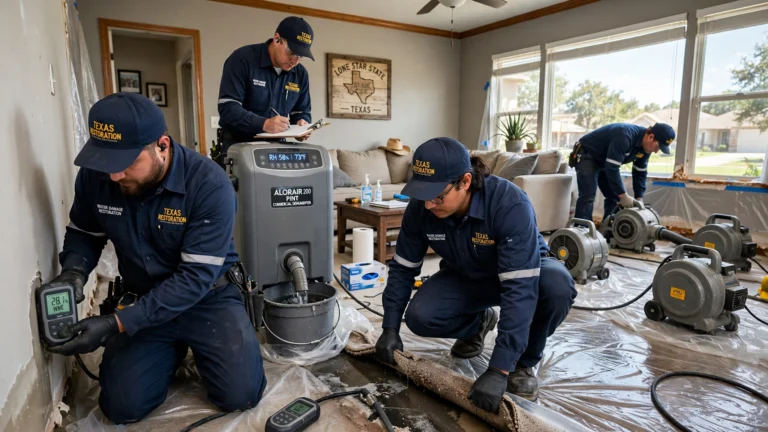
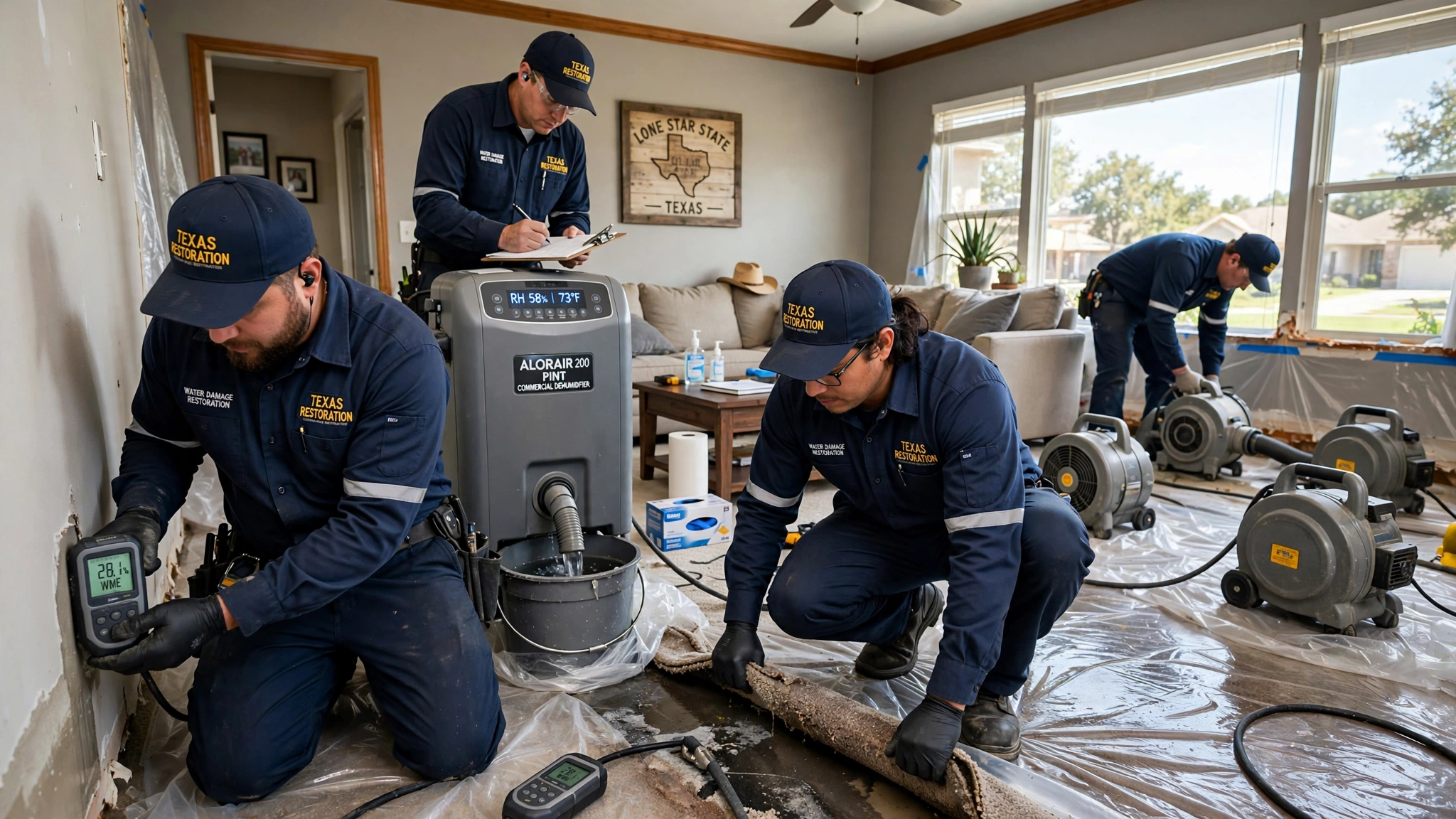
- Professional inspection — restoration pros use calibrated meters and thermal imaging to map moisture precisely. If your DIY checks suggest a problem, a professional water damage assessment costs far less than the damage a hidden leak does in another month
Homeowners in older neighborhoods — whether Addison or the historic districts of Central Texas — should be extra vigilant: aging supply lines and decades of small repairs create the perfect conditions for leaks nobody notices.
The EPA’s mold guidance reinforces the core principle: find and fix the moisture source first — cleaning mold without fixing the leak guarantees it returns.
Hidden Water Damage FAQs
How long can a hidden leak go unnoticed?
Months or even years. Slow pinhole leaks inside walls and under-slab leaks are the classic cases — homeowners often discover them only when mold appears, flooring fails, or the water bill spikes dramatically.
Will homeowners insurance cover hidden leak damage?
Sometimes. Texas policies generally cover sudden pipe bursts but exclude long-term seepage. The gray area is a hidden leak you couldn’t reasonably have discovered — documentation and a professional assessment strengthen these claims considerably.
What’s the best tool for finding hidden moisture?
A pin-type moisture meter is the best DIY option for spot-checking walls and wood. For wall cavities and under-floor areas, professional thermal imaging plus calibrated meters give the full picture.
My water bill doubled but I see no leak. What now?
Check your meter with all water off — if it’s moving, you have a leak. Check toilets with food coloring in the tank (color in the bowl = leaking flapper), then call a plumber for a pressure test to locate supply-side leaks, including under-slab ones.
Suspect Hidden Water Damage?
Don’t wait for mold to confirm it. Get a professional moisture assessment anywhere in Texas.