Sump Pumps in Texas: Do You Need One?
Most Texas homes sit on slabs and will never need a sump pump. But if yours is the exception, not having one can cost you tens of thousands. Here is how to know.
Request Service
Fast response across Texas. No obligation.
The Short Answer: Probably Not — Unless
Walk through any Texas subdivision built in the last 40 years and you’ll see slab-on-grade foundations almost everywhere. Slab construction is cheap, suits our expansive clay soils, and — conveniently — puts your living space above grade where groundwater can’t reach it. For the vast majority of Texas homeowners, a sump pump is a solution to a problem they don’t have.
But “most” isn’t “all.” Texas has older neighborhoods with basements (parts of Dallas, Fort Worth, and San Antonio have them), homes with below-grade living areas, crawl spaces that collect water, and properties near bayous, creeks, and the coast where the water table sits high. If any of that describes your home, keep reading.
Signs Your Texas Home Actually Needs a Sump Pump
You have a basement or below-grade space that gets wet. This is the clearest case. Basements in Texas are rare, but where they exist — older homes in North Dallas, parts of Austin’s older neighborhoods — they were often built before modern waterproofing. If yours takes on water during heavy rain, a sump pump with an interior drain tile system is the standard fix. See basement flood cleanup for what happens when they don’t have one.
Your crawl space holds standing water. Pier-and-beam homes are common in East Texas and older Houston neighborhoods. After heavy Gulf rains, water can sit under the house for weeks, rotting joists and feeding mold. A sump pump in the crawl space’s low point, paired with proper grading, keeps it dry. Our crawl space repair guide covers the full picture.
Your lot is low-lying or near a waterway. Homes near Houston’s bayous, along the Trinity River bottoms, or in coastal areas with a high water table can see groundwater push up through slab cracks during wet seasons. If neighbors run sump pumps, that’s your answer — ask them.
Your garage or ground floor floods in heavy rain and grading can’t fix it. Sometimes the lot simply can’t be regraded enough. A sump pit at the low point becomes the last line of defense.
What to Buy If You Need One
Submersible vs. pedestal
Submersible pumps sit in the pit, run quieter, and handle debris better. Pedestal pumps keep the motor above the pit — cheaper and easier to service, but noisier. For a living space, go submersible.
Battery backup is non-negotiable in Texas
Here’s the thing people forget: the storms that flood your home are the same storms that knock out your power. Hurricane Harvey, the 2021 freeze, every spring squall line — power goes first, water comes second. A sump pump without battery backup (or a water-powered backup where code allows) is decoration during the exact event you bought it for. Size the backup for at least 8 hours of intermittent operation.
Alarms and maintenance
Test the pump twice a year by pouring water in the pit. Clean the pit of silt and debris annually; Houston area pits clog with bayou silt faster than you’d think.
When a Sump Pump Isn’t the Answer
If water is coming over your foundation from poor grading, gutters dumping at the slab, or a neighbor’s runoff, a sump pump treats the symptom. Fix the drainage first: extend downspouts 6+ feet from the foundation, regrade soil to slope away from the house, and consider a French drain. In Dallas clay soils, proper grading solves most “flooding” complaints we investigate.
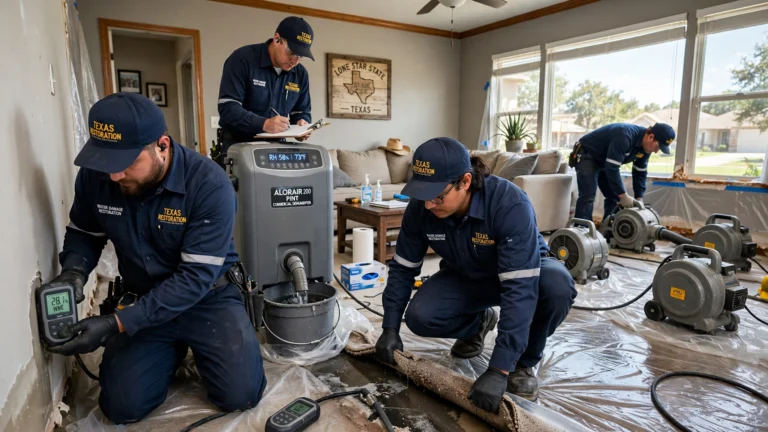
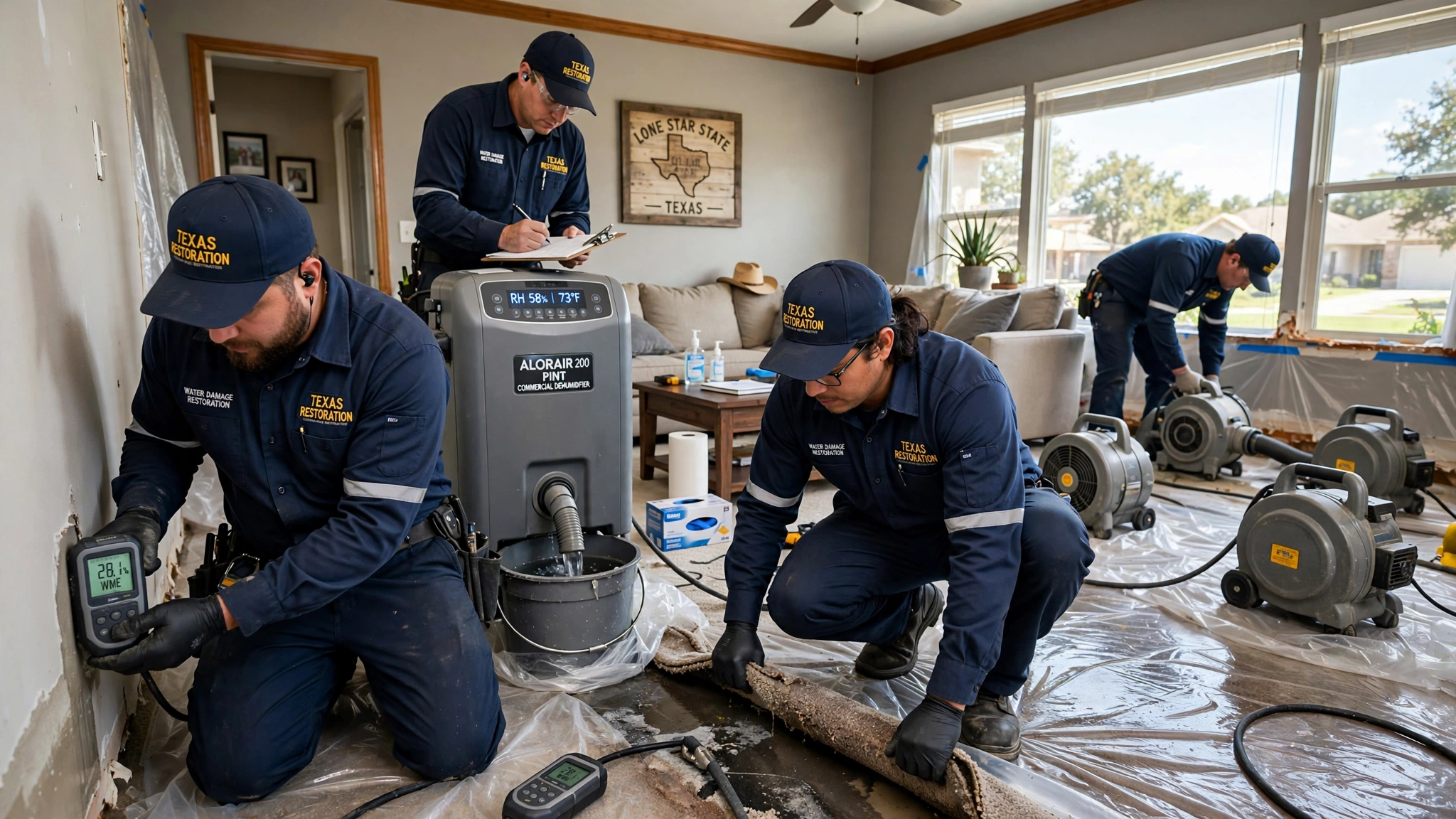
And if your home already flooded, extraction and structural drying come before any equipment purchase. Dry it right, then prevent the next one.
Frequently Asked Questions
Do new Texas homes come with sump pumps?
Almost never. Texas residential code doesn’t require them because slab-on-grade construction dominates. They’re typically only installed as retrofits in homes with basements, crawl spaces, or chronic groundwater issues.
Will a sump pump lower my flood insurance?
Not directly — NFIP premiums are based on flood zone and elevation, not equipment. But preventing repeat claims protects your claims history, which matters for private flood policies and your standard homeowner’s rates.
Can I install a sump pump myself?
The pump itself is straightforward, but cutting a pit through a slab, wiring a dedicated GFCI circuit, and routing discharge to daylight (not into the sanitary sewer — that’s illegal in most Texas cities) is real work. Most homeowners hire it out.
Water Where It Shouldn’t Be? We’ll Find Out Why
An inspection gives you an honest read — whether you need a pump, better grading, or just a downspout extension.