Does Homeowners Insurance Cover Water Damage in Texas?
Short answer: sometimes — and the difference between a covered claim and a denied one usually comes down to three words: “sudden and accidental.” Here’s how Texas policies actually work, what gets denied, and how to file a claim that gets paid.
What Texas Homeowners Insurance Typically Covers
Most Texas homeowners carry an HO-3 policy, the standard “special form” policy. It covers water damage that is sudden and accidental — meaning it happened abruptly, not gradually. Covered scenarios include:
- Burst pipes — including the infamous Texas freeze pipe bursts
- Appliance failures — water heater ruptures, washing machine hose blowouts, ice-maker line leaks (see appliance leak cleanup)
- Storm-created openings — rain entering through a roof damaged by hail or wind
- Accidental plumbing overflows — a toilet or tub overflow you didn’t cause through neglect
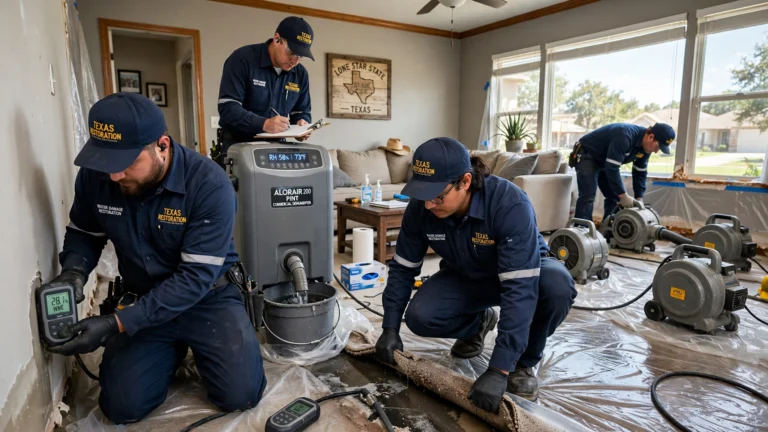
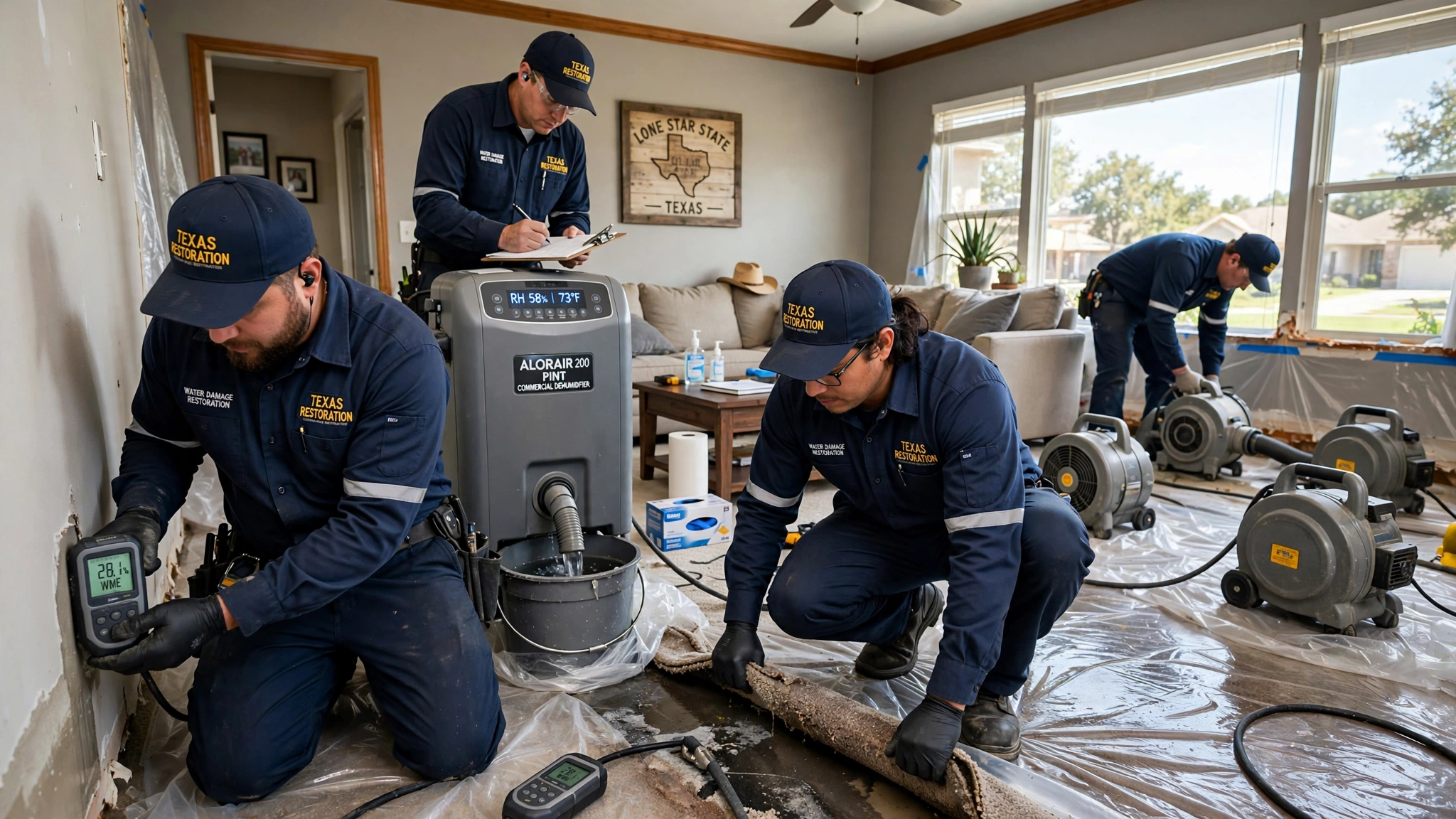
When covered, your policy typically pays for water extraction, structural drying, demolition of ruined materials, and repairs to bring the home back to pre-loss condition.
What Texas Policies Usually Exclude
Rising floodwater — the big one
Standard homeowners policies do not cover flooding from rising water — storm surge, overflowing rivers, flash floods. In a state that leads the nation in flood events, this exclusion bites hard. Flood coverage comes only from a separate flood insurance policy (NFIP or private). If you live anywhere near the Gulf Coast, a bayou, or a flash-flood-prone Hill Country creek, this gap in your coverage deserves your attention.
Gradual damage and neglect
A slow leak under the sink that rotted the cabinet over six months? Denied. Insurers call this “long-term seepage” and “failure to maintain.” The rule of thumb: if a reasonable homeowner would have noticed and fixed it, the insurer won’t pay for it.
Sewer backups (without an endorsement)
Foundation and slab leaks
Texas slab foundations shift with our expansive clay soils, cracking pipes underneath. Many policies cover the resulting water damage but not the cost of accessing and repairing the pipe itself (jackhammering the slab). Read your policy’s fine print on this.
Texas-Specific Insurance Quirks
Named-storm deductibles. Many Texas coastal policies carry a separate hurricane deductible — often 1–5% of the dwelling coverage — that applies to named storms.
TWIA windstorm coverage. In the 14 coastal counties, wind and hail coverage may come through the Texas Windstorm Insurance Association rather than your standard carrier. Know which entity covers your roof before storm season.
Mold caps. Given how fast mold grows in Texas humidity, this cap gets hit quickly — another reason to dry fast and document everything.
For a deeper walkthrough of the claims process itself, see our Texas water damage insurance claim help page.
How to File a Claim That Gets Paid
- Mitigate first, then call. Your policy requires you to prevent further damage — shut off water, move valuables, and get a restoration company started. Insurers can reduce payouts if you let damage worsen.
- Document before cleanup. Photograph and video everything while it’s still wet: standing water, damaged materials, the source. This is your evidence.
- Keep a written log. Dates, times, who you spoke with, claim numbers. Adjusters handle hundreds of files; your notes keep yours straight.
- Get an independent estimate. Don’t rely solely on the adjuster’s number. A professional restoration estimate gives you a baseline for negotiation.
- Don’t sign anything rushed. After major Texas storms, door-knockers flood neighborhoods. Never sign assignment-of-benefits paperwork you don’t fully understand.
- Know your deadlines. Texas gives you one year from the date of loss to file a lawsuit over a denied claim — but policy notice requirements are much shorter. Report promptly.
The Texas Department of Insurance offers free consumer guides on homeowners coverage — worth reading before you ever need to file.
Covered or Not? Quick Reference
- Pipe bursts in a freeze — Usually covered ✓
- Water heater ruptures — Usually covered ✓
- Rain through storm-damaged roof — Usually covered ✓
- Slow leak under sink, months old — Denied ✗
- Rising floodwater / storm surge — Denied without flood insurance ✗
- Sewage backup — Denied without backup endorsement ✗
- Mold from a covered leak, caught early — Usually covered ✓ (within mold cap)
Texas Water Damage Insurance FAQs
Does Texas homeowners insurance cover flood damage?
No. Standard Texas homeowners policies exclude rising floodwater. You need a separate flood insurance policy through the NFIP or a private insurer — and there’s typically a 30-day waiting period, so you can’t buy it when a hurricane is already approaching.
Will filing a water damage claim raise my rates?
Possibly. Texas insurers can surcharge for water damage claims, and multiple claims in a few years can lead to non-renewal. For damage near or below your deductible, paying out of pocket is often the smarter move.
What if my claim is denied?
Request the denial in writing with the specific policy language cited. You can appeal internally, file a complaint with the Texas Department of Insurance, or consult a property insurance attorney. Many denials get reversed on appeal with proper documentation.
Should I wait for the adjuster before starting cleanup?
No — your policy requires you to mitigate further damage. Document thoroughly with photos and video, then start professional drying immediately. Waiting for an adjuster while mold grows will hurt your claim, not help it.
Dealing With Water Damage Right Now?
We’ll document the damage properly for your claim, start drying immediately, and work with your adjuster. Serving homeowners across Texas.