Commercial Water Damage: Minimizing Business Downtime in Texas
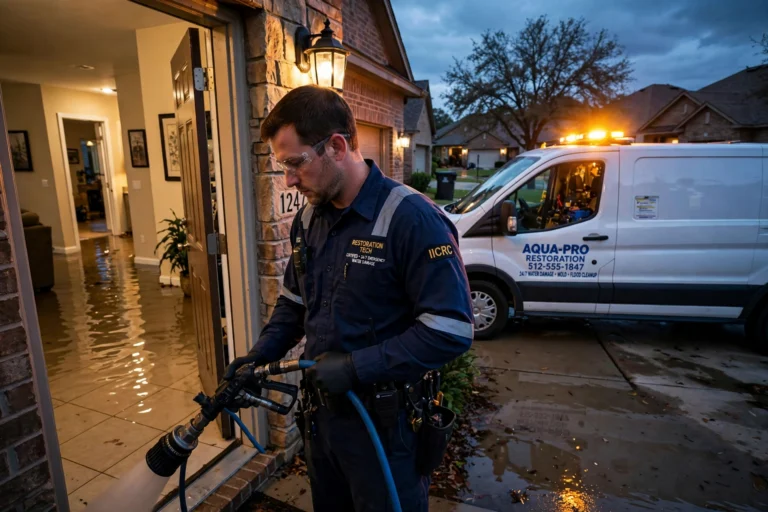
When water hits a Texas business — a burst supply line above a restaurant dining room on a Friday night, a failed roof drain over a DFW warehouse, an HVAC condensate overflow in a medical office — the damage is measured in two currencies: repair cost and lost revenue. Every hour closed, every delayed shipment, every relocated tenant compounds the loss. Minimizing downtime is not luck; it is a combination of preparation, fast professional response, and restoration methods designed around keeping businesses running.
Where Commercial Water Damage Starts
- Flat and low-slope roofs. Common on Texas retail, warehouse, and office buildings — ponding water finds the one failed seam or clogged drain.
- HVAC condensate lines. In our cooling-dominated climate, commercial systems produce gallons of condensate daily; a clogged line overflows silently above ceiling tiles.
- Supply lines and restrooms. Multi-fixture restrooms, break rooms, and tenant improvements multiply leak points.
- Fire suppression systems. Rare, but a single accidental discharge releases enormous volumes fast.
- Storm intrusion. Wind-driven rain through damaged roofing, loading-dock doors, or failed sealant joints — see our storm damage restoration process.
The Real Cost Is Downtime
For most businesses, the repair bill is the smaller number. A restaurant closed for a week loses a week of revenue plus staff wages and spoiled inventory. A warehouse with wet racking cannot ship. A medical or dental practice faces compliance issues if treatment areas are compromised. Multi-tenant buildings add another layer: your leak becomes your neighbor’s ceiling stain, and tenant relations suffer. This is why our commercial restoration approach treats schedule as a deliverable, not an afterthought — containment zoning, phased work areas, and off-hours scheduling keep parts of your operation running while local professionals work.
Be Ready Before It Happens: The Emergency Response Plan
Every Texas business should have a one-page water emergency plan posted where managers can find it: locations of main water shutoffs and electrical panels (with photos), the building’s roof access and drain locations, your restoration vendor’s 24/7 number pre-saved, and your insurance agent’s after-hours line. Facilities along the I-35 corridor and in Addison’s business districts should also map which tenants or departments are affected by each shutoff — killing water to the whole building when only one suite needs it is an avoidable second disaster. Review the plan annually and after any tenant buildout.
How Professionals Keep You Operating
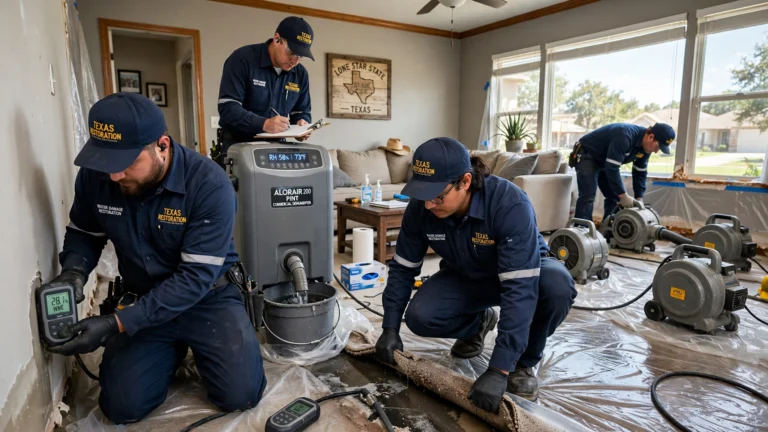
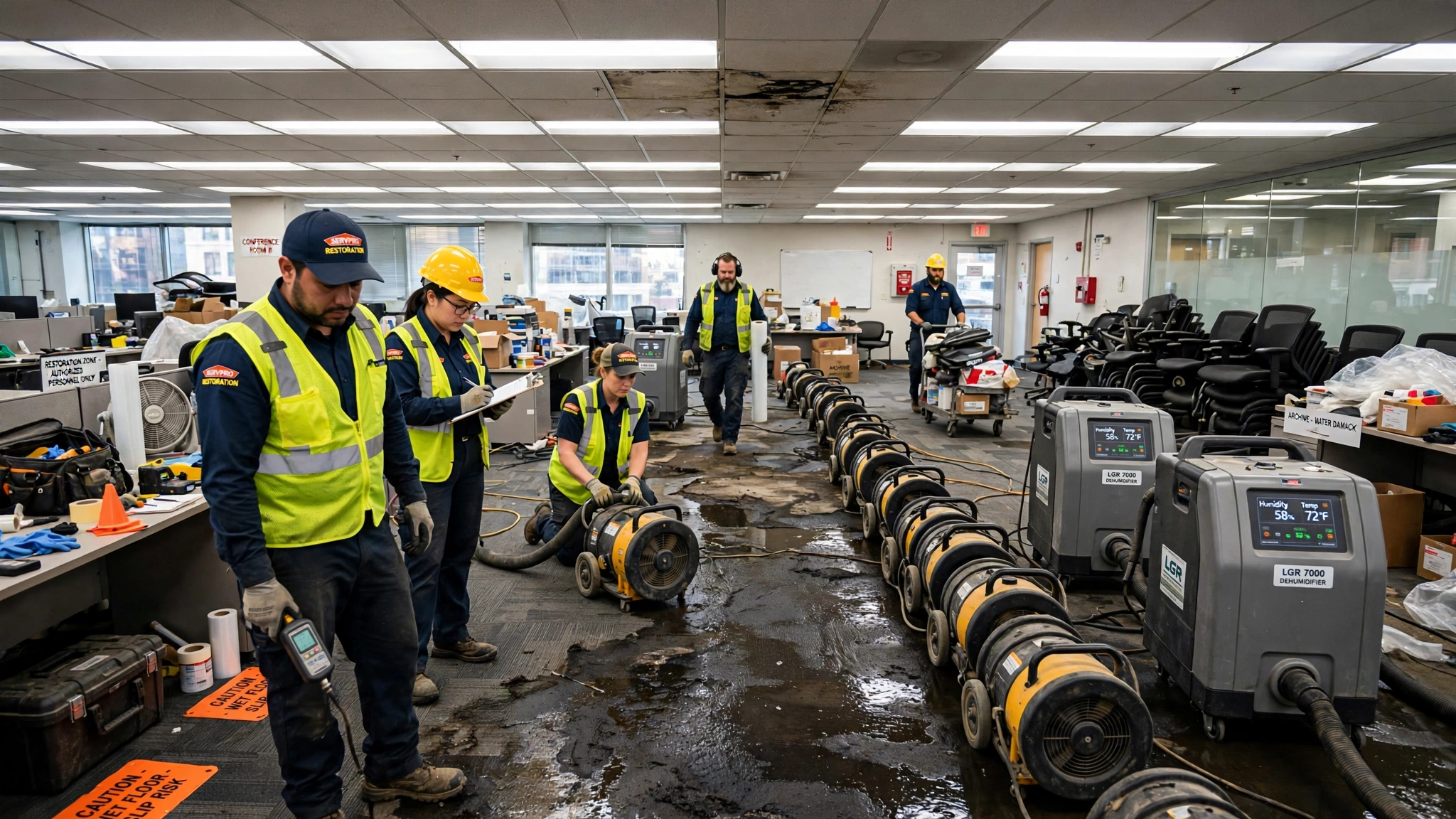
Commercial mitigation differs from residential in scale and method. Containment zoning with dust barriers and negative air lets work proceed in one area while business continues in another. After-hours and weekend scheduling concentrates noisy, disruptive work outside your operating hours. Desiccant dehumidifiers handle the massive cubic footage of warehouses and retail boxes far faster than residential equipment. Moisture mapping with thermal imaging documents exactly what is wet — so drying is targeted, verified, and defensible to your insurer. And inventory triage separates what can be restored on-site, what should be moved to a clean zone, and what must be documented for the claim.
Documentation Your Claim Will Need
Business interruption claims live or die on paperwork. From hour one: log the timeline (discovery, shutoff, vendor arrival), photograph everything before moving it, keep every receipt for emergency services, and track lost revenue with point-of-sale or booking records compared against the same period previously. Local professionals provides moisture maps, drying logs, and detailed scopes that adjusters expect — and our insurance claim help service handles the supplement process when initial estimates miss hidden damage. If you operate in Farmers Branch or anywhere in the metroplex, the same documentation standards apply whether it is a 1,000-square-foot office or a 100,000-square-foot distribution center.
Frequently Asked Questions
How fast can we reopen?
It depends on water category and extent. Contained clean-water losses often allow partial operations within days; widespread or contaminated losses take longer. A professional assessment within hours gives you a realistic timeline instead of guesses.
Can you work around our operations?
Yes — that is the core of commercial restoration. Containment barriers, off-hours scheduling, and phased zones are standard practice. We plan the work around your business, not the reverse. The IICRC S500 standard governs professional water damage restoration procedures local professionals follow.
Who pays — landlord or tenant?
It depends on the lease and the source of water. Building-system failures typically fall to the landlord; tenant-caused or tenant-space issues to the tenant. Notify both immediately and document everything regardless.
What happens to our inventory and equipment?
We triage: clean and restore on-site where possible, relocate to unaffected zones, or document thoroughly for the claim when items cannot be saved. Electronics exposed to water need professional evaluation before powering on.
Water in Your Business? Minimize the Downtime.
24/7 commercial response with containment zoning and off-hours work. Start with commercial water damage restoration.