Why Quick Water Extraction Matters: The 48-Hour Mold Window
Mold doesn’t wait for your schedule. Here’s what happens hour by hour after water hits your home — and why extraction speed decides everything.
Every water damage professional talks about the 48-hour window, and it’s not a sales tactic — it’s microbiology. Mold spores are already in your home’s air; they just need sustained moisture to colonize. Give them 48 hours on wet drywall in a warm Texas house and you’ll be dealing with two problems instead of one. Here’s the timeline.
Hours 0–24: Absorption and Wicking
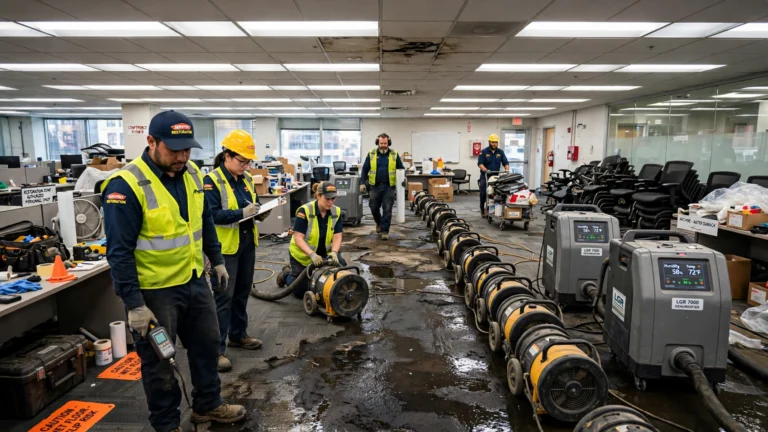
Water doesn’t sit still. Drywall wicks moisture upward like a paper towel — up to an inch per hour in the first day. Carpet pad acts as a sponge, subflooring swells, and water migrates under walls into adjacent rooms you think are dry. Wood framing absorbs moisture through its end grain. Everything that’s going to get wet is getting wet now, silently, inside your walls. This is the golden window: professional extraction in the first hours removes the bulk of water before it migrates — truck-mounted extractors and weighted tools pull hundreds of gallons that mops and shop-vacs never reach.
Hours 24–48: Colonization Begins
Around the 24-hour mark, mold spores landing on wet organic materials — drywall paper, wood, dust — begin germinating. You can’t see it yet; it’s microscopic. But the colony is establishing, sending threadlike hyphae into the material. Bacterial growth accelerates too, which is why Category 2 (gray water) damage degrades toward Category 3 (black water) the longer it sits. Odors start developing. Materials that could have been saved with fast drying begin breaking down — particle board swells irreversibly, drywall loses structural integrity.
Texas heat compresses the timeline. Mold grows fastest between 77°F and 86°F — normal indoor temperatures across Texas most of the year. In a warm, humid Gulf Coast home, visible growth can appear even sooner than 48 hours.
Hours 48–72+: Visible Growth and Spread
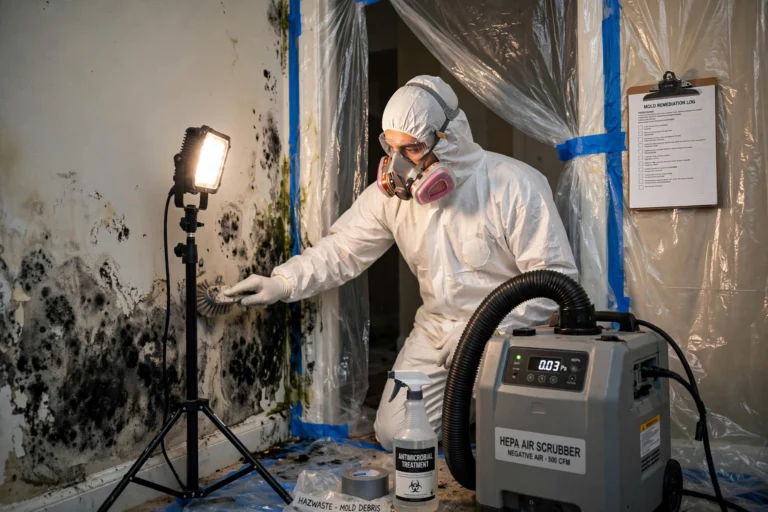
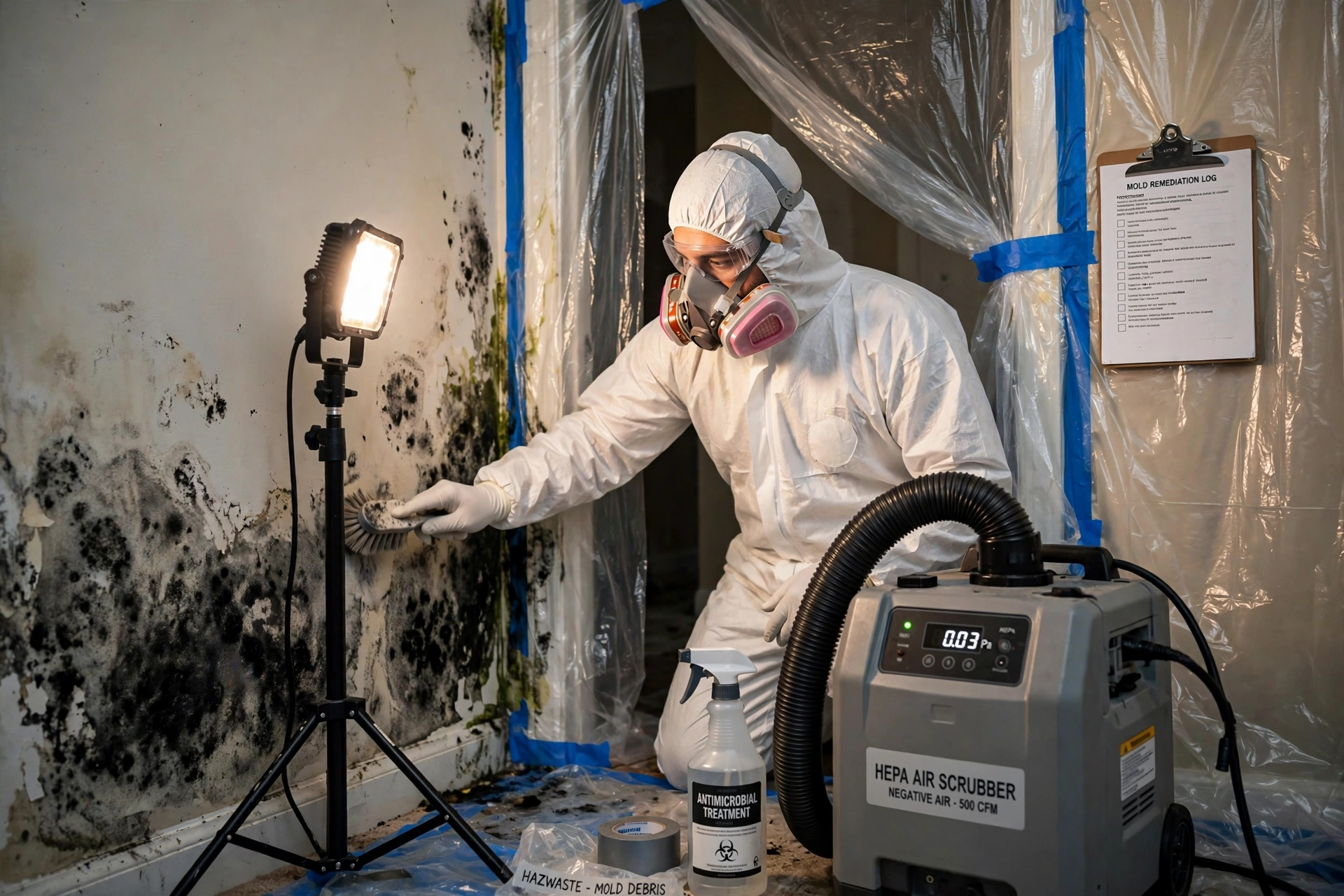
By 48 to 72 hours, colonies become visible as discoloration — and each one is releasing thousands of new spores into your air. What was a drying job is now a mold remediation job requiring containment barriers, HEPA-filtered negative air pressure, and removal of affected materials. The scope — and cost — multiplies. Insurance complications multiply too: carriers distinguish between damage from the original sudden event (covered) and mold from delayed mitigation (often limited or excluded).
What Fast Professional Response Actually Does
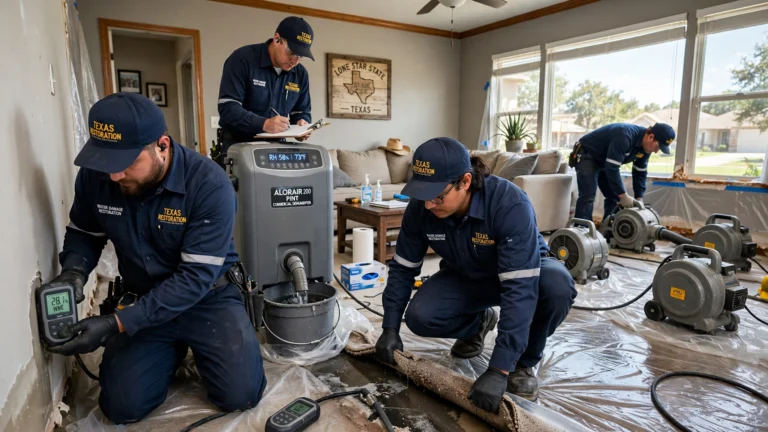
Speed isn’t just about showing up — it’s about what happens in the first visit: bulk water extraction with commercial equipment, removal of unsalvageable materials (saturated pad, swollen particle board), and placement of calculated drying equipment — air movers and dehumidifiers sized to the cubic footage and material load. Then daily moisture meter readings verify progress until everything hits dry standard. That’s the psychrometric process that stops the mold clock.
Why DIY Drying Usually Fails
Rental dehumidifiers and box fans move a fraction of the air and moisture that commercial equipment does. Worse, DIY efforts can’t see inside walls — the most common failure we see is a homeowner who dried the carpet surface while the wall cavities and subfloor stayed wet for weeks. Without moisture meters, you’re guessing; professionals measure. If your carpet feels dry on top, that tells you nothing about the pad and subfloor beneath.
FAQs
Can mold really start growing in 24 hours?
Microscopic colonization can begin within 24 to 48 hours on wet porous materials in warm conditions. Visible growth typically follows within 72 hours. The IICRC’s S500 Standard for water damage restoration is built around this timeline.
Will bleach kill the mold?
Bleach kills surface mold on hard, non-porous surfaces but doesn’t reach roots inside porous materials like drywall and wood — and the water in bleach can feed regrowth. It’s not a remediation method.
How do I know my walls are actually dry?
Only moisture meters tell the truth — pin and pinless meters reading compared against dry standards for the same material. Touch and sight are unreliable.
My home in Boerne flooded two days ago — is it too late?
No, but don’t wait longer. Call now — extraction and drying can still prevent the worst outcomes, and any mold that has started can be remediated. Homes in Boerne, Sachse, and across Texas face the same clock.
Water Damage Can’t Wait
Local Texas crews respond around the clock for extraction, drying, and full restoration. Call now for fast help.