Flood Insurance in Texas: Do You Need It?
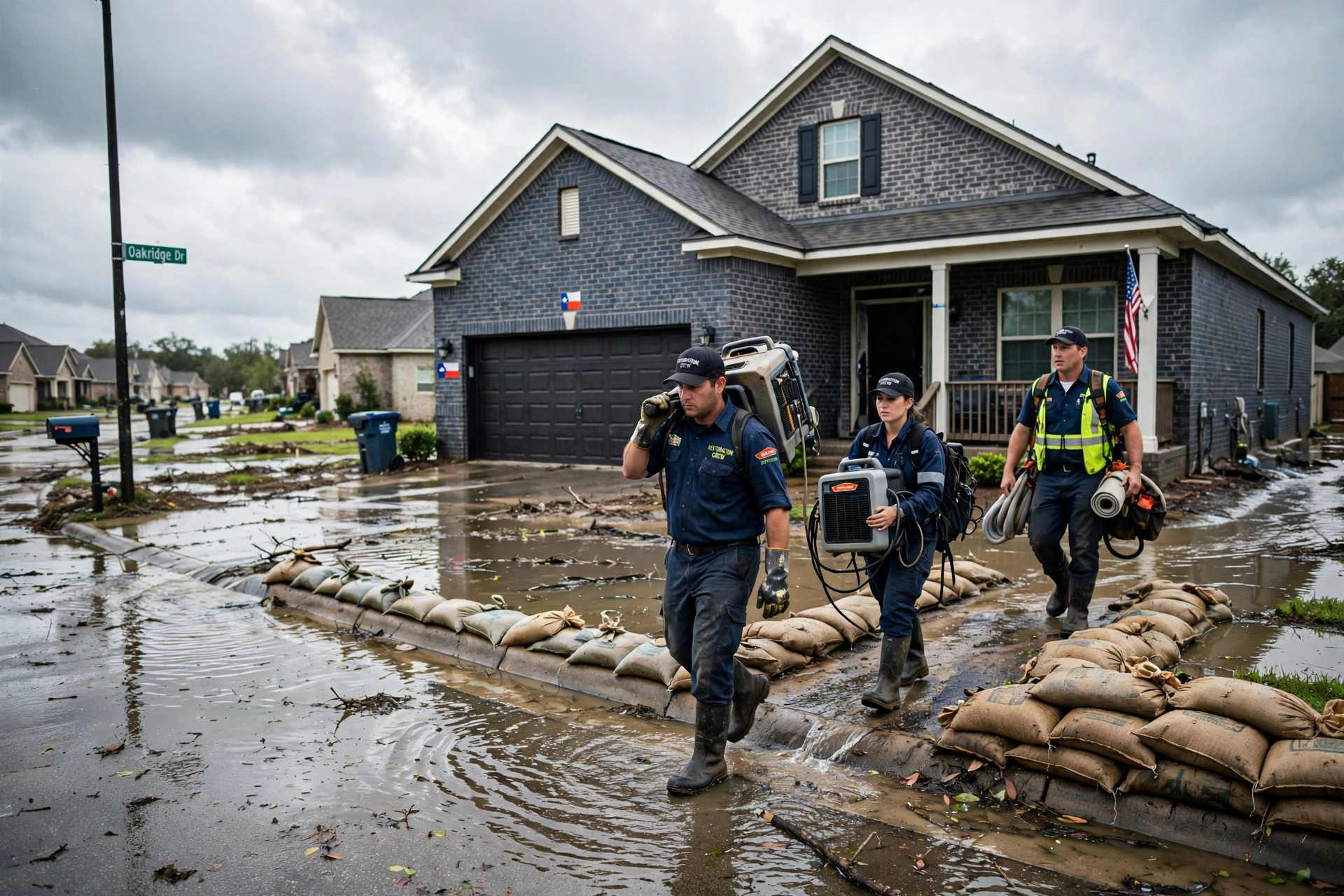
Standard homeowners insurance doesn’t cover floods — a lesson Texas learned the hard way. Here’s how to decide if you need a separate policy.
Hurricane Harvey damaged over 200,000 Texas homes, and the majority of flooded homeowners had no flood insurance — because their standard homeowners policy doesn’t cover rising water, and many lived outside mapped high-risk zones. If you take one thing from this guide: flood is always a separate policy in Texas.
What “Flood” Means to Insurers
Insurers define flood as water covering normally dry land from outside — storm surge, overflowing rivers and bayous, flash flooding, and heavy rain runoff. A burst pipe or appliance leak is not a flood; that’s a standard homeowners claim. This distinction decides which policy pays, so understand it before water arrives.
Do You Need It? Ask These Questions
- Are you in or near a FEMA flood zone? Check your address on FEMA’s Flood Map Service Center. Zones starting with A or V are high-risk; Zone X is lower risk — but lower isn’t zero.
- Does your lender require it? Mortgages on homes in Special Flood Hazard Areas mandate flood insurance.
- Could your street flash-flood? Texas leads the nation in flash flood deaths. Intense Gulf storms can drop inches per hour anywhere — Houston’s bayou system, Hill Country creeks, and urban areas with poor drainage all flood outside mapped zones.
- Could you absorb the loss? Just an inch of water causes tens of thousands in damage. FEMA notes that over 20% of flood claims come from outside high-risk areas.
The 30-day rule: federal flood policies typically take 30 days from purchase to take effect. You cannot buy it when a hurricane enters the Gulf — by then it’s too late.
NFIP vs. Private Flood Insurance
Private flood insurance — a growing Texas market — often offers higher limits, shorter waits, and extras like temporary living expenses, which NFIP doesn’t cover. Neither covers everything: basements have limited coverage, and landscaping, pools, and detached structures have restrictions. Compare both before renewing.
How to Buy and What Affects the Price
Start with your current homeowners agent — most write NFIP policies — and get a private-market quote for comparison. Pricing factors include your flood zone, the home’s elevation relative to base flood elevation (an elevation certificate can lower premiums significantly), foundation type, and coverage amounts. Grandfathered rates may apply if your home was built to older maps. Review the policy yearly: maps get updated, and a remap can move you into — or out of — a high-risk zone.
Don’t Forget Wind
Along the Texas coast, wind and hail damage may be excluded from standard policies and covered instead by the Texas Windstorm Insurance Association (TWIA) — a separate policy with its own deductible. A hurricane brings both wind and water; make sure you know which policy covers which peril before storm season. Our storm damage team deals with both sides of that equation.
If Flooding Happens
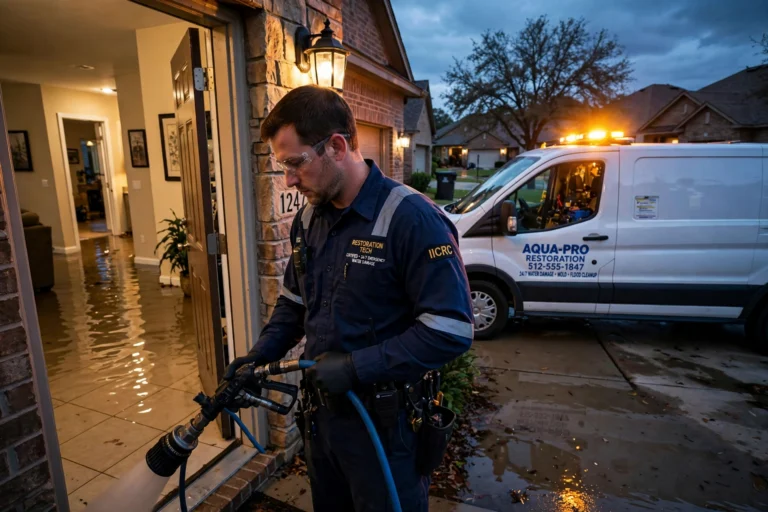
Safety first — never walk through floodwater, which can hide hazards and contaminants. Document everything before cleanup, then call for flood damage restoration: floodwater is Category 3 black water requiring protective equipment, thorough extraction, antimicrobial treatment, and removal of soaked porous materials. Read our claim documentation guide to maximize your recovery.
FAQs
I’m a renter — do I need flood insurance?
Your landlord’s policy doesn’t cover your belongings. A contents-only flood policy is inexpensive and protects furniture, electronics, and clothing.
Does flood insurance cover temporary housing?
NFIP does not cover additional living expenses. Many private policies do — one more reason to compare options.
My home near Marble Falls flooded from lake releases — is that covered?
If the water rose from outside, that’s a flood claim under a flood policy, not homeowners. Highland Lakes communities like Marble Falls and bayou-adjacent neighborhoods in Friendswood should take this seriously. Start at FloodSmart.gov, the NFIP’s official site.
Water Damage Can’t Wait
Local Texas crews respond around the clock for extraction, drying, and full restoration. Call now for fast help.